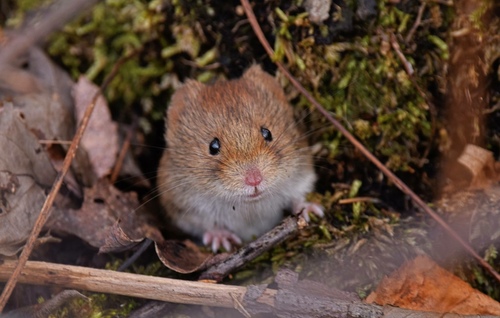
Southern Red-backed Vole
Clethrionomys gapperi
With its signature rusty-red stripe and agile movements, the Southern Red-backed Vole is a colorful hidden gem of the forest floor. Often found darting through mossy logs, this industrious rodent is a master of the woodland undergrowth.
Quick Identification
Size
Total length: 4.7–6.5 inches (120–165 mm); Weight: 0.5–1.5 oz (15–42 g)
Colors
Features a prominent broad reddish or rusty-brown stripe running from the forehead to the base of the tail. The sides are yellowish-gray or buff, and the belly is silvery-white or pale gray.
Key Features
- Broad reddish-brown dorsal stripe
- Short, bicolored tail (dark on top, light below)
- Larger, more visible ears than most other voles
- Slender, mouse-like body shape
When You’ll See Them
Behavior
The Southern Red-backed Vole is an energetic and agile inhabitant of the forest floor. Unlike many of its cousins that prefer open grasslands, this species is a specialist of the deep woods. They are remarkably light on their feet, capable of climbing low shrubs and navigating complex tangles of fallen branches. While they are active year-round, they are particularly fascinating in winter, when they live in the 'subnivean zone'—the narrow, insulated space between the frozen ground and the snowpack—where they are protected from the worst of the cold and many predators.
These voles are somewhat unique in their social structure; while they can be territorial during the peak of the breeding season, they often tolerate the presence of others in the winter to conserve heat. They are diligent hoarders, spending much of the late summer and autumn caching seeds, roots, and dried fungi in hollow logs or underground chambers. In the backyard setting, they are shy and quick, usually only appearing as a flash of red fur as they move between patches of cover.
EverydayEarth exclusive
Camera Tips
To successfully capture the Southern Red-backed Vole on your AI camera, you must focus on 'micro-habitats.' These voles rarely venture into the open, preferring to travel along natural runways like the sides of fallen logs, stone walls, or through thick moss. Mount your camera extremely low—no more than 3 to 5 inches off the ground—and aim it along the edge of a log or a rock pile. If your camera has a focus adjustment, set it for close-range (3–5 feet) to ensure the small details of their reddish fur are sharp.
Baiting is a highly effective way to slow these fast-moving rodents down for a clear shot. A small amount of peanut butter smeared onto a piece of bark or a handful of black-oil sunflower seeds placed in a mossy depression will encourage them to pause. Place the bait in a spot that receives dappled sunlight during the day, as the contrast can help the AI identification software pick up the distinct 'red back' against the darker forest floor. Because they are so quick, use a 'burst' mode for stills or set your video length to 10–15 seconds to ensure you don't just catch a tail disappearing out of frame.
Seasonal placement is key for this species. In the winter, look for 'chimneys' or small holes in the snow near the base of trees or logs; these are ventilation shafts for their subnivean tunnels. Placing a camera near these exits can yield surprising footage of them popping up to check the surface. In the summer, focus on the wettest parts of your yard or woodlot, as they are highly sensitive to water loss and prefer the coolest, dampest areas available. If using infrared at night, try to angle the camera so the flash doesn't bounce harshly off nearby leaves, which can 'white out' the vole's features.
Similar Species
Species that look similar or are commonly confused with Southern Red-backed Vole.
Frequently Asked Questions
Record Southern Red-backed Vole at your habitat
Connect a camera to start building your own species record — AI identifies every visitor automatically.