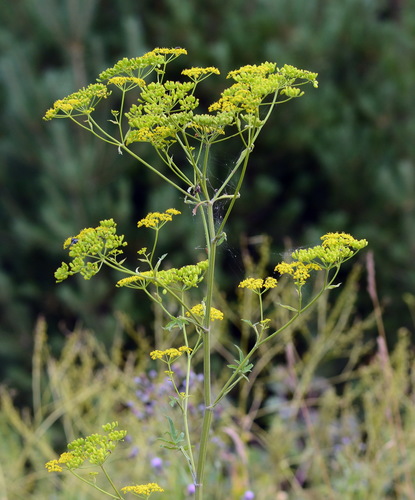
wild parsnip
Pastinaca sativa
Towering over summer meadows with its golden, umbrella-shaped blooms, wild parsnip is a biennial powerhouse. While it commands respect for its light-sensitive sap, it serves as a vital summer skyscraper for butterflies and beneficial insects.
Quick Identification
Size
Stands 2 to 5 feet (60–150 cm) tall in its second year; rosettes stay close to the ground in the first year.
Colors
Bright yellow flower clusters; deep green foliage; cream-colored taproot.
Key Features
- Flat-topped yellow flower clusters (umbels)
- Hollow, grooved green stems
- Pinnately compound leaves with saw-toothed leaflets
- Deep, thick edible taproot
- Biennial growth habit
When You’ll See Them
Behavior
Wild parsnip is a biennial plant, which means it operates on a two-year life cycle. In its first year, it remains a low-lying rosette of leaves, quietly funneling energy into a deep, nutrient-rich taproot. During its second spring, it "bolts," sending up a tall, sturdy stem that can tower over surrounding grasses to reach for the sun.
This plant is highly successful in colonizing disturbed areas, but it is best known for its chemical defense mechanism. Its sap contains furanocoumarins, which cause a reaction called phytophotodermatitis. When the sap touches skin and is then exposed to sunlight, it can cause severe, painful blisters. Despite this danger to humans, the plant is a bustling hub for wildlife, providing a massive landing pad for various pollinators during the heat of the summer.
EverydayEarth exclusive
Camera Tips
Documenting wild parsnip is a unique challenge that rewards the patient observer. Because the plant is stationary, it provides a perfect opportunity for time-lapse photography. Place your camera on a sturdy tripod at chest height during late May or early June. By taking one frame every 30 minutes, you can capture the dramatic "bolting" process where the plant shoots upward several inches a day to claim its place in the sun.
Once the yellow umbels bloom in mid-summer, the plant becomes a high-traffic destination for backyard insects. To capture the best action, set your camera to a high-speed trigger or short video bursts. Wild parsnip is a magnet for some of the most visually striking pollinators, including Eastern Black Swallowtail butterflies (which use the plant as a host for their caterpillars) and various specialized predatory wasps. Focus your lens specifically on the flat top of the flower cluster, as this is where 90% of the movement will occur.
Safety is the most important factor when setting up cameras near this species. Always wear long sleeves, pants, and heavy gloves when positioning equipment in a patch of wild parsnip to avoid skin contact with the sap. If you need to clear some foliage to get a better shot, use hand pruners rather than a weed-whacker to ensure the sap doesn't spray onto your camera lens or your skin. If sap does get on your gear, clean it carefully with isopropyl alcohol while wearing protection.
For the most aesthetic shots, utilize the "golden hour" lighting. The yellow flowers of the wild parsnip have a reflective quality that can look washed out in the harsh midday sun, but they glow with a deep, honey-like gold during the hour after sunrise or before sunset. Setting your camera to a lower exposure can help preserve the intricate details of the tiny individual flowers within the larger cluster.
Frequently Asked Questions
Record wild parsnip at your habitat
Connect a camera to start building your own species record — AI identifies every visitor automatically.