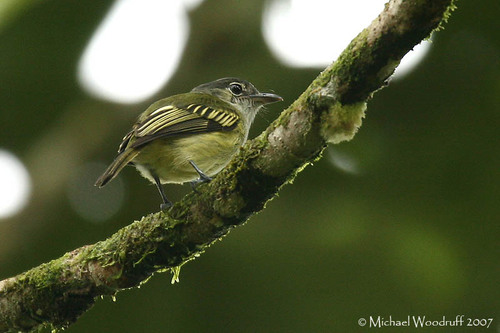
Yellow-margined Flatbill
Tolmomyias assimilis
A master of the mid-canopy, the Yellow-margined Flatbill is a stealthy insect hunter known for its distinctive pale eyes and bright wing accents. Widely distributed across the Amazon, it is a rewarding species for any backyard observer in the tropics.
Quick Identification
Size
13–13.5 cm (5.1–5.3 in) in length; weighs approximately 13–18 g (0.46–0.63 oz)
Colors
Olive-green upperparts, pale yellowish-grey underparts, and distinctive yellow edges on the wing feathers. Both sexes appear similar.
Key Features
- Broad, flattened bill with a pale base
- Bright yellow margins on wing coverts and secondaries
- Pale, often whitish or light-grey iris
- Upright, attentive flycatcher posture
When You’ll See Them
Geographic range
Where Does the Yellow-margined Flatbill Live?
The Yellow-margined Flatbill is a quintessential inhabitant of the South American tropics, with a vast range that covers nearly the entire Amazon Basin. It is natively found across a broad stretch of the continent, from the humid forests of Colombia, Venezuela, and the Guianas in the north, down through the lush interiors of Peru, Ecuador, and Bolivia, and across the massive forested expanses of Brazil. While it avoids the cooler southern climates of Argentina and Chile, it remains one of the most widespread tyrant flycatchers in the northern and central regions of South America.
Basemap © OpenStreetMap contributors
Behavior
Socially, these birds are often found as solitary individuals or in pairs, but they frequently join mixed-species foraging flocks. By following woodcreepers and other insect-eaters, they capitalize on the insects flushed out by the movement of the group. They are also known for their remarkable architecture; they build hanging, pouch-like nests with a side entrance, often strategically placed near active wasp nests to deter potential nest predators like monkeys or snakes.
EverydayEarth exclusive
Camera Tips
Since they do not visit traditional seed or suet feeders, the best 'bait' is a water feature. A birdbath with a solar-powered dripper or a small recirculating waterfall is highly effective. The sound of moving water is a powerful magnet for canopy-dwellers in tropical climates, often enticing them down from the high branches for a drink or a bath. Position your camera about 3 to 5 feet from the water source to ensure the AI can clearly identify the yellow wing margins and pale iris.
Lighting is your biggest challenge in the humid forest. Try to place your camera in a spot that receives filtered morning light, and set your camera to a fast trigger speed—ideally 0.2 seconds or faster. Because these flycatchers move in quick, explosive bursts, using a high-frame-rate video setting (60fps or higher) will allow you to capture the detail of their flight patterns. During the rainy season, ensure your camera housing is well-maintained, as these birds remain active even during light tropical showers.
Similar Species
Species that look similar or are commonly confused with Yellow-margined Flatbill.
Frequently Asked Questions
Record Yellow-margined Flatbill at your habitat
Connect a camera to start building your own species record — AI identifies every visitor automatically.