Aardvark
Orycteropus afer
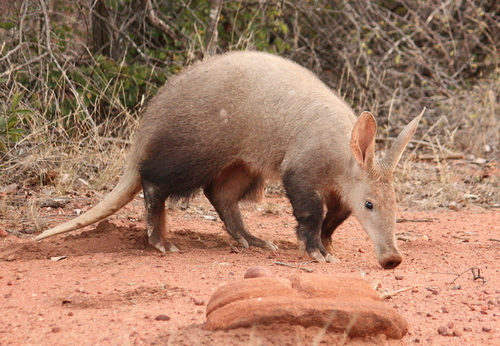
The aardvark is Africa's most mysterious excavator, a prehistoric-looking marvel that lives a secret life underground. With ears like a rabbit and a snout like a pig, this solitary nocturnal wanderer is a master of the night.
Quick Identification
Size
Total length 105–130 cm (41–51 in) with a 45–63 cm (18–25 in) tail; weight ranges from 40–65 kg (88–143 lb), though large males can reach 80 kg.
Colors
Dull yellowish-gray to reddish-brown skin often stained by local soil; thin, coarse hair is usually darker on the limbs.
Key Features
- Elongated, pig-like snout with a sensitive nose
- Large, upright ears reaching up to 24 cm (9.5 in) long
- Massive, shovel-like claws on the front feet
- Thick, muscular tail that tapers to a point
When You’ll See Them
Sightings on EverydayEarth
Aug 1, 2026
An aardvark walks steadily across the clearing under the cover of night. It keeps its head low to the ground, likely searching for insect mounds, before moving out of the frame to the right.
Geographic range
Where Does the Aardvark Live?
Native to the African continent, the aardvark occupies a vast territory stretching across almost the entirety of sub-Saharan Africa. From the southern reaches of South Africa to the edges of the Sahara in the north, these elusive excavators thrive wherever soil conditions allow for burrowing and insects are plentiful. While they are absent from the driest deserts and the densest rainforests of the Congo Basin, they are a staple of the savanna and shrubland landscapes throughout countries like Tanzania, Namibia, and Ethiopia.
Basemap © OpenStreetMap contributors
Behavior
Aardvarks are the ultimate solitary architects of the African wild, spending their daylight hours tucked away in complex underground burrows. They are strictly nocturnal, emerging shortly after sunset to begin a nightly trek that can cover several miles in search of food. Despite their somewhat clumsy appearance, they are incredibly powerful diggers; an aardvark can excavate a yard of tunnel in about five minutes when motivated by a tasty termite mound or the need for a quick escape.
While they are generally shy and avoid conflict, aardvarks are considered a 'keystone species' because their abandoned burrows provide essential housing for dozens of other animals, including warthogs, hyenas, and owls. They rarely interact with humans and are notoriously difficult to spot, even in areas where they are common, due to their keen sense of hearing and smell which alerts them to approaching footsteps long before they are seen.
EverydayEarth exclusive
Camera Tips
To capture an aardvark on camera, the most effective strategy is to locate an active burrow. Look for large, D-shaped holes with fresh soil mounds and clear claw marks. Position your camera about 15 to 20 feet away from the entrance, mounted at knee height (approx. 18-24 inches) to account for their low-slung profile and long snout. Aim the lens slightly downward to capture them as they emerge or enter the tunnel head-first.
Because aardvarks are strictly nocturnal and have very dark skin, you need a camera with high-quality infrared (No-Glow) flash to avoid spooking them while ensuring enough contrast for a clear image. Set your camera to take bursts of 3-5 photos or a 15-second video clip. They move surprisingly fast when foraging, so a rapid trigger speed of 0.3 seconds or less is vital to avoid getting a photo of just a disappearing tail.
Aardvarks are highly sensitive to scent, so it is crucial to minimize your human footprint. Use scent-elimination spray on your equipment and try to check the camera during the heat of midday when the animal is deep underground and least likely to be disturbed. There is no reliable bait for aardvarks, as they are specialized insectivores, but placing your camera near a known termite mound within 100 yards of a burrow can also yield excellent results.
In terms of timing, aardvarks are active year-round, but you may have better luck during the dry season. When the ground is hard, they spend more time above ground traveling between food sources. If you are using video mode, ensure your camera has a high-sensitivity microphone; the sound of an aardvark sniffing the ground or scratching at a termite mound is one of the most distinctive audio signatures in the African bush.
Similar Species
Species that look similar or are commonly confused with Aardvark.
Frequently Asked Questions
Record Aardvark at your habitat
Connect a camera to start building your own species record — AI identifies every visitor automatically.