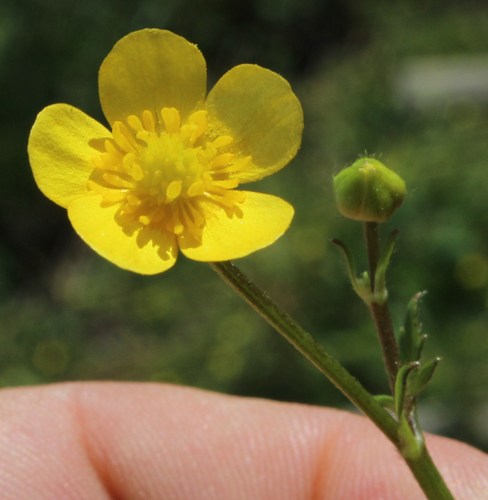
African buttercup
Ranunculus multifidus
A golden jewel of the African wetlands, the African buttercup brightens damp landscapes with its glossy yellow blooms and intricately divided leaves.
Quick Identification
Size
Grows 30–100 cm (12–40 inches) in height; flowers are 15–20 mm in diameter.
Colors
Brilliant glossy yellow petals with a waxy sheen; bright green to deep green deeply lobed foliage.
Key Features
- Five-petaled yellow flowers with a distinctive glossy luster
- Deeply divided, hairy leaves that appear multi-segmented
- Preference for muddy or waterlogged soil
- Erect, branched stems that can form dense clusters
When You’ll See Them
Geographic range
Where Does the African buttercup Live?
The African buttercup is widely distributed across the African continent, occurring natively throughout Sub-Saharan Africa from South Africa and Lesotho northwards to Ethiopia and Eritrea. It is also found across the Mozambique Channel in Madagascar and extends its range into the southern Arabian Peninsula, specifically in Yemen and Saudi Arabia. It is most frequently encountered in high-rainfall regions or near permanent water bodies within these territories.
Basemap © OpenStreetMap contributors
Behavior
The African buttercup is a resilient perennial herb that follows a seasonal growth cycle tied closely to water availability. During the rainy season, it emerges with vigor, producing bright yellow blooms that exhibit heliotropic behavior, turning their heads to follow the sun across the sky. This ensures maximum warmth for the reproductive organs of the flower and makes them highly visible to flying insects.
While it is a stationary plant, it interacts dynamically with its environment. It serves as a vital early-season nectar source for a variety of pollinators. In suburban or agricultural settings, it can be quite aggressive, colonizing damp ditches and pond edges. It is also known for its chemical defense; like many members of the Ranunculaceae family, it produces a bitter, irritating sap that discourages grazing by livestock and herbivores.
EverydayEarth exclusive
Camera Tips
Capturing the African buttercup with an AI-powered camera requires a focus on lighting and micro-activity. Because the petals are incredibly reflective and waxy, they can appear as 'white spots' in direct, harsh midday sunlight. For the best color saturation, position your camera to face the blooms during the golden hours of early morning or late afternoon when the yellow tones truly pop. Set your camera at a low 'worm's eye' perspective, approximately 10 to 15 inches from the ground, to capture the height of the stalks and the detail of the lobed leaves.
Since these flowers are stationary, they serve as the perfect 'stage' for capturing insect wildlife. Use your camera's macro or close-focus settings and trigger the AI to look for movement around the flower heads. You will likely record a steady stream of hoverflies, honeybees, and small beetles. If your camera allows for time-lapse, set it to trigger every 10 minutes from dawn to dusk; this will beautifully illustrate the 'nyctinasty' of the plant, where the flowers open to greet the sun and close as light levels drop.
Placement is key—look for 'vlei' areas or the dampest part of your yard where the soil stays dark and moist. If you are using a trail camera, ensure it is mounted on a very stable stake or a heavy stone. African buttercups often grow in soft, muddy ground, and a standard tripod might sink or tilt during a rainstorm, ruining your framing. If you want to attract more 'activity' to the plant for your camera to record, ensure the area remains well-watered, as the flowers will wilt and stop attracting pollinators if the soil dries out completely.
Similar Species
Species that look similar or are commonly confused with African buttercup.
Frequently Asked Questions
Record African buttercup at your habitat
Connect a camera to start building your own species record — AI identifies every visitor automatically.