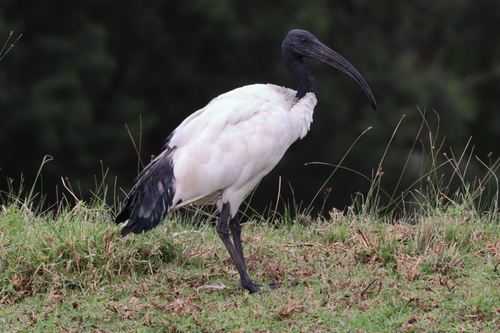
African Sacred Ibis
Threskiornis aethiopicus
Symbol of the ancient Egyptian god Thoth, this striking bird is a master of adaptation, thriving in both wild wetlands and busy suburban parks. Its stark white feathers and iconic curved bill make it one of the most recognizable figures in the avian world.
Quick Identification
Size
Length: 65–89 cm (25–35 in); Wingspan: 112–124 cm (44–49 in); Weight: 1.5 kg (3.3 lbs)
Colors
Primary white plumage with a black featherless head and neck. The tail features prominent black lacy plumes, and the wings have black tips visible during flight.
Key Features
- Long, thick, down-curved black bill
- Bald black head and neck
- Puffy black plumes on the rump
- Large white body with black wing borders
When You’ll See Them
Sightings on EverydayEarth
Jul 30, 2026
A Black-headed Heron and an African Sacred Ibis are perched on a large rock in the middle of a river. In the surrounding water, several hippopotamuses are submerged, with one individual in the background performing a wide yawn, displaying its large tusks and mouth.
Geographic range
Where Does the African Sacred Ibis Live?
Native to the vast majority of sub-Saharan Africa, the African Sacred Ibis is a widespread and common sight across the continent. While it was once a staple of the Nile Delta in Egypt, it is now considered extirpated there, though small populations still exist in parts of Iraq, Iran, and Kuwait. In recent decades, the species has also established self-sustaining introduced populations in several European countries, including France, Italy, and Spain.
Basemap © OpenStreetMap contributors
Behavior
The African Sacred Ibis is a highly social bird, known for its gregarious nature and tendency to gather in large flocks for both foraging and nesting. They are colonial breeders, often sharing nesting sites with other waterbirds like herons, egrets, and spoonbills. While they are traditionally associated with tranquil wetlands, they have proven to be remarkably adaptable, frequently colonizing urban environments where they scavenge for food in parks and even landfills.
These birds are mostly silent away from their breeding colonies, where they may emit harsh croaks or grunts. They are incredibly opportunistic feeders, using their long, sensitive bills to probe deep into mud or soil for prey. In flight, they are a majestic sight, flying in disciplined V-formations or long lines with their necks and legs fully extended, alternating between steady wingbeats and short glides.
EverydayEarth exclusive
Camera Tips
When setting up an AI camera to capture the African Sacred Ibis, focus on low-lying wet areas or open lawns. Because these birds are quite tall, the ideal camera height is between 2 and 3 feet (60-90 cm) off the ground. If you are monitoring a backyard, aim the camera at areas where the grass stays damp or where you have recently turned over soil, as the birds are naturally drawn to these spots to probe for worms and grubs.
These birds are bold and relatively slow-moving when foraging, which makes them excellent subjects for high-quality trail camera photos. To get the best results, use a wide-angle setting if your camera allows it, as they often travel in groups; a narrow field of view might only catch a single bird while missing the social dynamic of the flock. Ensure your camera is positioned to avoid direct midday sun, as their bright white plumage can easily "blow out" or overexpose in harsh lighting, making it difficult for AI to identify specific features.
The early morning and late afternoon are the golden hours for Ibis activity. They are diurnal and return to communal roosts at night, so night-vision captures are rare unless your camera is near a nesting colony. In suburban areas, they are often attracted to standing water; if you have a shallow pond or even a large birdbath on the ground, placing the camera nearby will significantly increase your chances of a clear, close-up shot of their unique probing feeding behavior.
Similar Species
Species that look similar or are commonly confused with African Sacred Ibis.
Frequently Asked Questions
Record African Sacred Ibis at your habitat
Connect a camera to start building your own species record — AI identifies every visitor automatically.