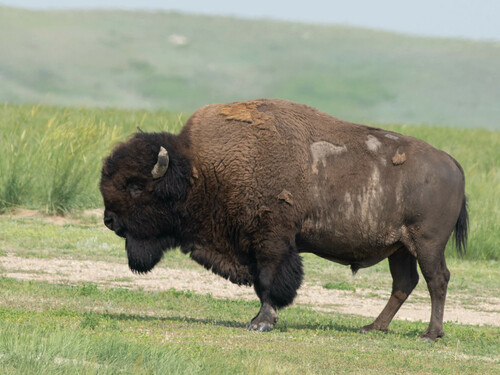
American Bison
Bison bison
The American Bison is an enduring icon of the Great Plains, a prehistoric giant that once roamed North America in the tens of millions. As the continent's largest land mammal, these powerful grazers are a masterclass in resilience and wild majesty.
Quick Identification
Size
Length: 2–3.5 m (6.6–11.5 ft); Shoulder height: 1.5–2 m (5–6.5 ft); Weight: 318–1,000 kg (700–2,200 lbs)
Colors
Dark brown to black shaggy coat on the front quarters, transitioning to shorter, lighter brown fur on the rear; calves are born a reddish-orange 'red dog' color.
Key Features
- Massive humped shoulders
- Large head with short, upward-curving black horns
- Dense, shaggy beard and cape of fur
- Short tail with a tufted end
When You’ll See Them
Sightings on EverydayEarth
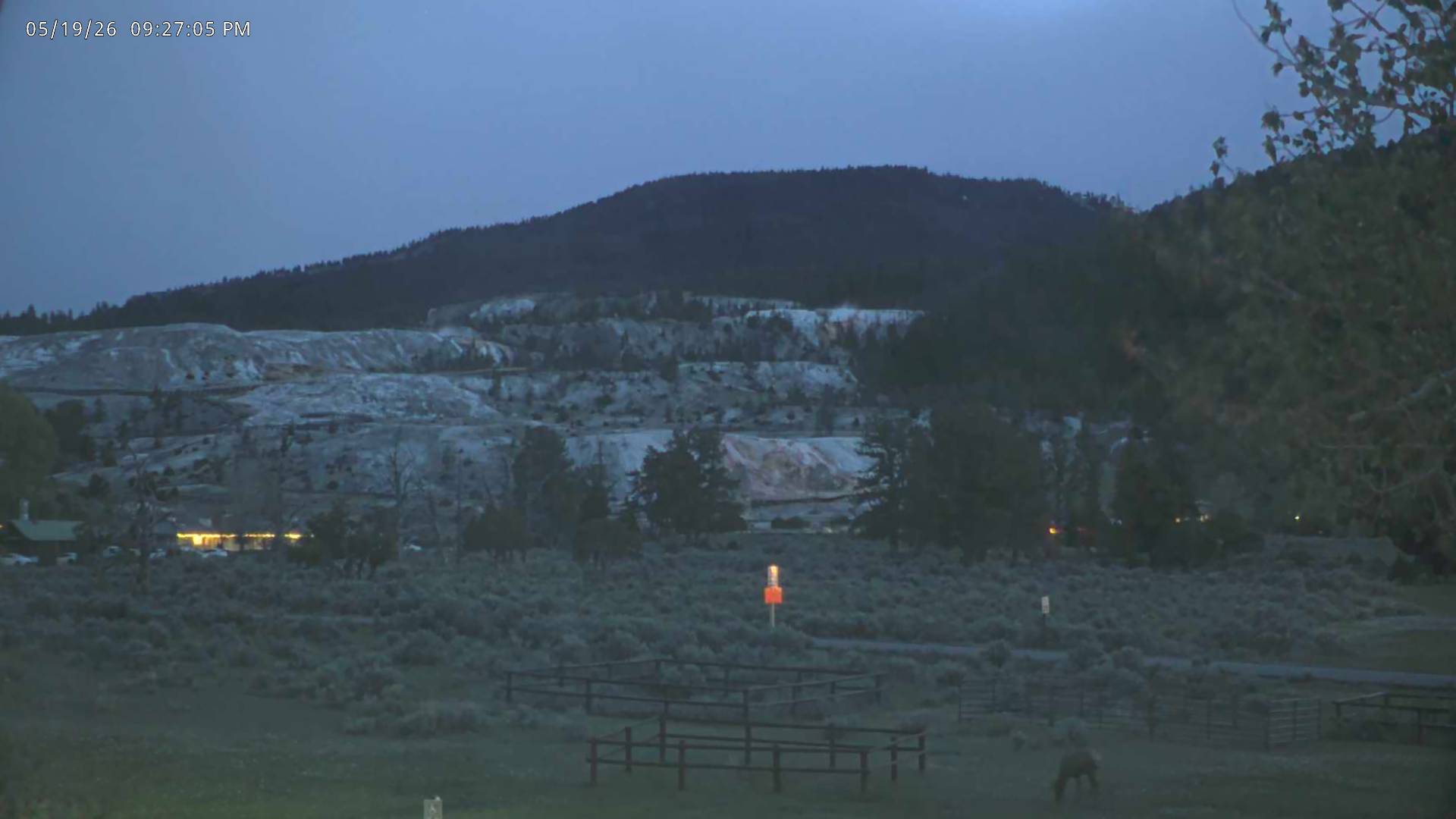
May 19, 2026
A single American Bison is seen grazing in the grassy parade grounds in the lower-right foreground. The animal is stationary or moving slowly as it feeds during the late evening hours.
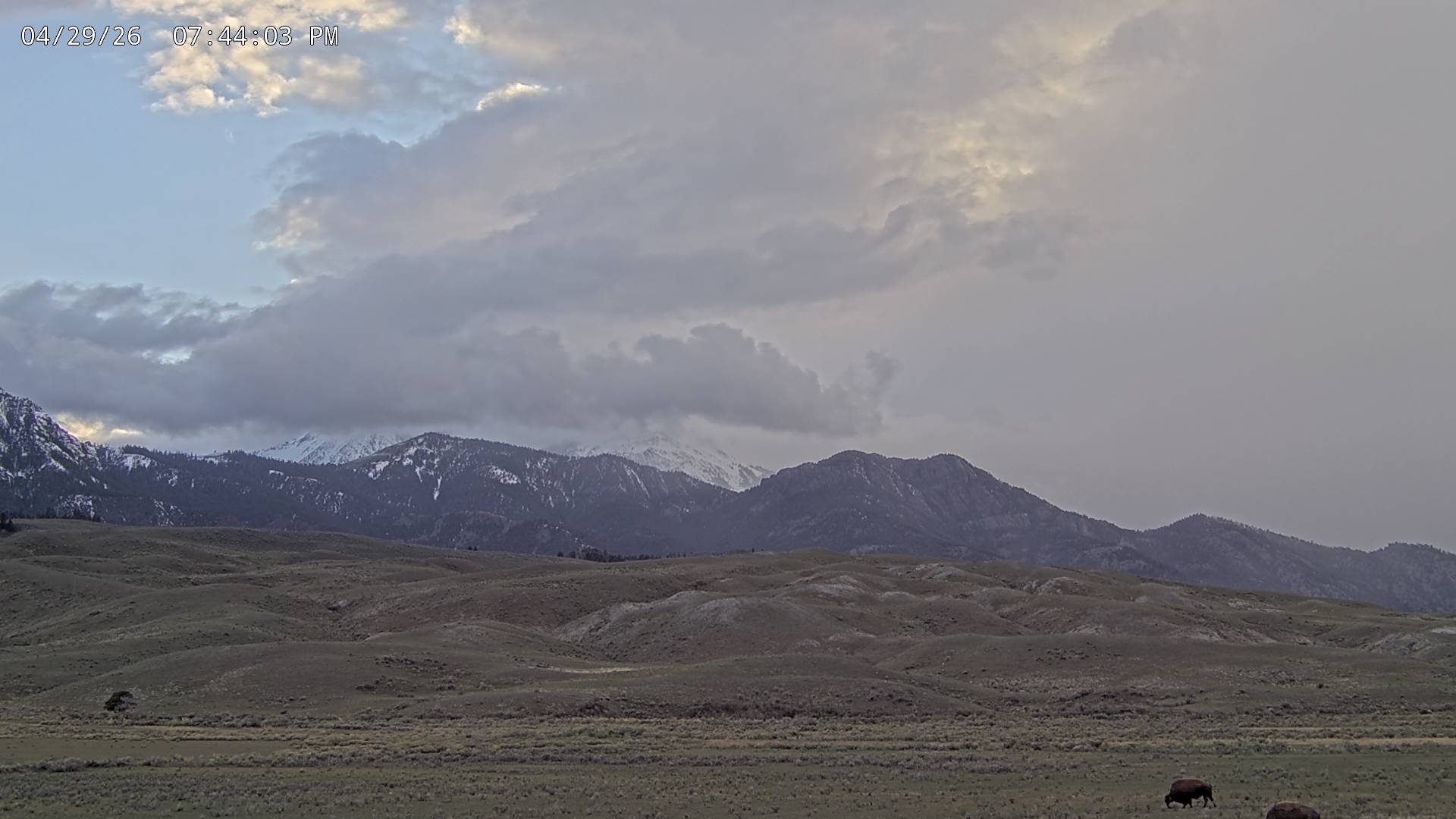
Apr 29, 2026
Two American Bison are grazing in the open grasslands as evening sets in. One is clearly visible in the lower right, head lowered to feed, while another is partially visible nearby.
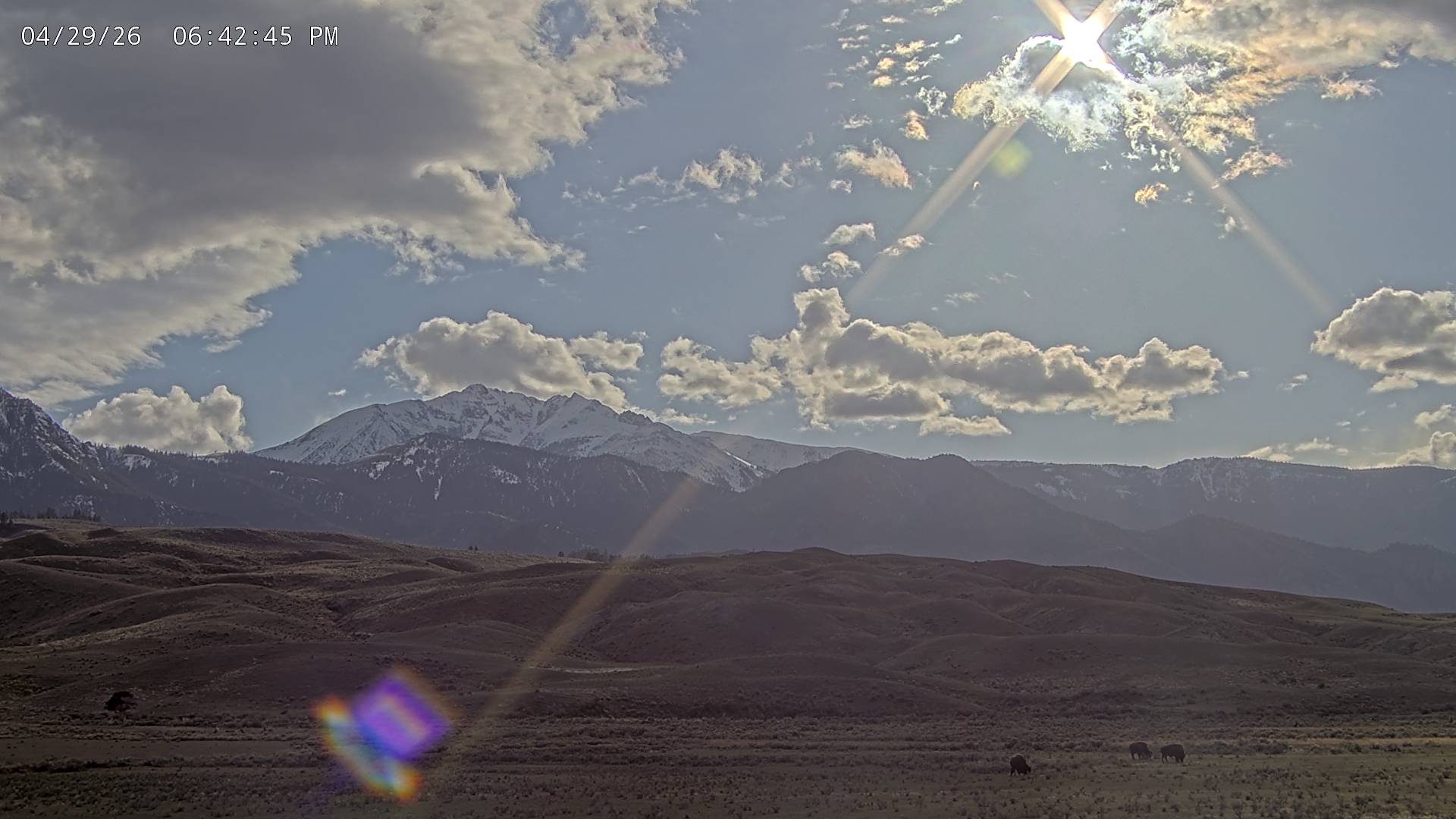
Apr 29, 2026
Three American Bison are grazing on the wide, grassy plain in the lower right of the frame. The animals are seen as dark silhouettes against the sunlit landscape.
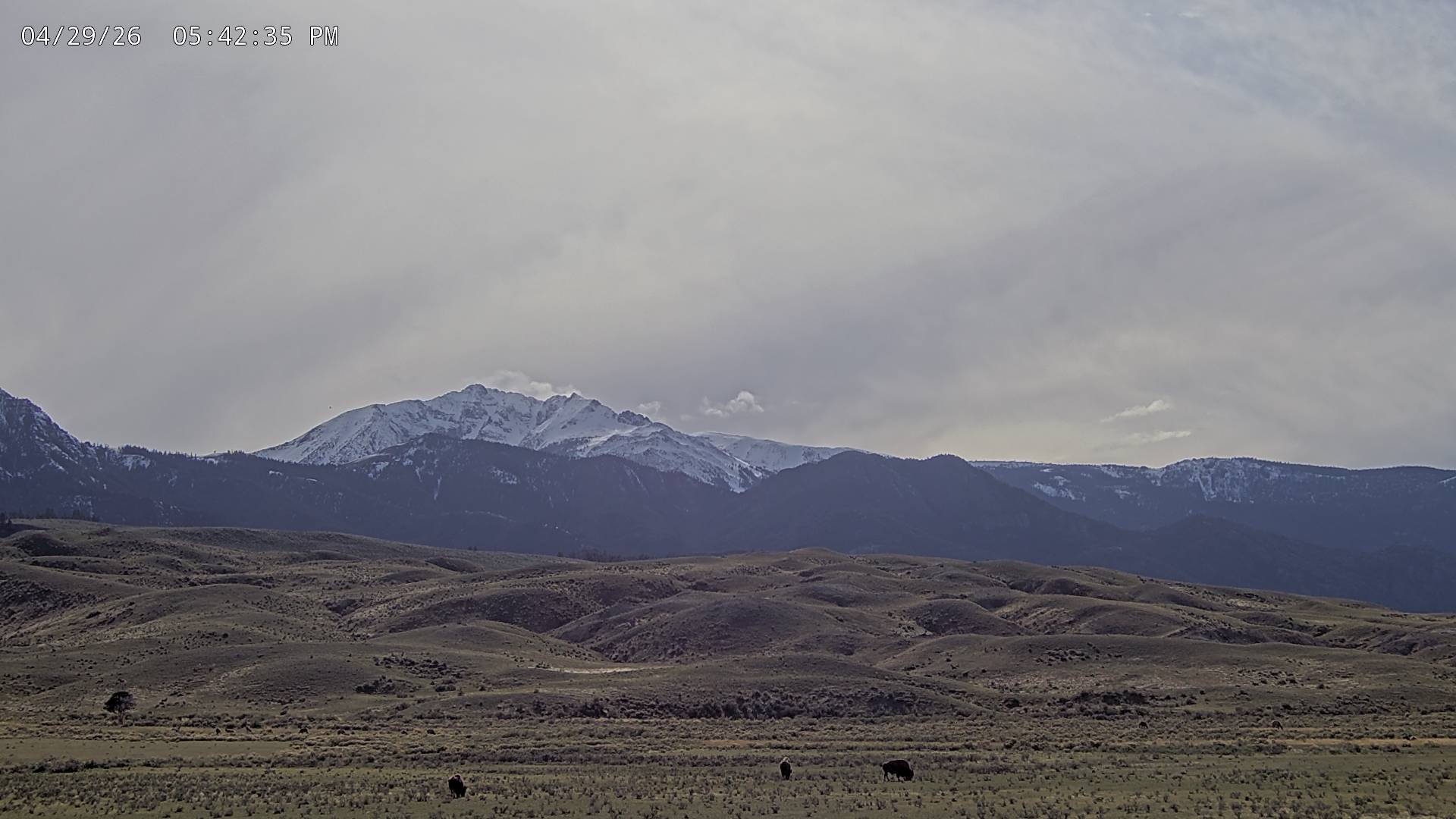
Apr 29, 2026
Several American Bison are spread out across the foreground of the valley, peacefully grazing on the low vegetation. The mountain range in the background, including Electric Peak, is covered in snow under a thick layer of grey clouds.
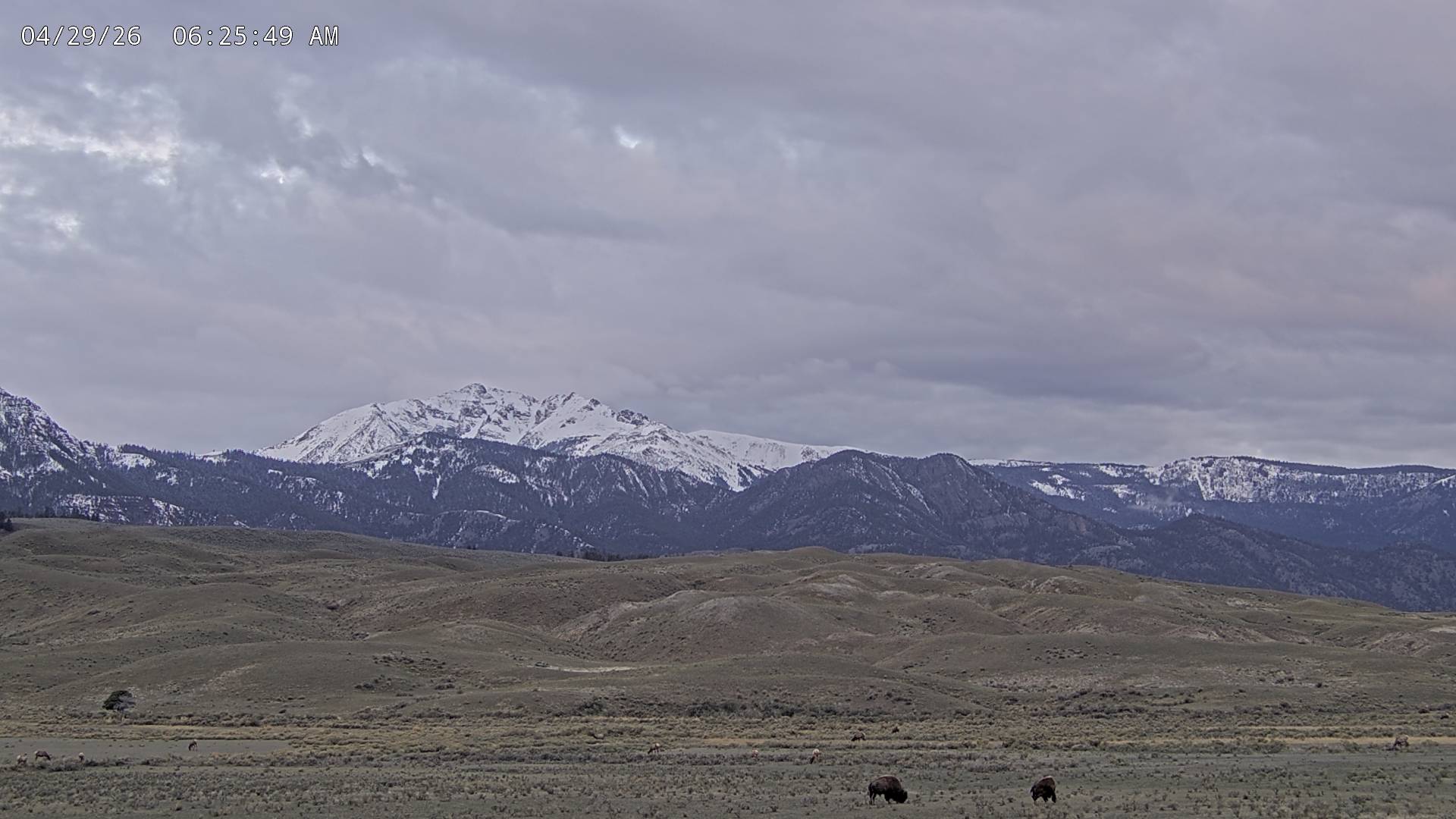
Apr 29, 2026
Two American bison graze in the foreground of an expansive mountain valley. The early morning light reveals a quiet scene with several other distant animals scattered across the sagebrush landscape. High peaks in the background are still heavily covered in snow.
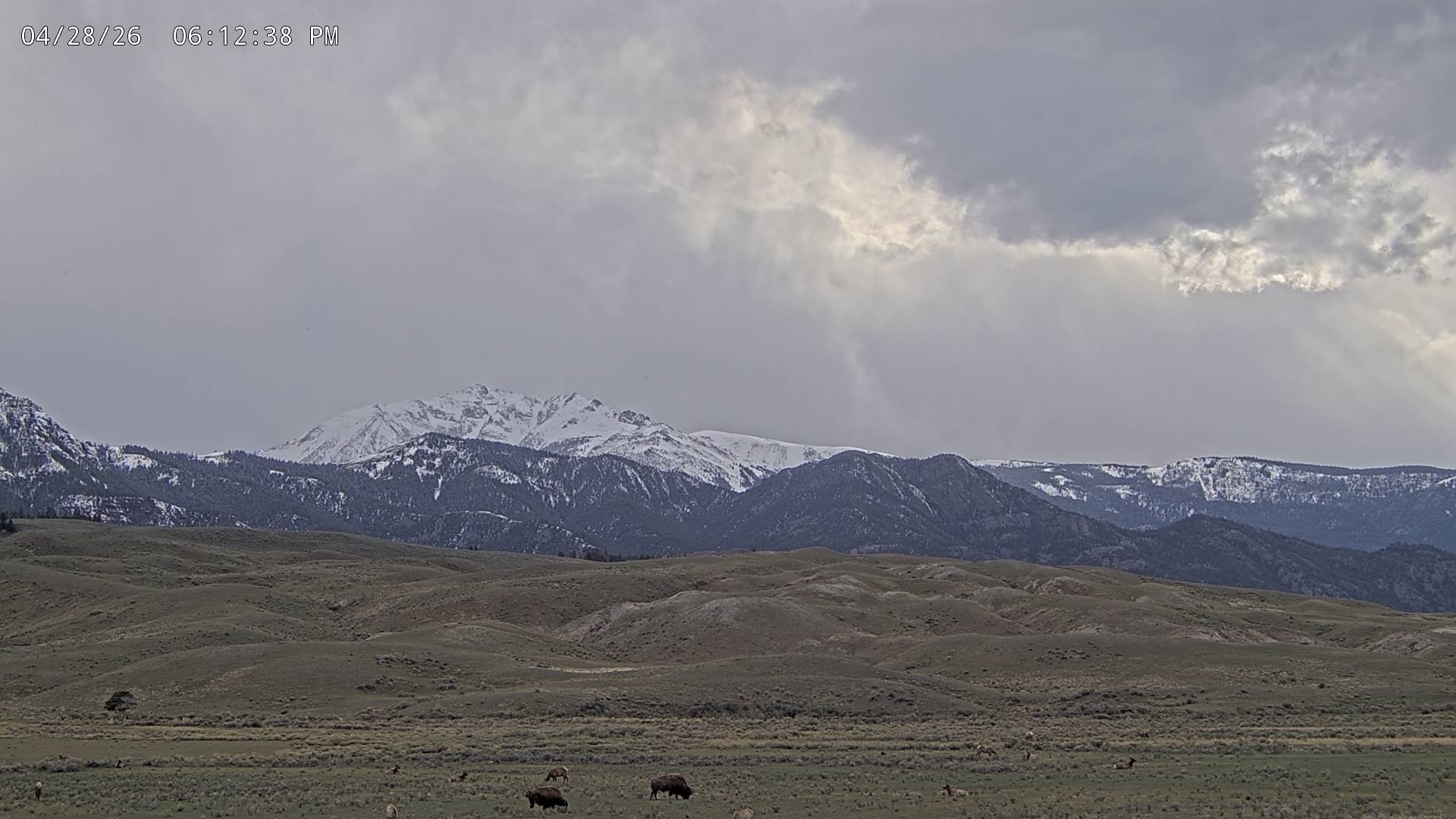
Apr 28, 2026
A small group of American Bison is seen grazing across a vast, open valley. In the background, dramatic rays of sunlight break through a heavy cloud layer to illuminate the snow-dusted mountain peaks.
Geographic range
Where Does the American Bison Live?
Native to the North American continent, the American Bison primarily inhabits the Great Plains and the Rocky Mountain regions of the United States and Canada. While they once spanned from Alaska to Mexico and as far east as the Atlantic coast, their modern range is largely restricted to managed national parks, wildlife refuges, and private ranches. Reintroduction efforts have also established small, wild-roaming populations in parts of northern Mexico.
Basemap © OpenStreetMap contributors
Behavior
American Bison are highly social ungulates that live in herds structured by sex and age. Outside of the mid-summer mating season, or 'rut,' bulls and cows typically live in separate groups. They are remarkably agile for their size, capable of clearing six-foot fences and swimming across wide rivers. Much of their day is spent grazing, punctuated by periods of rest where they chew their cud, similar to domestic cattle.
Interactions with humans should be approached with extreme caution. While they may appear slow or docile, bison are unpredictable and can charge at speeds of up to 35 miles per hour. One of their most distinctive behaviors is 'wallowing'—rolling in dry depressions in the earth to create a dust bath, which helps them shed their winter coat and provides relief from biting insects.
EverydayEarth exclusive
Camera Tips
Capturing the majesty of bison requires a focus on trail selection and equipment durability. Look for established game trails that show heavy hoof traffic or 'wallows'—the distinctive circular dirt pits where they bathe. These wallows are high-activity hubs that guarantee great footage. Because bison are massive and naturally curious, they may use a camera mounting post as a scratching post; use heavy-duty security boxes and mount the camera to a thick, sturdy tree or a reinforced steel post to prevent your gear from being crushed or knocked out of alignment.
For the best framing, mount your camera higher than you would for deer, ideally between 4 and 5 feet off the ground. Angle the lens slightly downward to capture the full scale of the animal rather than just its midsection. Bison are herd animals, so using a wide-angle lens is beneficial to capture the social dynamics of the group rather than a single individual. If your camera allows for it, set a longer video trigger to record their complex vocalizations and social interactions, which are much more frequent than most people realize.
Lighting can be a challenge due to their dark, light-absorbing fur. In bright sunlight, bison often appear as dark silhouettes, while at night, their fur can disappear into the shadows. Use a camera with high dynamic range and set the trigger to 'high' sensitivity to catch them as they move. During the winter, the contrast of their dark coats against white snow is visually stunning, so keep your cameras active year-round. Just be sure to check the battery life frequently, as cold weather and the bison's frequent movement can drain power quickly.
Similar Species
Species that look similar or are commonly confused with American Bison.
Frequently Asked Questions
Record American Bison at your habitat
Connect a camera to start building your own species record — AI identifies every visitor automatically.