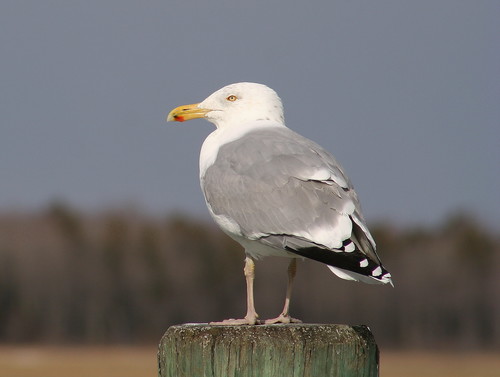
American Herring Gull
Larus smithsonianus
Often called the quintessential 'sea gull,' the American Herring Gull is a master of the North American coastlines and inland waterways. With its striking pink legs and intelligent, piercing gaze, this adaptable bird is as much at home in a bustling harbor as it is on a remote Arctic beach.
Quick Identification
Size
Length 55–66 cm (22–26 in); wingspan 130–146 cm (51–57 in); weight 600–1,650 g (1.3–3.6 lbs)
Colors
Adults have pale gray upperparts, white heads and underparts, and black wingtips with white spots. They are distinguished by pink legs and a yellow bill with a red spot.
Key Features
- Bright yellow bill with a prominent red spot on the lower mandible
- Bubblegum-pink legs and feet
- Pale gray mantle (back) with black-and-white 'windows' on wingtips
- Large, powerful build with a fierce, pale-eyed expression
When You’ll See Them
Sightings on EverydayEarth
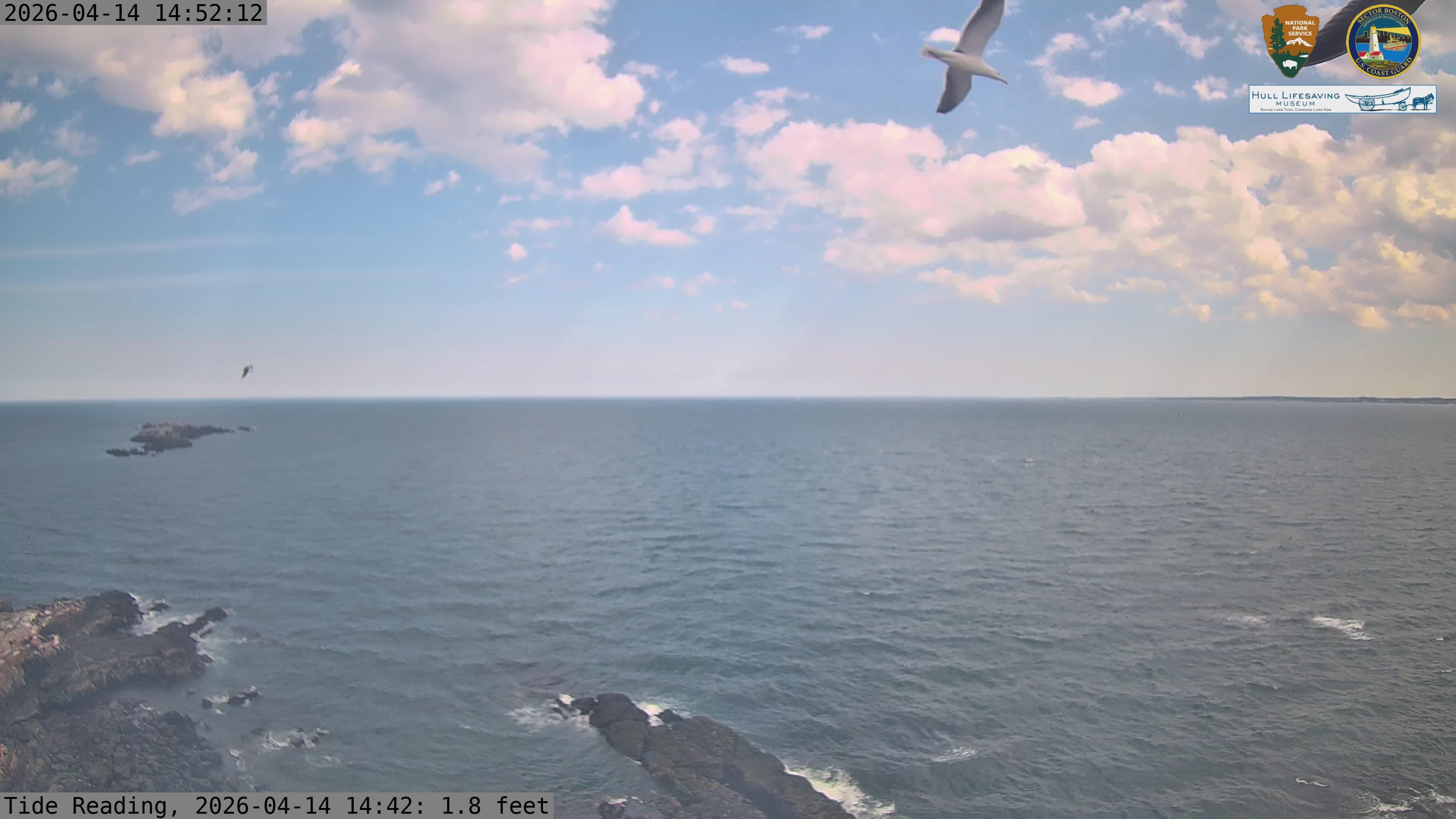
Apr 14, 2026
A Herring Gull glides through the upper-right portion of the frame against a backdrop of blue sky and scattered clouds. The camera provides a wide view of the rocky coastline and the waters of Massachusetts Bay during a bright afternoon.
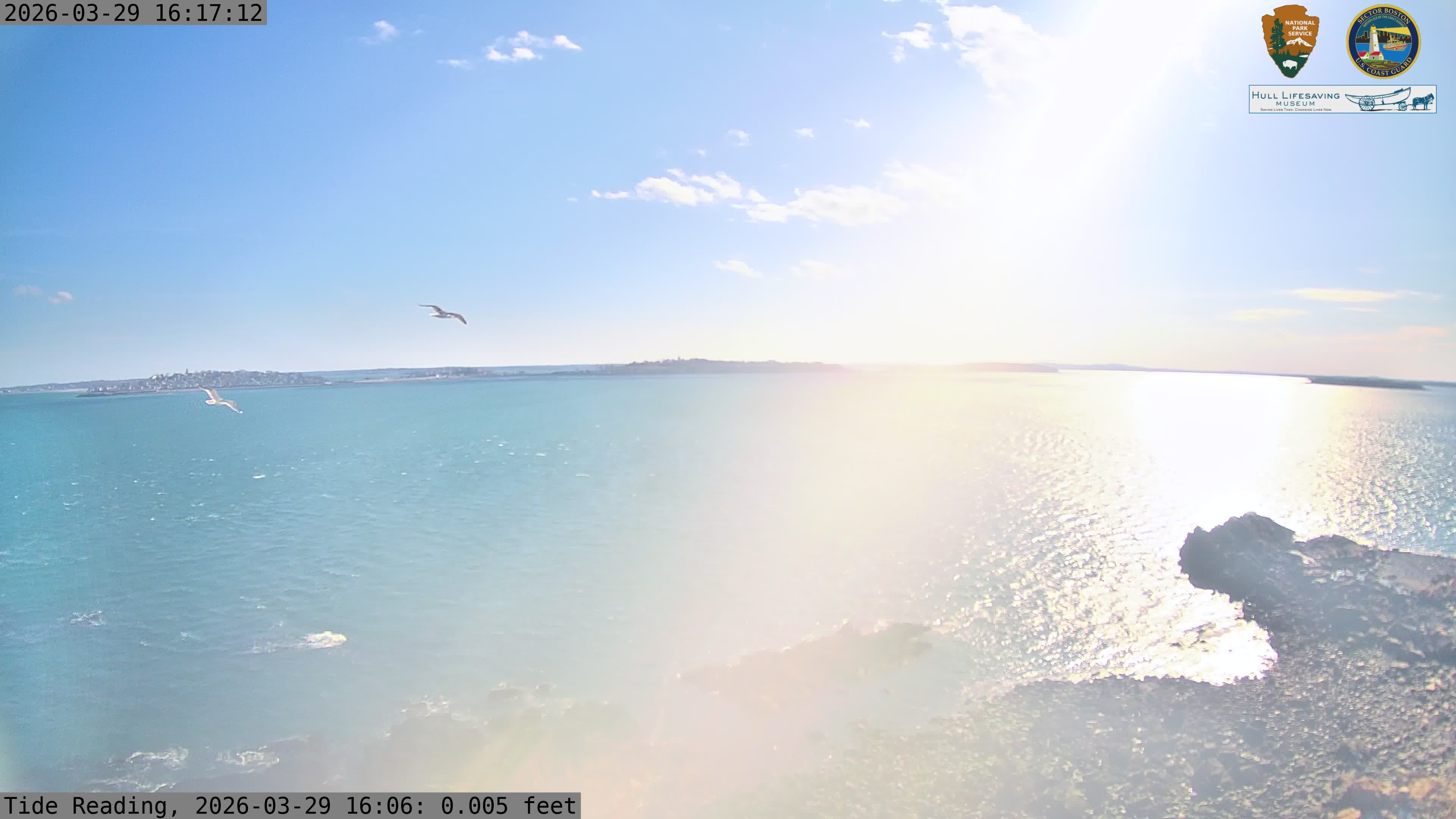
Mar 29, 2026
Two gulls are soaring over the open water of the Nantasket Roads shipping route. One bird is positioned higher in the sky, while the other glides lower toward the horizon on the left side of the frame.
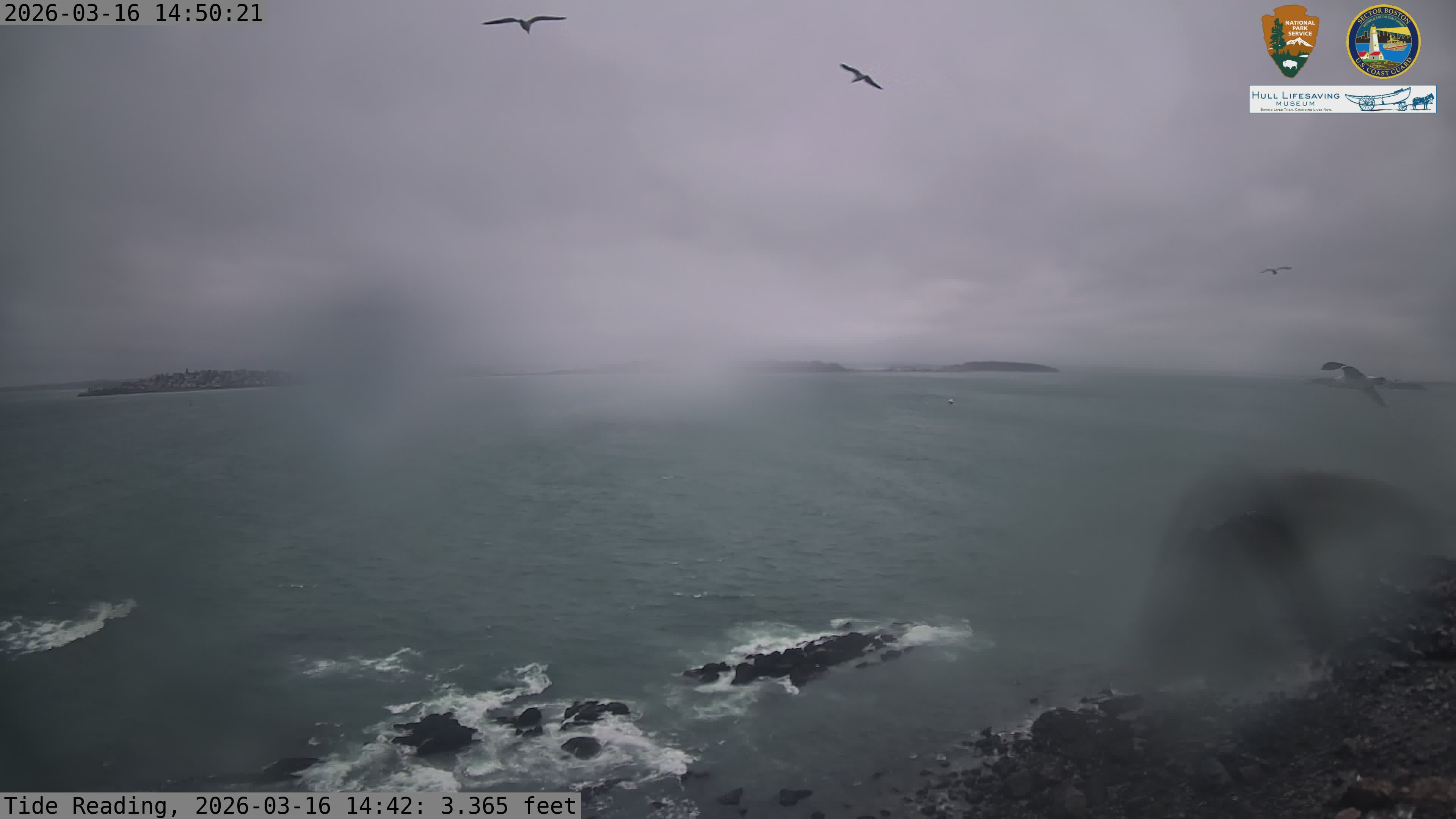
Mar 16, 2026
Several gulls are seen soaring through the air over the Nantasket Roads shipping route. The sea is choppy with whitecaps visible against the rocky shoreline of Little Brewster Island under an overcast, misty sky.
Geographic range
Where Does the American Herring Gull Live?
The American Herring Gull is native to North America, where it maintains an expansive presence across the continent. Its breeding range stretches from the high Arctic of Alaska and northern Canada, reaching across the Great Lakes region and down the Atlantic coast to the mid-Atlantic states. During the winter, populations migrate southward, blanketing the United States and extending their reach into Mexico, Central America, and occasionally as far as the Caribbean, making them one of the most widely distributed large gulls in the Western Hemisphere.
Basemap © OpenStreetMap contributors
Behavior
The American Herring Gull is an exceptionally intelligent and adaptable bird, often serving as the 'sentinel' of the shoreline. They are highly social, nesting in large colonies and communicating through a complex series of raucous calls, including the iconic 'long call' that echoes across coastal harbors. Despite their reputation as simple scavengers, they display remarkable problem-solving skills, such as dropping mollusks onto hard surfaces to crack them open or following fishing boats to capitalize on easy meals.
In suburban environments, these gulls have learned to coexist closely with humans. They are bold and opportunistic, often patrolling parking lots or parks for food scraps. While they can be defensive of their nesting sites, they are generally wary of direct human contact unless they have been habituated through feeding. Their presence is a vital part of the ecosystem, as they act as natural cleaners by consuming carrion and refuse.
EverydayEarth exclusive
Camera Tips
To capture the American Herring Gull on a backyard or trail camera, placement is everything. Since these birds are primarily ground-feeders when away from the water, set your camera at a low angle, roughly 12 to 18 inches off the ground. Aiming the camera across a flat, open area like a driveway, dock, or large lawn will provide the best field of view. Gulls are easily spooked by sudden movements, so a stationary camera with a wide-angle lens is better than trying to follow them manually.
If you live near water or in a suburban area they frequent, you can use high-protein lures to draw them in. While we recommend avoiding processed human food, scraps of raw fish or unsalted suet can act as a powerful attractant. Because they are daytime foragers, ensure your camera's exposure settings are optimized for bright, reflective surfaces—the white plumage of a gull can easily 'blow out' and lose detail in direct midday sun. A slightly underexposed setting can help preserve the texture of their feathers.
These birds are most active during the early morning hours when they begin their daily foraging rounds. Setting your camera to a 'Burst Mode' or high-speed video is essential, as gulls are incredibly fast when they take flight or engage in social squabbles. If you're using an AI-powered camera like EverydayEarth, position it near a high-vantage point like a fence post or a flat roof edge where gulls often perch to survey the area; this can provide stunning eye-level portraits that reveal their striking pale eyes and bill markings.
Similar Species
Species that look similar or are commonly confused with American Herring Gull.
Ring-billed Gull
Smaller with yellow legs and a black ring around the bill, whereas the Herring Gull has pink legs and a red bill spot.
Great Black-backed Gull
Much larger with a much darker, slate-black back compared to the Herring Gull's pale gray mantle.
California Gull
Has darker eyes and a bill that features both a red and a black spot, unlike the Herring Gull's single red spot.
Frequently Asked Questions
Record American Herring Gull at your habitat
Connect a camera to start building your own species record — AI identifies every visitor automatically.