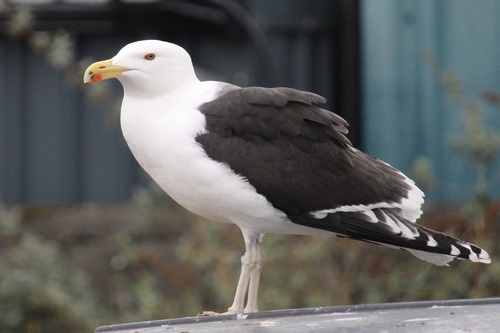
Great Black-backed Gull
Larus marinus
Meet the world's largest gull, a formidable North Atlantic predator with a wingspan that commands respect. Known for its charcoal-black back and piercing gaze, this is the undisputed heavyweight of the coastline.
Quick Identification
Size
Length: 64–79 cm (25–31 in); Wingspan: 1.5–1.7 m (4 ft 11 in – 5 ft 7 in); Weight: 0.75–2.3 kg (1.7–5.1 lb)
Colors
Adults have a slate-black back and wings with white underparts; thick yellow bill with a red spot near the tip; distinct bubblegum-pink legs
Key Features
- Massive size, the largest gull in the world
- Deep charcoal-black mantle and wings
- Heavy, bulbous yellow bill with a red spot
- Pale pink legs and feet
When You’ll See Them
Sightings on EverydayEarth
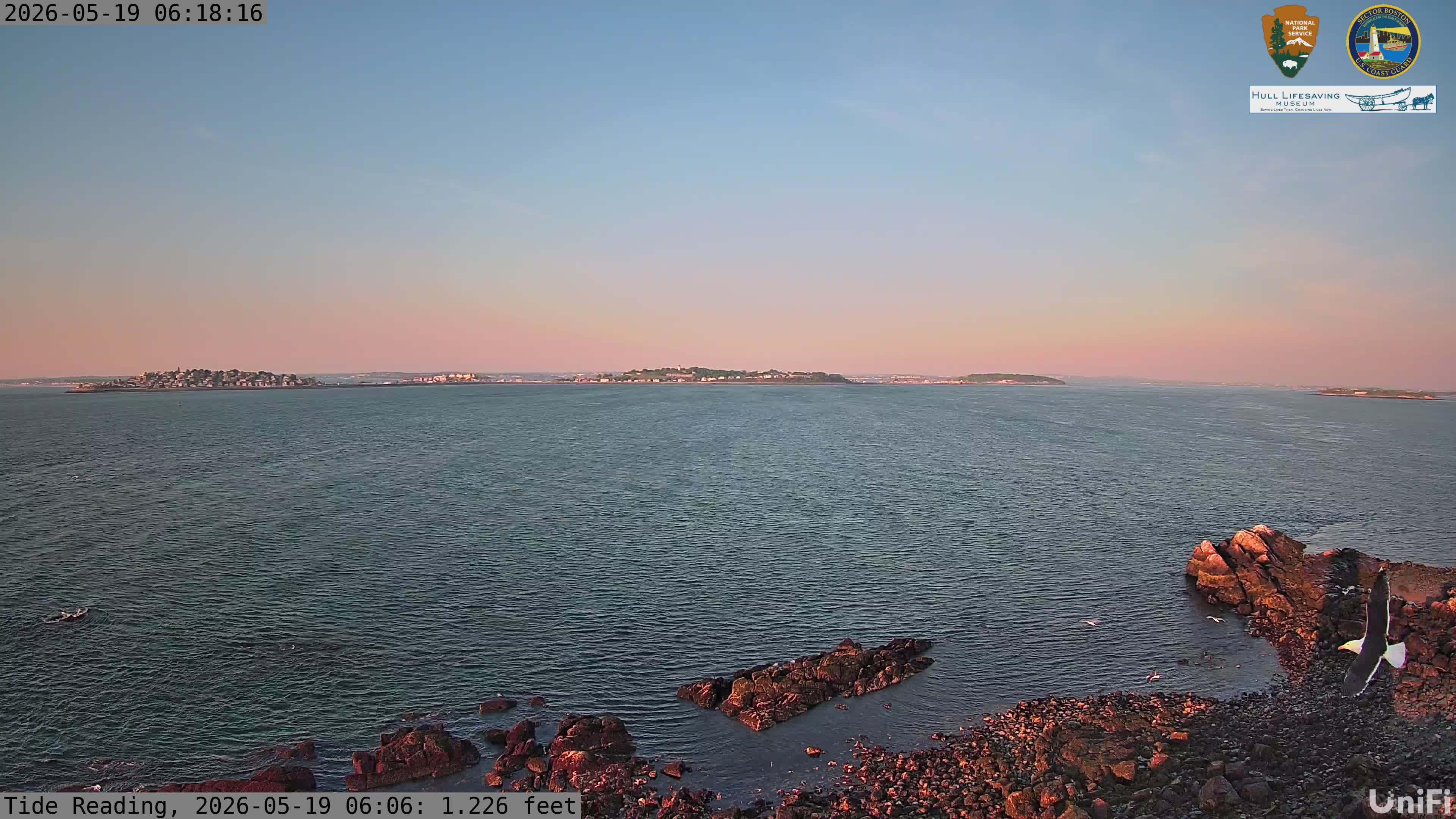
May 19, 2026
An adult Great Black-backed Gull is captured in mid-flight over the rocky shore of Little Brewster Island. The bird is moving toward the left of the frame, showcasing its broad, dark wings. In the distance, the town of Hull and the calm waters of the Nantasket Roads are visible under the soft light of the early morning sun.
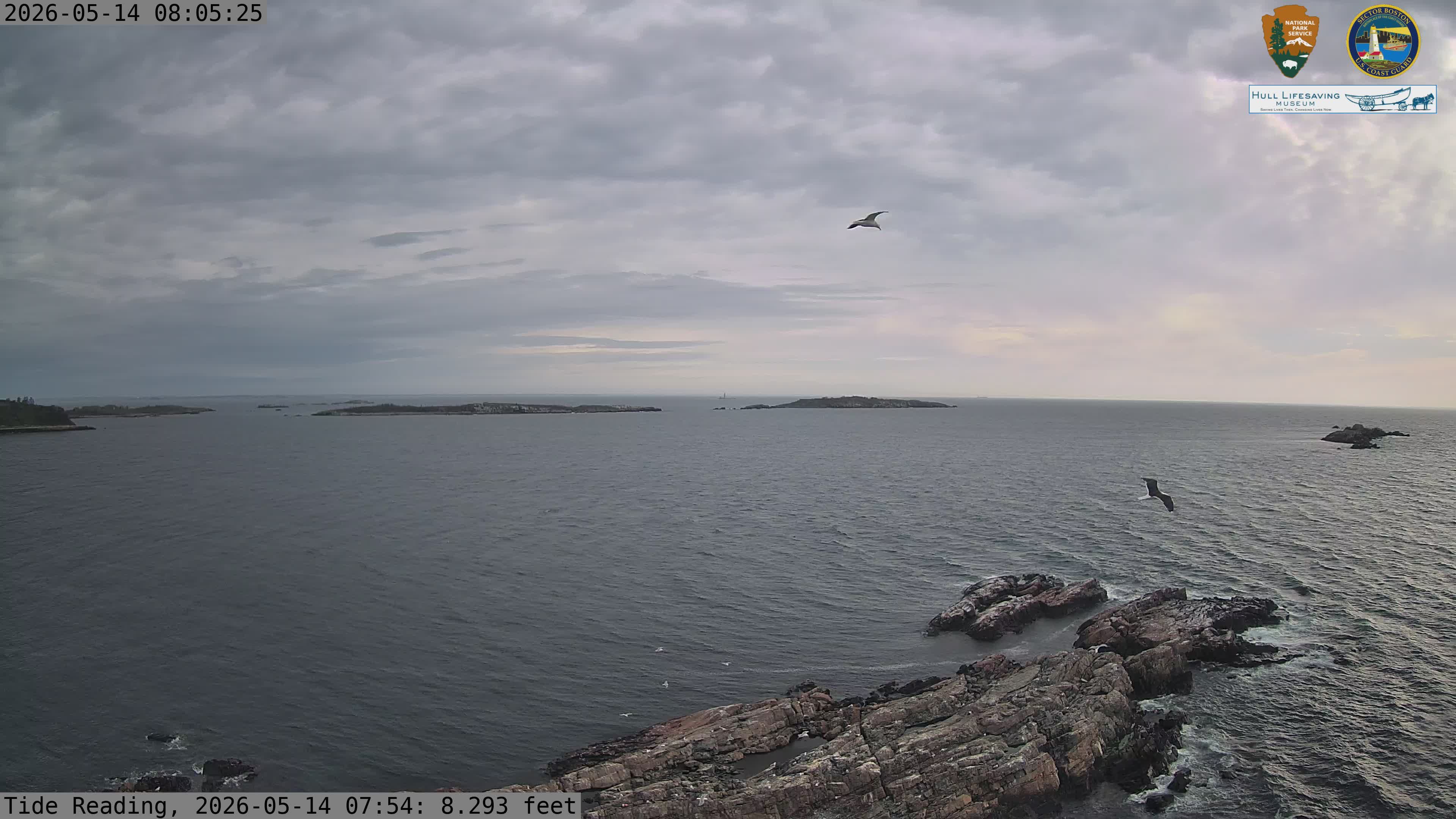
May 14, 2026
Several gulls are active across the coastal scene. One large gull is seen flying low over the water on the right, while another is higher in the sky. Several more birds are perched on the rocky outcropping in the foreground. The water is relatively calm under an overcast morning sky.
Geographic range
Where Does the Great Black-backed Gull Live?
Native to the North Atlantic basin, the Great Black-backed Gull maintains a powerful presence along the northeastern coasts of North America and the shores of northern Europe. In the United States, their core range stretches from the rugged coastlines of Maine down through the Mid-Atlantic, while in Europe, they are common sights from the British Isles to the Scandinavian fjords. While primarily coastal, southern populations are often permanent residents, while northern birds may push further south or move to large inland lakes during the harshest winter months.
Basemap © OpenStreetMap contributors
Behavior
The Great Black-backed Gull is widely regarded as the 'King of the Atlantic Coast,' behaving more like a bird of prey than a typical scavenger. They are highly territorial and dominant, often bullying smaller gulls, crows, and even hawks away from food sources. Unlike many other gulls, they are formidable hunters that will actively kill and eat other seabirds, such as puffins and shearwaters, and are known for their 'kleptoparasitism'—the practice of stealing catches directly from the mouths of other birds.
In social settings, they are often solitary or found in small groups, though they congregate in larger numbers at rich feeding grounds like fishing docks or landfills. Around humans, they are remarkably bold and intelligent, quickly learning to associate specific sounds or locations with food. While they are comfortable in urban coastal environments, they maintain a certain aloofness compared to the more social Herring Gull, often watching from a high vantage point before swooping in to claim a meal.
EverydayEarth exclusive
Camera Tips
To capture the Great Black-backed Gull, placement is everything. If you live near the coast or a large waterway, position your camera on a high, flat vantage point such as a deck railing, a flat rooftop, or a sturdy pier post. These gulls prefer to land on elevated spots where they have a 360-degree view of potential threats and food. Angle your camera slightly upward if placing it on the ground to capture their impressive wingspan as they land.
Using a lure can be very effective, but you must be strategic. Fresh fish scraps or a shallow bowl of water can attract them, but be aware that their size and aggression may drive away other backyard birds. Because they are large birds, set your camera's trigger sensitivity to 'Medium' to avoid missing them, and ensure your focal distance is set for at least 3 to 5 feet to accommodate their massive bodies and prevent blurry 'wing-smears' across the lens.
Daylight is your best friend with this species. Their white feathers can easily 'blow out' or overexpose in bright midday sun, so if your camera allows for exposure adjustment, dial it down slightly. Early morning or late afternoon light will better highlight the deep contrast between their snowy white heads and their charcoal-black backs. During winter, look for them inland near reservoirs; a camera placed near an ice-free patch of water is a guaranteed hotspot.
Similar Species
Species that look similar or are commonly confused with Great Black-backed Gull.
Frequently Asked Questions
Record Great Black-backed Gull at your habitat
Connect a camera to start building your own species record — AI identifies every visitor automatically.