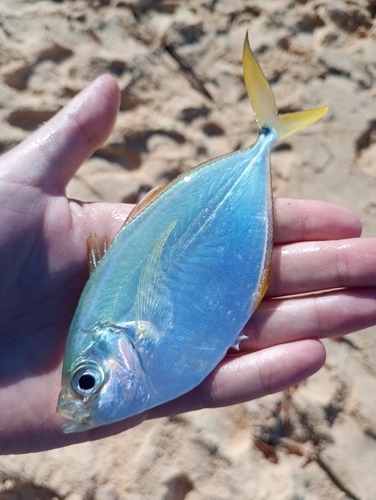
Atlantic Bumper
Chloroscombrus chrysurus
A shimmering specter of the coastline, the Atlantic Bumper moves in dazzling silver schools through estuaries and surf zones. Known for its distinctive 'tail spot' and lightning-fast turns, this energetic jack is a cornerstone of Atlantic coastal ecosystems.
Quick Identification
Size
Typically 15-25 cm (6-10 in) in length, reaching a maximum of 30.5 cm (12 in); weighs between 0.2-0.5 kg (0.4-1.1 lbs).
Colors
Metallic silver to golden-yellow sides with a pale or white belly; features a distinct black saddle-shaped spot on the upper tail base and a small dark spot on the gill cover.
Key Features
- Deep, oval-shaped and highly compressed body
- Distinctive black spot on the caudal peduncle (tail base)
- Highly arched lateral line over the pectoral fin
- Small black spot on the operculum (gill cover)
When You’ll See Them
Geographic range
Where Does the Atlantic Bumper Live?
The Atlantic Bumper is native to the warm waters of the Atlantic Ocean, spanning two continents. In the Western Atlantic, they are found from the coast of Massachusetts in the United States down through the Caribbean and Gulf of Mexico to Uruguay in South America. Across the ocean in the Eastern Atlantic, their range extends from the coast of Mauritania south to Angola, making them a widespread species in tropical and subtropical maritime regions.
Basemap © OpenStreetMap contributors
Behavior
The Atlantic Bumper is a highly gregarious schooling fish that thrives in coastal environments. They are incredibly fast and agile swimmers, often seen darting in unison to evade predators or to ambush smaller prey. These fish are primarily pelagic, meaning they spend most of their time in the open water column rather than on the bottom, though they frequently move into shallow estuaries and lagoons to feed during high tide.
While they are not a primary target for commercial fisheries due to their small size, they are a vital part of the marine food web, serving as a key forage species for larger game fish like snapper and tarpon. To humans, they are often known as 'bait fish,' but they are a delight to observe near docks and piers where their metallic bodies catch the sunlight, creating shimmering flashes beneath the surface.
EverydayEarth exclusive
Camera Tips
Capturing the Atlantic Bumper requires an underwater camera setup, ideally positioned near structural elements like dock pilings, sea walls, or submerged oyster bars where they congregate. Because these fish are extremely fast, use a camera capable of high-frame-rate recording (at least 60 fps) to prevent motion blur and capture the fluid motion of the school.
Lighting is crucial for bringing out their metallic sheen. If you are filming during the day, position the camera so the sun is behind it to illuminate the silvery scales. For nighttime footage, use diffused LED lights; avoid high-intensity direct beams which can cause 'backscatter' from floating plankton and may startle the school. A wider angle lens is preferred to capture the full scope of their schooling behavior.
To attract Atlantic Bumpers to your camera's field of view, consider using a mesh bait bag filled with chopped squid or oily fish like mackerel hung just above the camera's sightline. They are also naturally curious about movement, so shiny reflective lures dangling in the current can sometimes draw them in for a closer look. Ensure your camera is securely mounted, as tidal currents in their preferred estuarine habitats can be quite strong.
Similar Species
Species that look similar or are commonly confused with Atlantic Bumper.
Frequently Asked Questions
Record Atlantic Bumper at your habitat
Connect a camera to start building your own species record — AI identifies every visitor automatically.