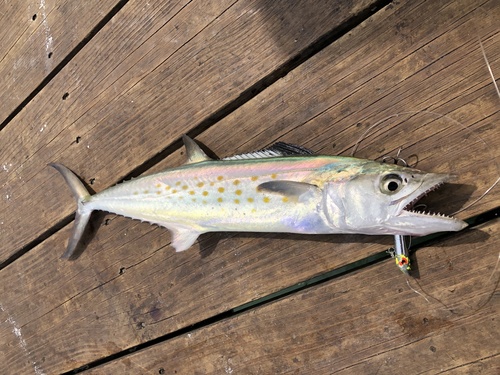
Atlantic Spanish Mackerel
Scomberomorus maculatus
A shimmering predator of the Atlantic surf, the Spanish Mackerel is famous for its golden spots and lightning-fast strikes. These migratory acrobats turn coastal waters into a silver frenzy every spring as they chase baitfish northward.
Quick Identification
Size
Typically 14-18 inches (35-45 cm) and 1-3 lbs (0.5-1.4 kg); maximum length up to 37 inches (94 cm) and weight up to 13 lbs (6 kg).
Colors
Iridescent bluish-green back transitioning to silver sides and white belly; sides feature numerous small, bronze or yellowish-gold oval spots.
Key Features
- Distinctive yellow or golden spots across the silver sides
- Front portion of the first dorsal fin is jet black
- Lateral line slopes gradually from the gill to the tail without a sharp drop
- Slender, torpedo-shaped body with a deeply forked tail
When You’ll See Them
Geographic range
Where Does the Atlantic Spanish Mackerel Live?
Native to the western Atlantic Ocean, the Atlantic Spanish Mackerel is a quintessential coastal traveler of North and Central America. Its range extends from the cooler waters of Cape Cod, Massachusetts, down the entire Eastern Seaboard to the Florida Keys, and throughout the Gulf of Mexico to the Yucatan Peninsula. While they are primarily found along the United States and Mexican coastlines, their migratory nature ensures they are a seasonal staple in temperate and subtropical Atlantic waters, appearing further north only as sea temperatures rise above 70°F.
Basemap © OpenStreetMap contributors
Behavior
These fish are opportunistic hunters, utilizing their keen eyesight and incredible speed to ambush schools of menhaden, anchovies, and shrimp. Because they are migratory, their presence is highly seasonal; they follow the warming water temperatures along the coast, moving north in the spring and returning to the warmer waters of Florida and Mexico as autumn approaches. They are known for being voracious eaters, often continuing to strike at bait even when their stomachs are full.
EverydayEarth exclusive
Camera Tips
Capturing Atlantic Spanish Mackerel on an AI-powered camera requires a sub-surface setup, ideally positioned near coastal structures like pier pilings, rock jetties, or artificial reefs where these fish congregate to hunt. These mackerel are 'sight hunters,' meaning water clarity is your best friend; aim your lens toward the mid-water column rather than the bottom, as these fish typically cruise for prey in the upper layers of the ocean. If your camera is pier-mounted, a vertical drop into the 'green water' just past the breaking surf is often the sweet spot.
To attract these silver speedsters into your camera's field of view, utilize visual attractors. Hanging a silver reflective spoon or a series of shiny flashers about 3 to 5 feet from the lens can mimic a fleeing baitfish and trigger their aggressive predatory strike. If local regulations allow, a slow-release chum bag filled with oily fish like menhaden can create a scent trail that draws the entire school directly in front of your sensor, providing consistent action for the AI to detect.
Because Atlantic Spanish Mackerel move with incredible speed, standard video frame rates often result in a silver blur. Set your camera to record at 60fps or higher to capture the detail of their golden spots and the mechanics of their strike. These fish are most active during the 'golden hours' of dawn and dusk when light levels are changing and baitfish are most vulnerable. Ensure your camera housing is rated for saltwater and rinse it thoroughly with fresh water after every deployment to prevent salt crystals from obscuring the lens.
Similar Species
Species that look similar or are commonly confused with Atlantic Spanish Mackerel.
Frequently Asked Questions
Record Atlantic Spanish Mackerel at your habitat
Connect a camera to start building your own species record — AI identifies every visitor automatically.