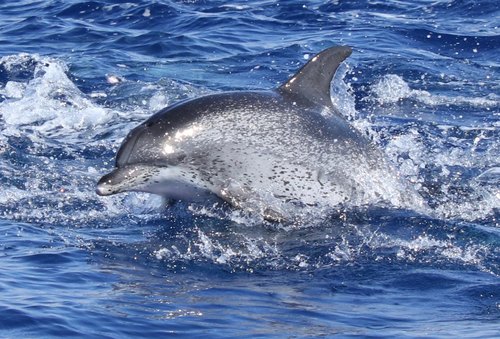
Atlantic Spotted Dolphin
Stenella frontalis
The Atlantic Spotted Dolphin is a master of the surf, famous for its intricate speckled coat and playful personality. These acrobatic mammals turn the warm waters of the Atlantic into a spectacular underwater playground.
Quick Identification
Size
1.6 to 2.3 m (5.2 to 7.5 ft) in length; 90 to 140 kg (200 to 310 lbs)
Colors
Three-toned: dark gray back, lighter gray sides, and a white belly. Older adults are heavily covered in contrasting spots.
Key Features
- Body covered in distinctive spotting that increases with age
- Long, slender rostrum (beak) with white tips in adults
- Tall, curved (falcate) dorsal fin
- Robust but streamlined body shape
When You’ll See Them
Geographic range
Where Does the Atlantic Spotted Dolphin Live?
Native to the Atlantic Ocean, these dolphins are primarily found in the warm, nutrient-rich waters of the Gulf Stream. Their core range spans from the southeastern United States and the Gulf of Mexico through the Caribbean, reaching as far south as the coast of Brazil. They are also frequently sighted across the Atlantic in the Azores and along the western coast of Africa, from Morocco down to Gabon. This species is a specialist of the continental shelf, preferring waters that are between 20 and 200 meters deep.
Basemap © OpenStreetMap contributors
Behavior
Unlike many other dolphin species, Atlantic Spotted Dolphins are remarkably curious about humans. In specific regions like the Bahamas, they are known to initiate long-lasting 'play' sessions with snorkelers and divers, showing little fear. They spend their days socializing and resting in shallower sandy areas, while their nights are often dedicated to deep-water foraging for prey that rises to the surface after dark.
EverydayEarth exclusive
Camera Tips
Capturing the Atlantic Spotted Dolphin requires specialized underwater or surface-level marine gear. If you are setting up a camera near a coastal property or on a boat, use a high-resolution action camera with an underwater housing. For the best clarity, position the camera 2 to 4 meters below the surface in areas with clear, sandy bottoms. These dolphins often use sandy flats to rest and socialize, providing a clean, bright background that makes their spots pop in photographs.
Lighting is your biggest challenge in marine environments. Avoid filming during high noon when the vertical sun creates harsh shadows and surface 'noise.' Instead, aim for the golden hours—shortly after sunrise or before sunset—when the light enters the water at an angle, creating beautiful shafts of light that highlight the dolphin's unique skin patterns. A red filter can also help restore color balance if you are filming deeper than 5 meters.
Because these dolphins are fast and erratic movers, set your camera to a high frame rate (60fps or 120fps) to capture smooth slow-motion footage of their leaps and social interactions. If you are monitoring from a dock or buoy, use a motion-activated trigger that is calibrated for larger movements to avoid being set off by small fish or floating debris. High-contrast settings will help the camera software distinguish the dolphins from the blue-green water more effectively.
Similar Species
Species that look similar or are commonly confused with Atlantic Spotted Dolphin.
Frequently Asked Questions
Record Atlantic Spotted Dolphin at your habitat
Connect a camera to start building your own species record — AI identifies every visitor automatically.