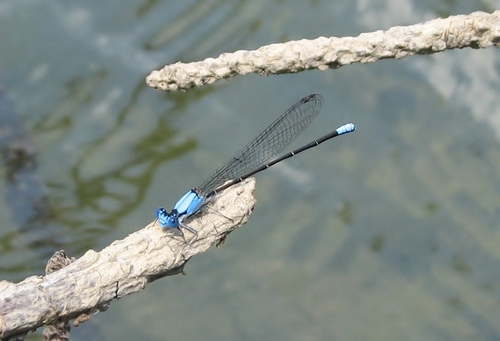
Blue-fronted Dancer
Argia apicalis
A vibrant flash of sky-blue in the summer sun, the Blue-fronted Dancer is a master of aerial acrobatics. Easily recognized by its unique 'dancing' flight and preference for sun-drenched rocks, this damselfly is a favorite for backyard observers.
Quick Identification
Size
33–40 mm (1.3–1.6 in) in length; wingspan of approx. 45–50 mm (1.8–2 in)
Colors
Males have a bright sky-blue thorax and blue tip on the tail (segments 8-10); females are polymorphic, appearing in brown, gray, or blue forms
Key Features
- Brilliant blue thorax and abdomen tip on males
- Rests on flat surfaces like rocks or docks
- Distinctive jerky, 'dancing' flight pattern
- Abdomen is mostly dark/black between the blue thorax and tip
When You’ll See Them
Geographic range
Where Does the Blue-fronted Dancer Live?
Native to North America, the Blue-fronted Dancer is a widespread inhabitant of the eastern and central United States. Its territory extends from the Atlantic coast westward to the Great Plains, reaching as far north as southern Ontario in Canada and stretching south into northeastern Mexico. It is one of the most common damselflies in human-altered environments, frequently appearing in suburban backyards and urban parks with permanent water features.
Basemap © OpenStreetMap contributors
Behavior
These insects are highly territorial and remarkably bold. Males will frequently return to the same basking spot even after being disturbed, making them excellent subjects for observation. They are skilled aerial predators, using their spines-covered legs to form a 'basket' that snatches small flying insects out of the air. While they are active throughout the day, they are most energetic during the hottest hours when other insects might seek shade.
EverydayEarth exclusive
Camera Tips
Since damselflies are small, the primary challenge for AI-powered cameras is triggering the motion sensor. If your camera allows for sensitivity adjustments, set it to the highest level. If you are using a DSLR-based trail cam setup, a focal length of 90mm to 100mm with a macro lens is ideal. Because these insects are most active in direct, harsh sunlight, use a fast shutter speed (at least 1/1000s) to freeze their rapid wing movements and prevent motion blur.
Timing is everything with this species. They are heat-seekers, so you'll get your best footage on hot, humid afternoons between June and August. If you have a backyard pond, try to position the camera so the water is in the background; the bokeh effect will make the brilliant blue of the male's thorax pop. Avoid placing the camera where tall grass will blow in the wind, as this will cause false triggers and bury your dancer footage under hundreds of empty clips.
Similar Species
Species that look similar or are commonly confused with Blue-fronted Dancer.
Powdered Dancer
Larger and covered in a grey-white waxy 'powder' (pruinosity) as adults, lacking the bright sky-blue thorax.
Blue-ringed Dancer
Males have more black on the thorax and distinct blue rings down the length of the abdomen.
Azure Bluet
Smaller and rests with wings tightly closed; prefers perching on vertical grass stems rather than flat rocks.
Frequently Asked Questions
Record Blue-fronted Dancer at your habitat
Connect a camera to start building your own species record — AI identifies every visitor automatically.