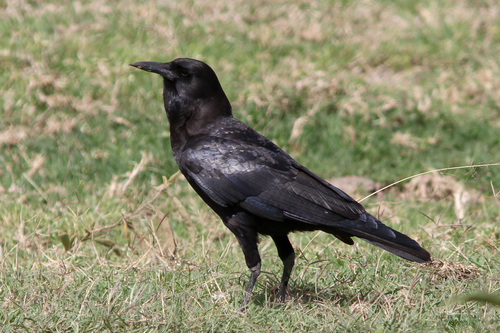
Cape Crow
Corvus capensis
Meet the 'Gentleman of Crows'—a sleek, glossy-black explorer with a specialized bill and a surprisingly musical voice. A frequent visitor to African gardens, the Cape Crow is a master of the soil and a delight to observe on camera.
Quick Identification
Size
Length of 48–50 cm (19–20 inches); wingspan approx. 100 cm (39 inches); weight 400–700g (0.9–1.5 lbs)
Colors
Entirely black plumage with a distinct purple and coppery-purple gloss; black legs and bill. Sexes are identical.
Key Features
- Slender, slightly curved bill adapted for probing
- Shimmering purple-blue gloss on body feathers
- Long, prominent throat hackles visible when calling
- Proportionately long legs and tail compared to other crows
When You’ll See Them
Geographic range
Where Does the Cape Crow Live?
Native to the African continent, the Cape Crow is found in two distinct geographic populations. The southern population is widespread across South Africa, Namibia, Botswana, and Zimbabwe, while a separate northern population inhabits the highlands of East Africa, particularly in Ethiopia, Eritrea, Kenya, and Somalia. They are a resident species that thrives in open landscapes from sea level up to high-altitude alpine grasslands.
Basemap © OpenStreetMap contributors
Behavior
The Cape Crow is a highly intelligent and social corvid, typically encountered in pairs or small family groups. Unlike many of its urban-dwelling cousins, this species is somewhat more specialized in its foraging, often spending hours 'plowing' through soft soil with its long bill to find larvae and beetles. They are known for their remarkable vocal range, which includes liquid, bubbling sounds and various rattles that differ significantly from the harsh 'caw' of other crows.
While naturally wary of humans, Cape Crows are opportunistic and have adapted well to suburban environments where they can find easy meals. They are known to be quite playful and exhibit complex social behaviors, such as mutual preening and cooperative territory defense. In the garden, they are methodical explorers, often the first to notice changes in their environment or the arrival of a new food source.
EverydayEarth exclusive
Camera Tips
To successfully capture a Cape Crow on your backyard camera, placement is everything. These birds are terrestrial foragers, so position your camera 30-50 cm off the ground, angled slightly downward toward a patch of open soil or short grass. They are most active during the first few hours after sunrise when they begin their morning 'patrol' for insects. If you have a birdbath, this is a prime location; Cape Crows are meticulous bathers and will often return to the same water source daily.
Because of their deep black plumage, they can be difficult for AI sensors to expose correctly. If your camera allows for exposure compensation, increase it slightly (+0.5 or +1.0) to ensure you capture the beautiful iridescent purple gloss on their feathers rather than just a black silhouette. Using a fast trigger speed is vital, as their head-flicking and probing motions are rapid. If you are using video mode, look for the 'throat puff'—a behavior where they expand their long throat feathers while calling.
To attract them specifically, offer a high-protein lure rather than standard birdseed. A shallow dish of mealworms, suet pellets, or even unsalted peanuts will draw them in quickly. However, be patient; as intelligent birds, they may spend several days observing a new camera or feeding station from a nearby tree or roof before they feel comfortable enough to land in front of the lens.
Similar Species
Species that look similar or are commonly confused with Cape Crow.
Pied Crow
Much more common in urban areas and easily distinguished by its large white chest and neck patch.
White-necked Raven
Much larger and bulkier with a massive bill and a white patch only on the back of the neck.
Village Weaver
While much smaller and yellow, they often forage in the same grassy areas, but lack the crow's size and probing bill.
Frequently Asked Questions
Record Cape Crow at your habitat
Connect a camera to start building your own species record — AI identifies every visitor automatically.