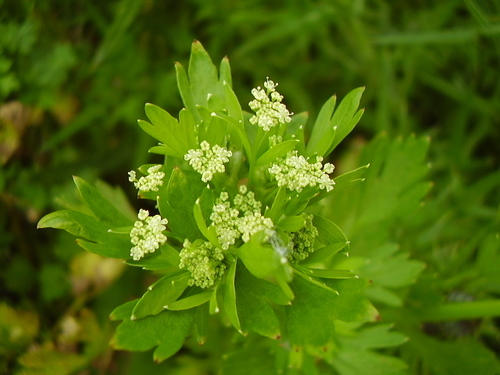
Celery
Apium graveolens
A crisp garden staple with ancient roots, Celery is more than just a vegetable—it's a vital host for beautiful butterflies and a centerpiece of the moisture-loving backyard.
Quick Identification
Size
Stalks typically reach 30–60 cm (12–24 inches) in height, while flowering 'bolted' stems can reach up to 1 metre (39 inches).
Colors
Bright emerald green to pale chartreuse stalks with darker green leafy foliage; wild varieties may show slight reddish-brown tinges at the base.
Key Features
- Deeply grooved, succulent fibrous stalks
- Pinnate to bipinnate leaves with wedge-shaped, lobed leaflets
- Small, creamy-white flowers clustered in flat-topped umbels
- Strong, aromatic scent when leaves or stalks are crushed
When You’ll See Them
Geographic range
Where Does the Celery Live?
Native to the Mediterranean basin and parts of the Middle East, Celery has been distributed by humans across the globe over thousands of years. It now flourishes across temperate regions of Europe, North America, and Northern Africa, with massive cultivated populations in the United States and China. In the wild, it is frequently found naturalized in damp, low-lying areas near the coasts of Great Britain and throughout the southern United States where moisture is abundant.
Basemap © OpenStreetMap contributors
Behavior
In a backyard setting, Celery is a passive but vital member of the ecosystem. It is highly sensitive to water availability and will visibly wilt to conserve moisture during the heat of the day, standing upright again as temperatures drop and evening humidity rises. While it does not move like an animal, its aromatic compounds act as a chemical signal, attracting specific pollinators and warding off certain herbivores.
Its most significant interaction with wildlife is serving as a primary host plant for the Black Swallowtail butterfly. The plant's chemical makeup provides essential nutrients for caterpillars, making it a bustling hub of activity during the spring and summer months as it supports the next generation of pollinators.
EverydayEarth exclusive
Camera Tips
Because Celery is a primary host for the Black Swallowtail butterfly, place your camera at a low angle (roughly 12-18 inches from the ground) and focus on the leafy canopy. This position is ideal for triggering the camera when caterpillars are feeding or when adult butterflies land to lay eggs. Use a high-speed trigger or video mode to capture the rapid movement of wings or the unique 'osmeterium' display of a threatened caterpillar.
For night-time backyard wildlife, Celery acts as a lure for nocturnal herbivores like Rabbits or Deer who enjoy the moisture-rich stalks. Position your camera 5-10 feet away with an infrared flash enabled to avoid spooking visitors. If you are specifically looking for pests like the Celery Looper or aphids, a macro lens or a camera with a short focal distance is necessary to see these smaller interactions.
Ensure your camera is shielded from the overhead sun, as the reflective green of the stalks can cause overexposure in mid-day shots. A north-facing orientation for the lens will provide the most consistent lighting throughout the day, highlighting the translucent quality of the ribs and the vibrant texture of the foliage.
Similar Species
Species that look similar or are commonly confused with Celery.
Poison Hemlock
Hemlock has smooth, round stems with purple blotches, whereas Celery has grooved, solid green stalks.
Wild Parsnip
Wild Parsnip features yellow flowers and much broader, flatter leaflets compared to Celery's white flowers and wedge-shaped leaves.
Lovage
Lovage grows much taller (up to 2 metres) and has a much more intense, yeast-like scent compared to the milder aroma of Celery.
Frequently Asked Questions
Record Celery at your habitat
Connect a camera to start building your own species record — AI identifies every visitor automatically.