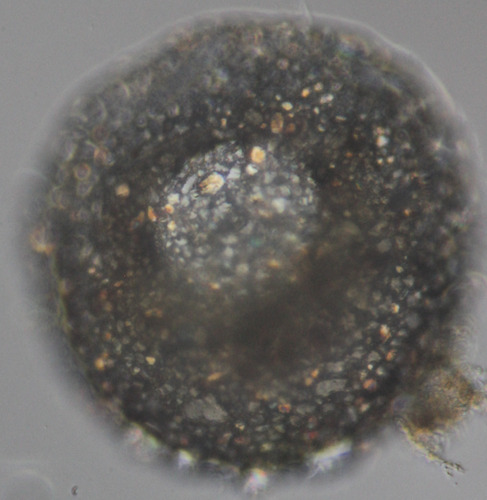
Centropyxis ecornis
Centropyxis ecornis
Meet the microscopic architect of your backyard. Centropyxis ecornis is a shelled amoeba that builds its own fortress out of sand and minerals, silently patrolling the moist corners of your garden.
Quick Identification
Size
150–280 micrometers (0.006–0.011 inches) in diameter
Colors
Earthy tones ranging from transparent to yellowish-brown, often appearing greyish due to attached sand grains
Key Features
- Flattened, circular or oval-shaped shell (test)
- Absence of posterior spines
- Shell surface composed of glued mineral particles (xenosomes)
- Finger-like lobopodia (pseudopods) used for movement
When You’ll See Them
Geographic range
Where Does the Centropyxis ecornis Live?
This species is truly cosmopolitan, found on every continent including Antarctica. It thrives wherever there is sufficient moisture, from the humid tropical rainforests of South America to the temperate backyard gardens of North America and Europe. Because they can form protective cysts to survive dry periods, they are easily dispersed by wind and water across the globe, reaching even the most remote islands.
Basemap © OpenStreetMap contributors
Behavior
Centropyxis ecornis is a prominent member of the testate amoebae group—microscopic organisms that construct and inhabit a protective shell. Unlike the more commonly known 'naked' amoebae, these creatures are master architects of the microscopic world. They spend their lives crawling through the film of water surrounding soil particles or moss leaves, using their finger-like pseudopodia to pull themselves forward and engulf food particles.
This species is solitary but can occur in extremely high densities in healthy, moist environments. They are highly resilient; when their environment dries out, they can retract into their shell and form a protective cyst, allowing them to remain dormant for years until moisture returns. While they don't interact with humans directly, they are essential members of the soil food web, helping to regulate bacterial populations and cycle nutrients in your garden.
EverydayEarth exclusive
Camera Tips
Capturing Centropyxis ecornis requires a specialized approach compared to standard backyard wildlife. Because they are microscopic, you cannot use a traditional trail camera. Instead, you will need to attach a high-magnification macro lens or a dedicated digital microscope camera to your observation station. The best way to find them is to collect a small sample of damp moss or leaf litter from your yard and place it in a shallow glass dish with a few drops of distilled water.
Lighting is the most critical factor for a clear image. Since their shells are made of tiny mineral grains, using side-lighting (oblique illumination) will highlight the texture and 'stonework' of their shells. If your camera setup allows for it, 'darkfield' lighting—where the subject is lit from the sides against a dark background—will make the translucent pseudopodia glow, creating a striking visual of the amoeba in motion.
Set your camera to a time-lapse mode rather than motion-triggering. These organisms move slowly, and a photo taken every 30 seconds over a period of an hour will reveal their foraging behavior and how they navigate their environment. Focus on the edges of organic debris in your sample, as Centropyxis ecornis loves to cling to surfaces while searching for bacteria. Ensure your setup is on a vibration-isolated surface, as even a heavy footfall nearby can cause a 'micro-earthquake' that blurs the image at such high magnification.
Similar Species
Species that look similar or are commonly confused with Centropyxis ecornis.
Frequently Asked Questions
Record Centropyxis ecornis at your habitat
Connect a camera to start building your own species record — AI identifies every visitor automatically.