Chain Pickerel
Esox niger
The 'water wolf' of the shallows, the chain pickerel is a master of camouflage and the ultimate ambush hunter. Its striking chain-link patterns and lightning-fast strikes make it one of the most exciting species to discover in your local pond.
Quick Identification
Size
15 to 24 inches (38 to 61 cm) on average; typically weighs 1.5 to 4 lbs (0.7 to 1.8 kg), though trophy specimens can reach 30 inches and 9 lbs.
Colors
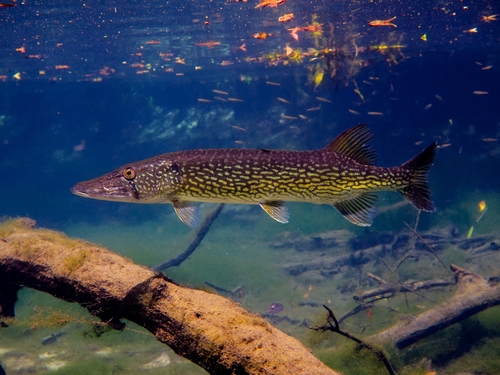
Olive to dark green back with a distinctive chain-like pattern of black lines over yellowish-green sides; belly is creamy white.
Key Features
- Dark, interlocking chain-like markings on the flanks
- Prominent vertical black 'teardrop' mark below the eye
- Long, duck-bill shaped snout filled with sharp teeth
- Single dorsal fin located very far back toward the tail
When You’ll See Them
Geographic range
Where Does the Chain Pickerel Live?
Native to the freshwater systems of North America, the chain pickerel is primarily found along the Atlantic and Gulf Coast states. Its core range extends from New Brunswick and Nova Scotia in Canada, down through the entire Eastern Seaboard to Florida, and westward along the Gulf to Texas. It is also found throughout the Mississippi River basin as far north as Missouri and Illinois, though it is most abundant in the weed-choked waters of the Northeast and Deep South.
Basemap © OpenStreetMap contributors
Behavior
The chain pickerel is a legendary ambush predator, often earned the nickname 'water wolf' for its lean, aggressive nature. It spends the majority of its day perfectly still, camouflaged among lily pads, pondweed, and submerged logs. From these hiding spots, it keeps a watchful eye on the surrounding water, waiting for a meal to swim within a few feet before launching an explosive, high-speed strike to seize its prey.
Unlike many other freshwater fish that form schools for protection, pickerel are strictly solitary and highly territorial. They are known for their boldness; they are rarely intimidated by larger creatures and will often follow an angler's lure right to the edge of a dock or boat. They remain active throughout the winter months, continuing to hunt under the ice while many other species become sluggish or dormant.
EverydayEarth exclusive
Camera Tips
To capture the chain pickerel on camera, you need an underwater setup or a high-vantage trail cam overlooking a shallow, clear-water area. If you are using an underwater camera like a GoPro or a specialized AI fish-cam, the 'weed line' is your best friend. Position the camera at the edge of dense lily pads or pondweed, about 1 to 2 feet (30-60 cm) from the bottom. These fish use these edges as hunting corridors, and they will often hang motionless right in front of the lens for minutes at a time.
You can attract pickerel to your camera's field of view by taking advantage of their predatory instincts. Suspend a shiny, slow-moving object like a silver spinner blade or a piece of holographic tape a few feet away from the lens. The flash and vibration will often draw them in for a closer look. Because they strike with incredible speed, ensure your camera is set to a high frame rate (at least 60 frames per second) so you don't miss the moment they hit a passing baitfish.
Lighting is the biggest challenge in aquatic environments. Early morning and late afternoon offer the best 'golden hour' light that can penetrate the shallows without the harsh overhead glare of midday. If your water is tea-colored or 'tannic'—which is common in many pickerel habitats—use a camera with a high-quality sensor to handle the lower light. For above-water cameras mounted on docks, a polarizing filter is essential to cut through the surface reflection and reveal the 'water wolf' lurking just below the surface.
Similar Species
Species that look similar or are commonly confused with Chain Pickerel.
Frequently Asked Questions
Record Chain Pickerel at your habitat
Connect a camera to start building your own species record — AI identifies every visitor automatically.