Chalkhill Blue
Polyommatus coridon
A shimmer of silver against the green, the Chalkhill Blue is a master of the limestone downs. This delicate butterfly tells a story of ancient landscapes and a remarkable partnership with the ants that guard its young.
Quick Identification
Size
Wingspan of 30–40 mm (1.2–1.6 inches)
Colors
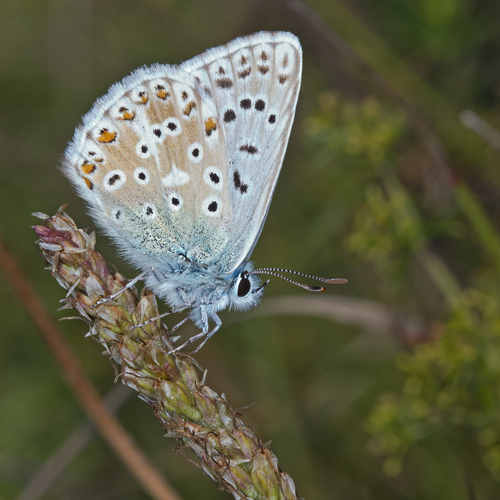
Males are a distinctive pale, silvery-blue; females are chocolate brown with orange spots on the wing edges. Both sexes feature black and white checkered wing fringes.
Key Features
- Silvery, pale sky-blue upper wings in males
- Distinctive black-and-white checkered wing fringes
- Underwings are grayish with prominent black spots ringed in white
- Females have a row of orange 'lunules' or crescents along the hindwing edges
When You’ll See Them
Geographic range
Where Does the Chalkhill Blue Live?
The Chalkhill Blue is a quintessential European species, with its native range stretching from the southern United Kingdom across Central and Southern Europe to the borders of Asia. It thrives in the Palearctic realm, with particularly dense populations found in the chalk downs of Southern England, the limestone massifs of France, and the sunny slopes of Germany and Spain. Because it is so dependent on specific geological conditions, its range is naturally fragmented, existing as a series of isolated 'islands' of habitat where alkaline soils support its primary host plant.
Basemap © OpenStreetMap contributors
Behavior
The Chalkhill Blue is a highly specialized butterfly known for its rhythmic, low-to-the-ground flight patterns across sun-drenched hillsides. Unlike many wide-ranging species, these butterflies are homebodies, rarely straying far from the specific chalk or limestone grasslands where their host plants grow. They are most active during the warmest parts of the day, darting between wildflowers to feed on nectar or searching for mates in the tall grasses.
One of the most fascinating aspects of their behavior is their symbiotic relationship with ants, specifically those from the Lasius and Myrmica genera. The caterpillars secrete a sugary, nutrient-rich substance that ants find irresistible. In return for this 'honeydew,' the ants act as personal bodyguards, protecting the larvae from parasitic wasps and other predators. This complex social interaction is a cornerstone of their survival strategy.
EverydayEarth exclusive
Camera Tips
To capture the Chalkhill Blue on camera, you must focus on 'ground-level' photography. These butterflies rarely fly higher than a few feet, so mount your AI-powered camera on a low stake or a mini-tripod no more than 6 to 12 inches above the soil. Positioning the camera near a clump of Horseshoe Vetch or Greater Knapweed—their favorite nectar sources—will significantly increase your chances of a high-quality trigger.
Timing is everything with this species. They are strictly diurnal and love the heat. Set your camera to its highest trigger sensitivity between 10:00 AM and 3:00 PM during the peak months of July and August. If you are looking for a more artistic shot, try the early morning just after sunrise. During this time, the butterflies are often sluggish and covered in dew, resting vertically on grass stems, which allows for stunning macro photography before they take flight.
Pay close attention to the light. Because the male's wings are a very pale, reflective silvery-blue, they can easily 'blow out' or lose detail in direct, harsh midday sun. Positioning your camera so it faces slightly away from the sun, or using the natural shade of tall grasses to diffuse the light, can help preserve the delicate textures of their wings. If your camera supports manual shutter speed settings, keep them high (at least 1/1000s) to freeze their rapid wing beats during take-off.
Similar Species
Species that look similar or are commonly confused with Chalkhill Blue.
Frequently Asked Questions
Record Chalkhill Blue at your habitat
Connect a camera to start building your own species record — AI identifies every visitor automatically.