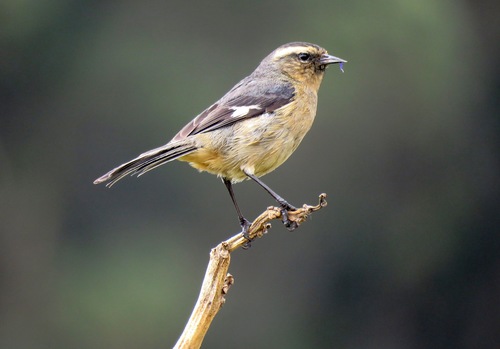
Cinereous Conebill
Conirostrum cinereum
The Cinereous Conebill is a tiny, silver-gray acrobat of the Andes, known for its restless energy and remarkable ability to thrive in both wild shrublands and busy city gardens.
Quick Identification
Size
Length: 12-13 cm (4.7-5.1 inches); Weight: 8-12 g (0.28-0.42 oz)
Colors
Uniform ashy-gray upperparts, pale gray to whitish underparts, dark blackish bill and legs, and a distinctive white wing patch (speculum).
Key Features
- Small, sharp, needle-like bill
- Distinctive white patch on the wings visible when perched
- Uniform silver-gray plumage without heavy streaking
- Very active, restless movement through foliage
When You’ll See Them
Geographic range
Where Does the Cinereous Conebill Live?
Native to the western side of South America, the Cinereous Conebill is a resilient inhabitant of the Andean mountain chain and adjacent coastal regions. Its core range spans from the highlands of southern Colombia through Ecuador and Peru, extending into the western fringes of Bolivia and northern Chile. While it is a mountain specialist in many regions, it is uniquely famous for thriving at sea level in coastal desert oases like Lima, Peru.
Basemap © OpenStreetMap contributors
Behavior
The Cinereous Conebill is a quintessential high-energy forager, constantly on the move as it flits through the outer canopy of shrubs and small trees. Often found in pairs or small family groups, they are highly social birds that frequently join mixed-species foraging flocks. They move with a nervous energy, hopping rapidly between branches and performing acrobatic reaches to glean insects from the underside of leaves.
Unlike many highland species that shy away from human contact, the Cinereous Conebill is remarkably bold and adaptable. It has successfully transitioned into urban and suburban environments, becoming a common resident of city parks and residential gardens throughout the Andes. Its presence is often announced by its thin, high-pitched chipping calls as it explores garden shrubbery for food.
EverydayEarth exclusive
Camera Tips
To capture the Cinereous Conebill on camera, placement is everything. These birds are foliage gleaners, meaning they spend most of their time in the outer branches of shrubs. Mount your camera at eye level (4 to 6 feet high) facing a dense, flowering shrub or a known perching spot. Because they are small and fast, a high shutter speed or a 'burst' mode is essential to avoid motion blur during their constant hopping.
Water is a fantastic lure for this species. A birdbath or a misting feature in a garden will often attract Cinereous Conebills for a drink or a quick bath, especially in drier coastal regions. Position the camera about 3-5 feet from the water source to get clear, detailed shots of their delicate gray plumage and needle-like bills.
If you are using an AI-powered camera, ensure it is set to its highest sensitivity for small subjects. These birds don't stay still for long, so a 'pre-roll' or 'fast trigger' setting will help capture the moment they land before they disappear into the leaves. Morning light provides the best illumination for their silver-gray feathers, making them stand out against green foliage.
Similar Species
Species that look similar or are commonly confused with Cinereous Conebill.
Blue-backed Conebill
Lacks the white wing patch and has a more distinct blue-gray tone on the back compared to the cinereous gray.
Giant Conebill
Much larger with a chestnut-colored vent and belly, and specifically prefers Polylepis forests.
Black-throated Flowerpiercer
Has a hooked bill used for piercing flowers, unlike the straight cone-shaped bill of the conebill.
Frequently Asked Questions
Record Cinereous Conebill at your habitat
Connect a camera to start building your own species record — AI identifies every visitor automatically.