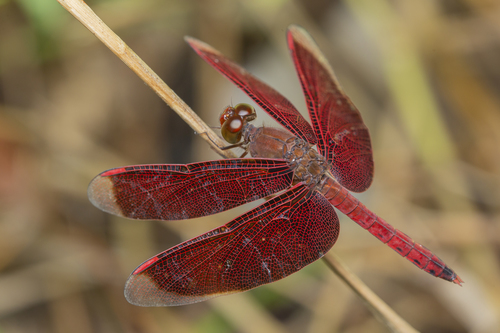
Common Parasol
Neurothemis fluctuans
A splash of crimson in the garden, the Common Parasol is one of Asia's most recognizable dragonflies. Known for its unique sun-shading posture and striking red wings, it is a master of the backyard pond.
Quick Identification
Size
Length 30-35 mm (1.2-1.4 in); Wingspan 50-60 mm (2-2.4 in)
Colors
Males are deep reddish-maroon with red wing patches; females are golden-brown with clear wings
Key Features
- Males have broad, reddish-brown wing patches ending sharply at the nodus
- Distinctive 'parasol' perching posture with wings tilted forward
- Females possess clear wings with a faint yellow tint at the base
- Stocky, robust body compared to other red dragonflies
When You’ll See Them
Geographic range
Where Does the Common Parasol Live?
This vibrant dragonfly is native to the tropical and subtropical regions of Southeast Asia. Its core range extends from Northeast India and Southern China through the Indochinese peninsula, including Thailand and Vietnam, all the way to the islands of Indonesia, Malaysia, and the Philippines. It is a highly adaptable species that thrives in both pristine wetlands and human-modified landscapes like urban parks and backyard gardens.
Basemap © OpenStreetMap contributors
Behavior
The Common Parasol is a conspicuous and approachable dragonfly often seen perching on the tips of tall grasses or garden stakes. They are known for their unique "parasol" habit—tilting their wings forward and downward during hot weather, likely to shade their thorax or regulate body temperature. Unlike more skittish species, these dragonflies often return to the exact same perch after a short flight, making them excellent subjects for observation.
They are primarily solitary hunters, defending small territories around stagnant or slow-moving water sources. While they are territorial against other males, they pose no threat to humans and are actually beneficial visitors to backyards as they consume large quantities of mosquitoes and midges. They are generally weak fliers compared to larger dragonflies, preferring to stay close to vegetation.
EverydayEarth exclusive
Camera Tips
Capturing the Common Parasol requires focusing on their "percher" behavior. These dragonflies have preferred hunting spots—usually the highest tip of a stick, reed, or garden stake. Once you identify a perch they favor, position your camera on a tripod at a 90-degree angle to the perch. This side-on view is essential to capture the sharp line where the red pigmentation ends on the male's wings, which is a key identifying feature.
Because they are most active during the brightest parts of the day, use a fast shutter speed (at least 1/1000s) to freeze their wings if you hope to catch them in flight. If using an AI-powered backyard camera, place it within 1-3 feet of a prominent garden stake near a water source. These dragonflies are highly attracted to open water, so placing a camera near the edge of a birdbath or pond will significantly increase your chances of a sighting.
Lighting is crucial for bringing out the deep reds of the male's body and wings. Aim for side-lighting in the mid-morning or afternoon to avoid harsh overhead shadows. If your camera allows for manual focus, pre-focus on the very tip of the perch. Since the Common Parasol often leaves and returns to the same spot every few minutes, you can wait for them to fly back into your pre-set focal plane for a perfectly sharp shot.
Similar Species
Species that look similar or are commonly confused with Common Parasol.
Frequently Asked Questions
Record Common Parasol at your habitat
Connect a camera to start building your own species record — AI identifies every visitor automatically.