Coypu
Myocastor coypus
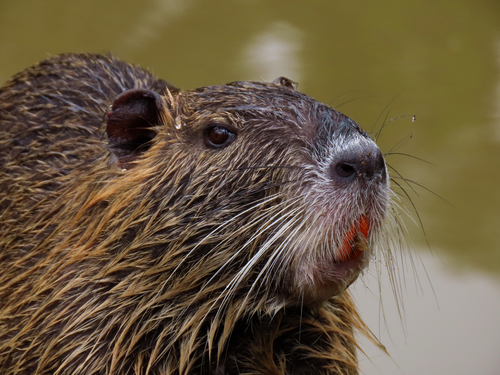
With their vibrant orange teeth and impressive swimming skills, the coypu is a fascinating giant of the wetlands. Often mistaken for beavers, these social South American rodents have become iconic sights in waterways around the world.
Quick Identification
Size
40-60 cm (16-24 in) body length plus a 30-45 cm (12-18 in) tail; weighs 5-9 kg (11-20 lbs)
Colors
Coarse reddish-brown or yellowish-brown guard hairs with a dense grey underfur; features a distinct white patch on the muzzle
Key Features
- Large, bright orange front incisors
- Long, cylindrical, scaly tail
- Webbed hind feet for swimming
- Prominent white whiskers on a blunt muzzle
When You’ll See Them
Geographic range
Where Does the Coypu Live?
Native to the southern half of South America, the coypu naturally thrives in the wetlands of Argentina, Chile, Uruguay, and southern Brazil. Because of its history in the fur trade, the species has been introduced to almost every other continent, establishing large, permanent populations across the southern United States, much of Western Europe, and parts of East Asia. They are most successful in temperate and subtropical climates where water sources do not freeze deeply in winter.
Basemap © OpenStreetMap contributors
Behavior
Coypus are highly social, semiaquatic rodents that spend the majority of their lives in or near the water. They are excellent swimmers, aided by their webbed hind feet, and can remain submerged for several minutes while foraging. While they can be active during the day in quiet areas, they are primarily crepuscular, meaning they are most active during the twilight hours of dawn and dusk. They are known for their vocal nature, often communicating with family members through a variety of grunts, whistles, and pig-like squeals.
These rodents are industrious burrowers, often excavating complex tunnel systems into the banks of rivers, ditches, and marshes. These burrows usually have multiple entrances, some of which are located underwater. In addition to burrowing, they may build large nests or platforms out of floating vegetation for resting and feeding. In social structures, they typically live in small groups consisting of a dominant male, several females, and their offspring, though young males may be solitary until they establish their own territory.
EverydayEarth exclusive
Camera Tips
To capture the best footage of a coypu, position your camera at a very low angle, no more than 6 to 12 inches off the ground. These rodents stay close to the waterline, so look for 'runs'—distinct, muddy paths where the grass has been flattened by their heavy bodies as they move between the water and their feeding grounds. Placing your camera along one of these runs, angled slightly toward the water, will provide a great profile view of the animal.
Since coypu are most active during low-light hours, a camera with high-quality infrared (IR) night vision is essential. They are naturally curious and may approach the camera to sniff it, so ensure your device is securely strapped to a post or a tree to prevent it from being knocked over. If you aren't seeing much activity, try using a small amount of 'bait' like sliced sweet potatoes, carrots, or apples placed on a flat, dry spot in front of the lens. This will encourage the coypu to pause and eat, giving you a much clearer and longer video clip than a simple walk-by.
Pay close attention to water levels when setting up. Coypu habitats are prone to flooding or tidal changes; a camera submerged in a sudden rise of water can be ruined. Aim for a spot that is just above the high-water mark. In the winter, focus your efforts near the entrances of burrows in the muddy banks, as they tend to range less widely in cold weather. Check your settings to ensure a high trigger speed, as they can swim past surprisingly fast when they aren't foraging.
Similar Species
Species that look similar or are commonly confused with Coypu.
Frequently Asked Questions
Record Coypu at your habitat
Connect a camera to start building your own species record — AI identifies every visitor automatically.