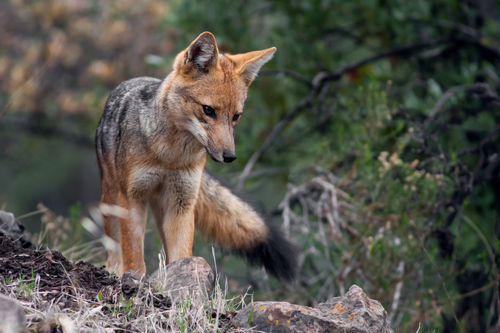
Culpeo
Lycalopex culpaeus
Often called the 'Andean Wolf,' the Culpeo is a resilient South American predator that thrives from the desert coast to the highest mountain peaks.
Quick Identification
Size
60-120 cm (24-47 in) long with a 30-45 cm (12-18 in) tail; weighs 5-13.5 kg (11-30 lbs)
Colors
Tawny or reddish-gray fur on the head and legs; grizzled gray back; white or tan chin and underparts; bushy tail with a black tip
Key Features
- Large, reddish pointed ears
- Bushy tail with a distinct black tip and a black spot at the base
- Robust, wolf-like build compared to other South American foxes
- Reddish-brown fur on the head and neck
When You’ll See Them
Geographic range
Where Does the Culpeo Live?
The Culpeo is a iconic resident of South America, with a native range that follows the majestic spine of the Andes mountains. It can be found from the northern high-altitude paramos of Ecuador and Peru, stretching south through the plateaus of Bolivia and the rugged landscapes of Chile and Argentina, all the way to the southern tip of Tierra del Fuego. This wide geographic span allows it to inhabit a diverse array of climates, from the arid Atacama Desert to the cold, windswept plains of Patagonia.
Basemap © OpenStreetMap contributors
Behavior
The Culpeo is the second-largest canid in South America, following the Maned Wolf. Despite its common name 'Andean Fox,' it is more closely related to wolves and jackals, which is reflected in its sturdy build and hunting prowess. They are primarily solitary animals, though they are known to form monogamous pairs during the breeding season. While they can be active during the day in areas with little human interference, they are most frequently observed during the twilight hours of dawn and dusk.
As highly adaptable predators, Culpeos exhibit complex social signals through scent marking and vocalizations, including high-pitched yaps and barks. In many parts of their range, they are the apex predator of their ecosystem, maintaining a territorial lifestyle that requires large home ranges. While they are generally shy around humans, they have been known to venture near remote settlements or campsites in search of food scraps or to hunt livestock, which occasionally leads to conflict with local farmers.
EverydayEarth exclusive
Camera Tips
Capturing a Culpeo on camera requires strategic placement along natural ridgelines, mountain passes, or animal trails near water sources. Because they are the dominant canids in their range, they often use established paths to patrol their large territories. Mount your camera at a height of 18 to 24 inches (45-60 cm) to ensure a full-body profile shot. In the rugged terrain of the Andes, ensure the camera is level and the PIR sensor isn't obstructed by tall tufts of ichu grass which can cause false triggers in the wind.
To encourage a Culpeo to stop and pose, use non-edible scent lures such as fatty acid tablets or a small amount of fish oil placed on a rock about 8-10 feet from the camera. Since Culpeos are naturally curious but cautious, avoid using bright white flashes; a 'no-glow' or 'low-glow' infrared flash is far less likely to startle them and will result in more natural behavior on video. Nighttime and twilight are your best windows, so ensure your camera is set to its highest sensitivity for low-light triggers.
Seasonal considerations are important for the best photos; during the southern winter (June to August), the Culpeo grows a magnificent, thick coat that makes for stunning imagery. If you are aiming for video, set your clip length to at least 15-20 seconds with a minimal trigger delay. These animals move with a purposeful, steady trot, and a short video will often capture them scent-marking or sniffing the air, providing a much deeper look into their wild lives than a simple still image.
Similar Species
Species that look similar or are commonly confused with Culpeo.
Frequently Asked Questions
Record Culpeo at your habitat
Connect a camera to start building your own species record — AI identifies every visitor automatically.