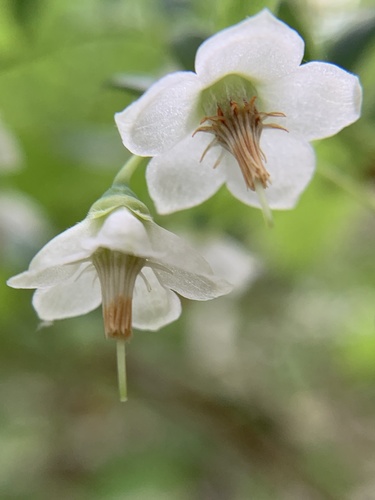
deerberry
Vaccinium stamineum
A hidden gem of the North American forest, the Deerberry offers unique drooping blossoms and a vital feast for backyard wildlife.
Quick Identification
Size
A multi-stemmed deciduous shrub reaching 1–3 meters (3–10 feet) in height and spread.
Colors
Creamy white or greenish-pink flowers; bright green leaves with pale, glaucous (whitish) undersides; berries range from greenish to dull purple or yellowish.
Key Features
- Distinctive flowers with stamens extending far beyond the bell-shaped petals
- Papery, shredding bark on mature stems
- Berries covered in a powdery waxy bloom
- Small, leaf-like bracts at the base of flower stalks
When You’ll See Them
Geographic range
Where Does the deerberry Live?
Deerberry is a quintessential North American shrub, native to a broad swath of the continent. Its range extends from the southern reaches of Ontario, Canada, through the eastern and central United States, reaching as far west as Kansas and Texas, and southward into the mountainous regions of central Mexico. It is most frequently encountered in the acidic soils of the Appalachian Mountains and the sandy coastal plains of the Southeast.
Basemap © OpenStreetMap contributors
Behavior
Deerberry is a slow-growing, long-lived shrub that plays a vital role in the early successional stages of forest ecosystems. Unlike many other members of the Vaccinium genus, its flowers are uniquely structured to facilitate pollination by specialized bees. The long-exserted stamens require "buzz pollination," where bees vibrate their wing muscles at a specific frequency to release the pollen. This makes it a fascinating hub of insect activity during the spring months.
As the season progresses, the shrub produces fruit that, while technically edible for humans, is often tart or mealy. However, these berries are a high-energy resource for wildlife. The plant often grows in loose colonies, providing excellent low-level cover for ground-nesting birds and small mammals. It is highly resilient, often rebounding quickly after forest fires due to its deep root system and ability to sprout from the base.
EverydayEarth exclusive
Camera Tips
To capture the best images of Deerberry and the wildlife it attracts, place your camera on a sturdy stake or low tripod about 2-3 feet off the ground, angled slightly upward toward the flower clusters or ripening berries. Because this shrub is a magnet for pollinators like the Deerberry Bee (Melitta americana), use a camera with a fast trigger speed or a dedicated macro mode if available. Set your device to capture short video bursts during the morning hours (8 AM to 11 AM) when insect activity is at its peak and the light is soft enough to highlight the waxy texture of the leaves.
If you are using a trail camera to track larger visitors, position the unit 5-10 feet back from the shrub. Deerberry is a preferred browse for White-tailed Deer and Black Bears, who frequent these bushes in late summer when the fruit ripens. Since the berries can be camouflaged by the foliage, a side-on angle will help you see the animals pulling at the branches. Ensure the area around the camera is cleared of tall grass that might trigger the sensor during windy conditions, as the flexible branches of the Deerberry itself can cause false triggers.
For high-quality plant portraits, visit the site during the 'golden hour' before sunset. The glaucous undersides of the leaves reflect soft light beautifully, and the drooping, bell-like flowers often glow against a darker forest backdrop. If you are monitoring growth or seasonal changes, use the 'Time Lapse' feature, setting it to take one photo every 24 hours at noon. This will create a stunning visual record of the plant’s transition from spring flowering to autumn leaf drop, which often turns a vibrant scarlet or purple.
Similar Species
Species that look similar or are commonly confused with deerberry.
Frequently Asked Questions
Record deerberry at your habitat
Connect a camera to start building your own species record — AI identifies every visitor automatically.