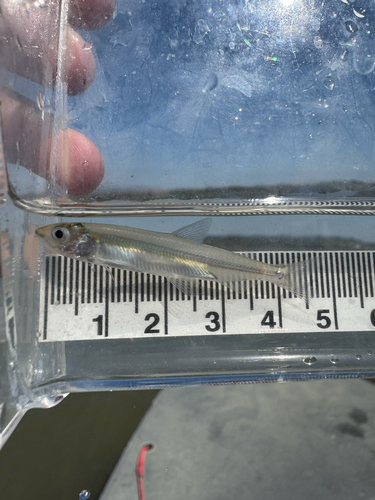
Delta Smelt
Hypomesus transpacificus
The Delta Smelt is the 'canary in the coal mine' for California's water health. This tiny, translucent resident of the San Francisco Bay-Delta offers a rare glimpse into a fragile ecosystem found nowhere else on the planet.
Quick Identification
Size
5 to 7 cm (2 to 2.8 inches) in length; weighs approximately 1 to 4 grams.
Colors
Translucent, pale silvery-blue body; faint iridescent lateral stripe with purple or pinkish hues; small dark spots on the head and back.
Key Features
- Translucent, slender 'cigar-shaped' body
- Small mouth that does not extend past the middle of the eye
- Presence of a small adipose fin between the dorsal and tail fins
- Emits a distinct, fresh cucumber-like scent when handled
When You’ll See Them
Geographic range
Where Does the Delta Smelt Live?
The Delta Smelt is native exclusively to the North American continent, found only in a tiny corner of the United States. It is endemic to the Sacramento-San Joaquin River Delta and the Suisun Bay in California. This highly restricted range is limited to the upper San Francisco Estuary, making it one of the most geographically constrained fish species in the world.
Basemap © OpenStreetMap contributors
Behavior
Socially, Delta Smelt are schooling fish that move in loose groups to feed and avoid predators. They are extremely sensitive to environmental changes, particularly water temperature and salinity, making them a critical indicator species. When the Delta Smelt population thrives, it suggests the entire San Francisco Bay-Delta ecosystem is healthy; conversely, their decline signals significant environmental stress.
EverydayEarth exclusive
Camera Tips
Capturing the elusive Delta Smelt requires an underwater setup, such as a specialized aquatic trail camera or a high-end action camera in a waterproof housing. Because these fish are nearly translucent, you need a camera with excellent contrast settings and high-resolution capabilities. To increase your chances, mount your camera to a dock piling or a weighted tripod in shallow, brackish water where the current is slow and steady.
Lighting is the most critical factor for these small, silvery fish. Use off-camera LED lights positioned at a 45-degree angle to the lens to prevent backscatter from silt and to catch the iridescent sheen on the fish's sides. Avoid direct flash, which can wash out their translucent bodies and make them appear like featureless white streaks in the water.
Set your camera to record at a high frame rate (60fps or higher) to capture their darting movements as they feed on plankton. Since these fish are highly endangered, do not use invasive baits; instead, rely on placing the camera near submerged vegetation or known spawning paths during the 'first flush' of winter rains. Use a wide-angle lens to maximize the field of view in the often murky waters of the Delta.
Similar Species
Species that look similar or are commonly confused with Delta Smelt.
Frequently Asked Questions
Record Delta Smelt at your habitat
Connect a camera to start building your own species record — AI identifies every visitor automatically.