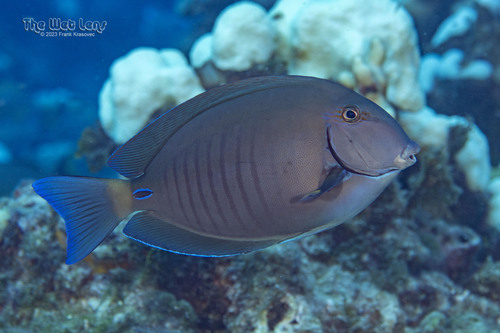
Doctorfish
Acanthurus chirurgus
Recognizable by the 'scars' on its sides and its defensive tail spine, the Doctorfish is a vital reef-cleaner. This industrious tang keeps coral healthy by grazing on algae across the Western Atlantic.
Quick Identification
Size
Typically 10-14 inches (25-35 cm) in length; weight usually under 5 lbs (2.3 kg)
Colors
Bluish-gray to dark brown body with 10-12 thin, dark vertical bars; blue or white margins on fins; yellow or blue highlights around the tail spine
Key Features
- 10-12 distinct dark vertical bars on sides
- Sharp, retractable spine at the base of the tail
- Oval-shaped, highly compressed body
- Small mouth with teeth specialized for scraping algae
When You’ll See Them
Geographic range
Where Does the Doctorfish Live?
The Doctorfish is a staple of the Western Atlantic's marine ecosystems, flourishing in the warm tropical and subtropical waters of the Americas. Its range begins as far north as Massachusetts and Bermuda, though it is far more common from the Florida coast southward through the Gulf of Mexico and the entire Caribbean Sea. This resilient species also follows the coastline of South America, with established populations extending as far south as the beaches of Brazil.
Basemap © OpenStreetMap contributors
Behavior
Doctorfish are active, diurnal grazers that spend the vast majority of their daylight hours patrolling reef flats and rocky outcrops. They are named for the sharp, scalpel-like spines located on either side of their tail base, which they use for defense against predators. When threatened, the fish can lash its tail to inflict deep cuts on an aggressor, though they are generally peaceful and prefer to flee when humans approach.
These fish are highly social and are often observed in large, multi-species schools. By joining forces with other tangs and surgeonfishes, they can overwhelm the defenses of territorial damselfish, allowing the group to feed on the damselfish's private algae patches. At night, Doctorfish find crevices in the reef to wedge themselves into, changing their color slightly to a mottled pattern to better camouflage against the rock while they sleep.
EverydayEarth exclusive
Camera Tips
Capturing high-quality footage of a Doctorfish requires an underwater action camera (like a GoPro) or a specialized trail camera with a waterproof housing. Since these fish are highly active during the day, placement is key. Look for 'cleaning stations' or large, sun-exposed rocks covered in a fine layer of algae. These are the natural cafeterias for Doctorfish, and they will return to these spots repeatedly throughout the day. Mount your camera at a slight upward angle to capture the light filtering through the water, which highlights the iridescent blue edges of their fins.
To attract Doctorfish to your lens, you can use a suction-cup seaweed clip—often used in home aquariums—and attach a piece of dried nori (seaweed) directly in front of the camera. While they are wary of fast movements, they are incredibly curious about new food sources. Ensure your camera is set to a high frame rate (at least 60fps) because their swimming patterns can be erratic and fast when they are darting between feeding spots.
Lighting is your best friend when filming underwater. Try to place your camera in shallow water (under 10 feet) during the middle of the day when the sun is directly overhead. This provides the best color penetration, ensuring the dark vertical bars and the subtle blue markings on the tail are visible. In deeper or murkier water, the Doctorfish can look like a simple gray silhouette, so proximity and light are essential for a 'pro' look.
Similar Species
Species that look similar or are commonly confused with Doctorfish.
Frequently Asked Questions
Record Doctorfish at your habitat
Connect a camera to start building your own species record — AI identifies every visitor automatically.