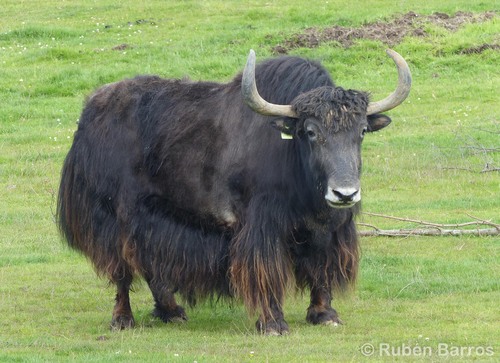
Domestic Yak
Bos grunniens
The shaggy sentinel of the high peaks, the domestic yak is a master of survival in the world's most extreme environments.
Quick Identification
Size
Standing 1.6–2.2m (5.2–7.2 ft) at the shoulder; bulls weigh 350–585kg (772–1,290 lb) while cows are smaller at 225–255kg (496–562 lb).
Colors
Typically dark brown to black, but domestic variants often show white, grey, or piebald (black and white) patches.
Key Features
- Extremely long shaggy coat that often reaches the ground
- Prominent humped shoulders
- Large handlebars-shaped horns up to 100cm (40 inches) in males
- Short, sturdy legs with broad hooves for rocky terrain
When You’ll See Them
Geographic range
Where Does the Domestic Yak Live?
Native to the towering peaks and vast plateaus of Central Asia, the domestic yak is most commonly found throughout the Himalayan region and the Tibetan Plateau. Their native range spans across China, Nepal, Bhutan, and Northern India, reaching as far north as the rugged landscapes of Mongolia and Siberia. In recent decades, hardy domestic populations have also been established in North America and parts of Europe, where they are raised on specialized ranches for their wool, milk, and meat.
Basemap © OpenStreetMap contributors
Behavior
Domestic yaks are highly social herd animals that have been integral to Himalayan cultures for thousands of years. Unlike most cattle species that moo, yaks are famous for their characteristic grunting sounds, which is why they are often called the "grunting ox." They are exceptionally hardy creatures, possessing a unique physiology that includes larger lungs, a higher red blood cell count, and a specialized heart to thrive in thin, high-altitude air where other mammals would struggle.
In a herd setting, yaks are generally docile but maintain a strict social hierarchy. They are known for being surprisingly agile for their size, capable of navigating treacherous mountain passes and swimming across icy rivers. While they are usually wary of strangers, they form deep bonds with their human herders, often responding to specific calls or whistles. During the warmer months, they move to higher pastures, returning to lower valleys when the heavy winter snows arrive.
EverydayEarth exclusive
Camera Tips
When setting up a camera to capture domestic yaks, durability is your primary concern. These animals are incredibly strong and have a habit of using any upright post, including your camera mounting, as a scratching post for their thick wool. Use a heavy-duty security box and ensure the camera is strapped tightly to a thick, immovable tree or a reinforced fence post that can withstand several hundred pounds of pressure.
Position your camera at a height of about 3 to 4 feet (chest height for a yak) and tilt it slightly downward. Because yaks are large-bodied animals, you don't need the camera right on the trail; backing it off by 10 to 15 feet will ensure you capture the entire animal rather than just a wall of shaggy fur. Wide-angle settings are preferable to frame the majestic mountain backdrop they usually inhabit.
Yaks are most active during the cooler parts of the day, so focus your trigger intervals around dawn and dusk. In the winter, their dark coats absorb heat, making them more likely to be active even during midday sun. If you are on a private ranch or homestead, placing cameras near salt licks or water troughs is a guaranteed way to get high-quality close-ups. However, be mindful of their curiosity; they may approach and lick the lens, so a protective housing is essential.
Similar Species
Species that look similar or are commonly confused with Domestic Yak.
Frequently Asked Questions
Record Domestic Yak at your habitat
Connect a camera to start building your own species record — AI identifies every visitor automatically.