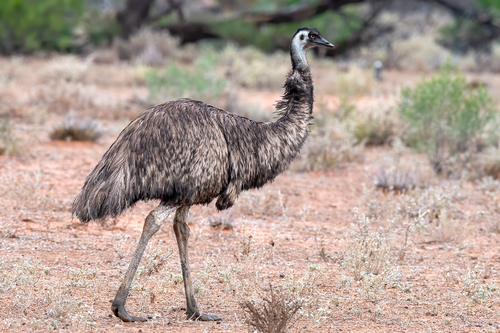
Emu
Dromaius novaehollandiae
Australia's tallest native bird is a wonder of the outback, known for its powerful legs, inquisitive nature, and incredible nomadic journeys. Discover the secrets of the emu, from its booming calls to its unique family life where the dads do all the parenting.
Quick Identification
Size
Standing 1.5–1.9 m (4.9–6.2 ft) tall and weighing 18–60 kg (40–132 lbs).
Colors
Shaggy grey-brown plumage with pale blue skin visible on the neck and head. Males and females look similar, though females are slightly larger.
Key Features
- Distinctive shaggy grey-brown plumage
- Long, powerful three-toed legs for running
- Vibrant blue-tinged skin on the neck and head
- Large, dark brown eyes with prominent lashes
When You’ll See Them
Geographic range
Where Does the Emu Live?
Native to the continent of Australia, the emu is found across almost the entire mainland. While they once inhabited Tasmania and several offshore islands, they are now primarily restricted to mainland Australia, where they roam from the tropical north to the temperate south. They are common in both the outback and on the fringes of suburban agricultural lands, though they generally avoid the most densely populated coastal cities.
Basemap © OpenStreetMap contributors
Behavior
Emus are the quintessential nomadic wanderers of the Australian bush. They are famous for their curiosity, often following humans or vehicles to investigate new sights. While they are usually solitary or found in pairs, they can form massive migratory flocks when searching for water or food during droughts. Unlike many bird species, it is the male emu who takes on the full responsibility of incubating the eggs and raising the chicks, during which time he may not eat or drink for several weeks.
These flightless birds are incredibly fast and agile, capable of reaching speeds up to 50 km/h (31 mph). They spend much of their day foraging, using their keen eyesight and hearing to detect predators like dingoes from a distance. While generally quiet, they produce deep, resonant booming and grunting sounds using a specialized tracheal pouch, which can carry for over a kilometer across the landscape.
EverydayEarth exclusive
Camera Tips
Capturing an emu on camera requires a different strategy than smaller backyard birds due to their sheer height. Position your camera significantly higher than usual—ideally between 3 and 4 feet (1 to 1.2 meters) off the ground. If your camera is too low, you will likely only capture a confusing blur of shaggy feathers. A wide-angle lens setting is essential to ensure you get the full bird in the frame, especially since their natural curiosity often leads them to walk directly up to the lens to investigate.
The most effective way to attract an emu to a specific spot is through a water source. In dry environments, a sturdy water trough or a ground-level birdbath will draw them in regularly. Emus are nomadic and highly responsive to weather; they are often most active after significant rainfall when they move into areas to feed on new green shoots. If you are tracking them during the breeding season (April to October), look for the male leading his striped chicks, as they tend to follow established paths or fence lines.
Because emus are inquisitive, they are often attracted to shiny or unusual objects. While you should never feed them, some trail cam users find success by hanging a piece of reflective material or a colorful ribbon nearby to pique their interest and bring them into the camera's field of view. Ensure your camera has a fast trigger speed, as an emu's stride is long and they can move through a frame surprisingly quickly even when just walking.
Similar Species
Species that look similar or are commonly confused with Emu.
Southern Cassowary
The cassowary has a distinctive bony 'helmet' (casque) and bright blue and red neck skin, whereas the emu has shaggy brown feathers and a simpler profile.
Common Ostrich
Ostriches are taller, have only two toes, and have much longer, bare necks compared to the feather-covered neck of the emu.
Frequently Asked Questions
Record Emu at your habitat
Connect a camera to start building your own species record — AI identifies every visitor automatically.