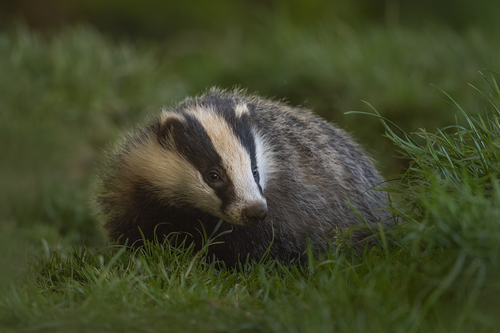
European Badger
Meles meles
The iconic architect of the evening, the European Badger is a social, nocturnal wanderer known for its striking monochrome mask and impressive digging skills.
Quick Identification
Size
60–90 cm (24–35 in) in length; weight typically 7–13 kg (15–29 lbs), though they can reach 17 kg (37 lbs) in autumn.
Colors
Distinctive black and white striped face, grizzled silver-grey back, and black legs and underbelly.
Key Features
- Iconic black and white vertical stripes through the eyes
- Stocky, wedge-shaped body with short legs
- Powerful front claws for digging
- Thick, coarse silver-grey fur
When You’ll See Them
Geographic range
Where Does the European Badger Live?
The European Badger is native to almost the entire European continent and extends into parts of West Asia. They are found from the British Isles and Scandinavia in the north, all the way down to the Mediterranean coast in the south, including Spain, Italy, and Greece. Their core range includes high-density populations in the United Kingdom, Ireland, France, and Germany, where they thrive in temperate climates and mosaic landscapes.
Basemap © OpenStreetMap contributors
Behavior
European Badgers are highly social mustelids that live in complex underground burrow systems known as setts. These setts are often passed down through generations, with some being over a century old. A single clan, usually consisting of about six adults, occupies a territory and works together to maintain the tunnels and bedding. While they are communal, they usually forage alone, using their keen sense of smell to navigate the darkness.
These animals are primarily nocturnal, emerging from their setts around dusk to spend the night foraging and grooming. They are meticulously clean, creating specific 'latrines' (shallow pits) away from their living quarters to mark territory boundaries. While generally peaceful and shy, they are incredibly strong and will defend themselves or their young if cornered by predators or dogs.
In suburban settings, badgers have become surprisingly adaptable. They are creatures of habit, often following the same 'badger paths' every night. While they can be a nuisance to gardeners by digging for grubs or eating fallen fruit, they are generally welcomed as a charismatic part of the local ecosystem.
EverydayEarth exclusive
Camera Tips
To capture great footage of a European Badger, placement is everything. Position your camera low to the ground—about 30 to 45 cm (12–18 inches) high—angled slightly upward. This 'badger-eye view' captures the detail of their facial stripes and powerful claws. If you know where a sett is located, place the camera 5 to 10 meters away from the entrance to avoid disturbing them, as badgers are sensitive to new objects and human scents.
Badgers are famously wary of white light, so it is essential to use a camera with 'No-Glow' or 'Black' Infrared (940nm) LEDs. Standard 'Low-Glow' (850nm) LEDs produce a faint red glimmer that badgers may notice, potentially causing them to avoid the area or behave unnaturally. For the best video results, set your camera to take 20-30 second clips with a short trigger interval, as badgers often spend several minutes grooming or foraging in one spot.
Luring badgers to your camera is relatively easy if they are already visiting your garden. A handful of unsalted peanuts, a smear of peanut butter on a log, or even a few scattered raisins can keep a badger in the camera's field of view for several minutes. Just be consistent; if you provide a small treat at the same time each evening, they will often make your garden a regular stop on their nightly patrol. Avoid using large amounts of food to ensure they don't become dependent on human feeding.
Check your camera settings for 'high sensitivity' during the autumn months. This is when badgers are most active, 'fattening up' for the winter. While they don't true-hibernate, they do spend much more time underground during cold snaps, so late spring through early autumn is your peak window for high-quality, frequent captures.
Similar Species
Species that look similar or are commonly confused with European Badger.
Frequently Asked Questions
Record European Badger at your habitat
Connect a camera to start building your own species record — AI identifies every visitor automatically.