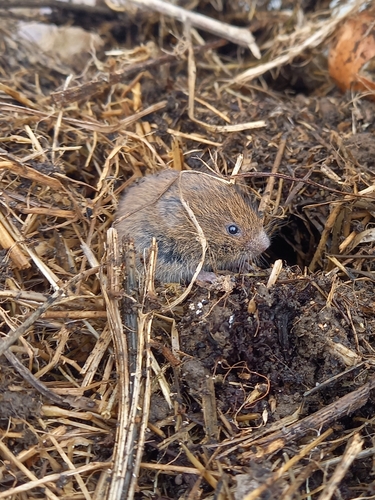
Field Vole
Microtus agrestis
The hidden pulse of the meadow, the Field Vole is a master of the under-grass world. Though small and secretive, this prolific mammal supports entire ecosystems and creates intricate runway networks right under our feet.
Quick Identification
Size
Body length 9–12 cm (3.5–4.7 in); tail length 3–5 cm (1.2–2.0 in); weight 20–50 g (0.7–1.8 oz)
Colors
Shaggy grey-brown upper fur with a grizzled appearance; creamy-grey or pale grey underside; dark eyes and pale feet
Key Features
- Tail is roughly one-third of the total body length
- Small ears are almost entirely hidden by thick, shaggy fur
- Blunt snout and stocky, rounded body profile
- Yellowish-green droppings often found in neat piles in grass runways
When You’ll See Them
Geographic range
Where Does the Field Vole Live?
The Field Vole is a widespread native of Europe and Northern Asia, with a massive geographic footprint that stretches from the Atlantic coast of the United Kingdom and France all the way east to Lake Baikal in Siberia. Within this range, they are found as far north as the Arctic Circle in Scandinavia and as far south as the mountain ranges of the Balkans. While they are remarkably common across most of mainland Europe, they are notably absent from most Mediterranean islands and Ireland, thriving instead in the moist, temperate climates of the central and northern latitudes.
Basemap © OpenStreetMap contributors
Behavior
Field Voles are the industrious architects of the meadow, spending the majority of their lives within a complex network of "runways" woven through tall, dense grass. Unlike many other rodents that excavate deep underground tunnels, the Field Vole prefers to build its nests and paths just above the soil surface, protected by a canopy of vegetation. They are highly territorial animals, especially females, and will vigorously defend their small home ranges from intruders.
These mammals follow a polyphasic activity pattern, meaning they are active for short bursts of 2 to 3 hours followed by periods of rest, repeating this cycle throughout both day and night. While they are naturally shy and avoid human contact, their presence is often betrayed by the distinctive sound of rustling grass or the sight of neatly clipped grass stems left along their travel paths. During the winter, they do not hibernate; instead, they remain active beneath the snow, which provides a layer of insulation against the cold and protection from aerial predators.
EverydayEarth exclusive
Camera Tips
To successfully capture a Field Vole on an AI trail camera, you must think at ground level. These rodents rarely venture into open ground, preferring the safety of tall grass. Look for "vole runs"—thin, matted paths about two inches wide at the base of the grass. Place your camera as low as possible, ideally mounting it on a small stake or a low-profile ground plate just 2 to 3 inches above the soil. Aim the lens across the runway rather than directly down it to get a better side-profile view of the animal.
Since Field Voles are small and move with lightning-fast, darting motions, your camera settings are critical. Set your PIR (passive infrared) sensitivity to the highest level to ensure the sensor picks up their tiny heat signatures. Use a fast trigger speed (0.2s or less) and set the video length to short 5-10 second bursts. Because they are so small, check your camera’s minimum focal distance; if the camera is too close, the vole will be a blur. Placing the camera about 1.5 to 2 feet away from the runway usually provides the best balance of detail and focus.
While you don't necessarily need bait, you can encourage them to pause for a photo by placing a handful of birdseed, sunflower hearts, or even a small slice of apple near a known run. Avoid placing large piles of food, as this may attract cats, foxes, or weasels that will scare the voles away or turn your camera spot into a hunting ground. In the winter, don't pack away your gear—Field Voles are active under the snow, and if you find a spot where the snow has melted or been cleared, you are very likely to see them scurrying about for food.
Similar Species
Species that look similar or are commonly confused with Field Vole.
Frequently Asked Questions
Record Field Vole at your habitat
Connect a camera to start building your own species record — AI identifies every visitor automatically.