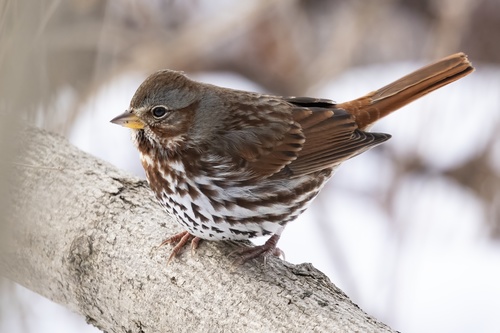
Fox Sparrow
Passerella iliaca
The Fox Sparrow is the industrious dancer of the forest floor, recognizable by its rich, rusty colors and its rhythmic double-footed kick. This large, melodic sparrow brings a touch of the wild northern woods to backyard thickets every winter.
Quick Identification
Size
Length 15-19 cm (5.9-7.5 in); Wingspan 25-30 cm (10-12 in); Weight 27-54 g (0.9-1.9 oz)
Colors
Variations of rusty red, soot gray, or slate depending on region; white underparts with heavy triangular streaks or chevrons on the breast.
Key Features
- Heavy, conical bill with a yellowish lower mandible
- Dense breast spotting often merging into a central chest spot
- Large, chunky build significantly bigger than a Song Sparrow
- Distinctive 'double-scratch' hopping behavior when foraging
When You’ll See Them
Geographic range
Where Does the Fox Sparrow Live?
The Fox Sparrow is a native of North America, with a vast breeding range that spans the boreal forests and scrubby tundras of Alaska and Canada, reaching as far east as Newfoundland. During the winter, they migrate across the continental United States and into northern Mexico, seeking out brushy edges and forest floors. Various subspecies are found year-round along the Pacific Coast and in the high-elevation mountains of the American West.
Basemap © OpenStreetMap contributors
Behavior
Fox Sparrows are the heavyweights of the sparrow world, known for their industrious and energetic foraging habits. They are most famous for their "double-scratch" technique: a rhythmic hop where they kick both feet backward simultaneously to uncover insects and seeds hidden beneath leaf litter. This behavior creates a noticeable rustling sound in the undergrowth, often alerting observers to their presence before the bird is actually seen.
While they are generally shy and prefer to stay near the protection of dense thickets, they are quite social during the winter and migration, occasionally joining mixed flocks of other sparrows or juncos. Despite their rugged appearance, they possess one of the most melodic and flute-like songs of any North American sparrow, consisting of clear, whistling notes that are a herald of spring in their northern breeding grounds.
EverydayEarth exclusive
Camera Tips
To capture the best footage of a Fox Sparrow, you must think like a ground-dweller. These birds rarely visit hanging feeders, preferring to forage on the forest floor or under dense cover. Mount your camera low to the ground—ideally between 6 and 12 inches high—and aim it at an area with plenty of leaf litter or mulch. If you have a brush pile or a thick hedge, place the camera right at the edge where the cover meets a small clearing.
Because the Fox Sparrow's most interesting behavior is its "double-scratch" foraging dance, video mode is highly recommended over still photos. Set your camera for a 10-15 second clip with a short trigger delay. To lure them into the frame, scatter a high-quality mix of cracked corn, white millet, or sunflower hearts directly on the ground. They are particularly fond of areas that haven't been meticulously raked, as the old leaves hold the insects and larvae they crave.
Lighting is crucial since these birds prefer shaded, "moody" habitats. Position your camera to avoid pointing directly into the sun, which can create harsh shadows in the thickets. In the winter months, a ground-level heated birdbath is an irresistible attractant; Fox Sparrows are enthusiastic bathers and will often spend several minutes splashing in front of the lens if fresh water is available when other sources are frozen. Ensure your AI triggers are set to a high sensitivity to catch their quick, hopping movements.
Similar Species
Species that look similar or are commonly confused with Fox Sparrow.
Frequently Asked Questions
Record Fox Sparrow at your habitat
Connect a camera to start building your own species record — AI identifies every visitor automatically.