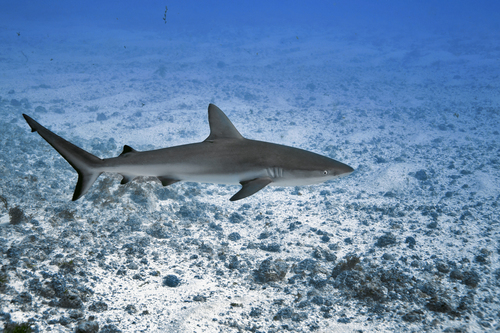
Galápagos Shark
Carcharhinus galapagensis
The undisputed ruler of the island reefs, the Galápagos shark is a bold, inquisitive apex predator that defines the rugged underwater landscapes of the Pacific.
Quick Identification
Size
Typically 3.0 to 3.7 m (9.8 to 12.1 ft) in length; weight up to 195 kg (430 lbs)
Colors
Uniform brownish-gray on top with a pale white underside; subtle white stripe often visible on the flanks
Key Features
- Tall, falcate first dorsal fin with a slightly rounded tip
- Prominent ridge located between the first and second dorsal fins
- First dorsal fin originates directly over the rear tips of the pectoral fins
- Broad, rounded snout and large eyes
When You’ll See Them
Geographic range
Where Does the Galápagos Shark Live?
The Galápagos shark is a circumtropical species that favors the clear waters of isolated oceanic archipelagos over continental coastlines. While they are most iconic in the Galápagos Islands of Ecuador, they maintain strong resident populations near Hawaii, the Revillagigedo Islands of Mexico, and the isolated islands of the South Pacific and Atlantic. They are rarely found in shallow coastal estuaries, preferring the steep drop-offs and jagged underwater topography of volcanic islands.
Basemap © OpenStreetMap contributors
Behavior
The Galápagos shark is known for its bold and inquisitive nature, often approaching divers and boats to investigate. In the hierarchy of the reef, they are frequently the dominant species, using their size and aggressive swimming patterns to clear other sharks from feeding areas. While they are often seen cruising alone, they are highly social and frequently gather in large groups around productive hunting grounds or cleaning stations.
These sharks are sophisticated hunters that utilize a combination of keen olfaction and electroreception to locate prey hidden in rocky crevices. Their interaction with humans is generally cautious but assertive; they may perform a 'hunching' display—dropping their pectoral fins and arching their backs—as a territorial warning if they feel crowded. Despite their formidable presence, they are a vital part of the island ecosystem, keeping populations of reef fish and smaller predators in check.
EverydayEarth exclusive
Camera Tips
To capture high-quality footage of a Galápagos shark, you will need a specialized underwater housing for your trail camera or a dedicated underwater 'action' camera with a time-lapse or motion-trigger mode. For 'backyard' island enthusiasts, mounting a camera to a weighted base or a dock piling at a depth of 3 to 10 meters (10–30 feet) near a reef edge is ideal. Ensure the camera is angled slightly upward to capture the shark's silhouette against the surface light, which helps highlight the tall dorsal fin.
Baiting, often referred to as a Baited Remote Underwater Video (BRUV) setup, is the most effective way to draw these inquisitive sharks into the frame. A perforated PVC pipe filled with oily fish like mackerel or sardines (a 'chum pod') should be positioned roughly 1 to 2 meters in front of the lens. This encourages the shark to linger and investigate, providing clear side-profile shots for identification.
Since these sharks are active across all light levels, a camera with strong low-light performance or infrared (IR) capabilities is essential for night shots. If using white light or a strobe, be aware that the Galápagos shark may be startled or, conversely, become overly interested and bite the light source. High frame rates (60fps or higher) are recommended to capture their fluid movement, and a wide-angle lens is a must, as these sharks often swim very close to the equipment.
Similar Species
Species that look similar or are commonly confused with Galápagos Shark.
Dusky Shark
The Dusky shark has a lower, more swept-back first dorsal fin that begins further behind the pectoral fins.
Grey Reef Shark
Much smaller on average, with a distinct black margin on the entire trailing edge of the caudal (tail) fin.
Silky Shark
Has a smaller dorsal fin with a much longer 'free rear tip' and a smoother, silkier skin texture.
Frequently Asked Questions
Record Galápagos Shark at your habitat
Connect a camera to start building your own species record — AI identifies every visitor automatically.