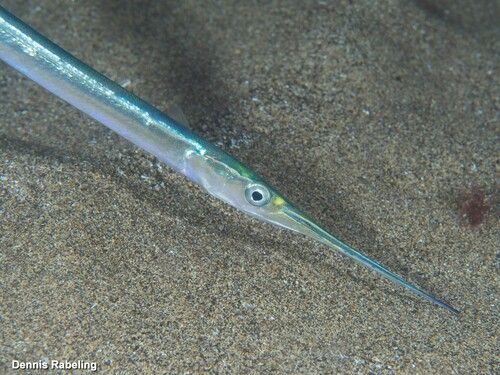
Garfish
Belone belone
Meet the 'Sea Needle,' a shimmering silver predator that skims the ocean surface with lightning speed. Famous for its needle-like beak and striking green bones, the Garfish is a master of the coastal shallows.
Quick Identification
Size
Typically 50–70 cm (20–28 inches) in length, though can reach 90 cm (35 inches); weight ranges from 0.5 to 1.4 kg (1.1 to 3 lbs).
Colors
Iridescent blue-green or dark blue back, shimmering silver flanks, and a white-silver belly; interior bones are a unique, bright emerald green.
Key Features
- Elongated, needle-like beak filled with small, sharp teeth
- Slender, eel-shaped body with fins set far back toward the tail
- Silvery-blue iridescent scales that reflect light
- Distinctive green bones caused by the presence of biliverdin pigment
When You’ll See Them
Geographic range
Where Does the Garfish Live?
The Garfish is a wide-ranging wanderer of the Eastern Atlantic, spanning from the subarctic waters of Iceland and Norway down to the sun-drenched coasts of Morocco and the Canary Islands. This sleek predator is a common sight in the Mediterranean, Black, and Baltic Seas, often migrating into shallower coastal reaches as the water warms. While they spend much of their time in the open sea, they frequently visit estuaries and brackish lagoons during the spring and summer spawning seasons.
Basemap © OpenStreetMap contributors
Behavior
The Garfish is a highly energetic, pelagic predator known for its incredible speed and agility near the water's surface. Often referred to as 'sea needles,' these fish are social hunters that travel in loose schools, following the migrations of their prey. They are famous for their acrobatic displays; when startled or chasing prey, they frequently leap out of the water, skittering across the surface at high speeds. This behavior is both a hunting tactic and a defense mechanism against larger predators like dolphins and tuna.
While they are primarily ocean-dwelling, Garfish exhibit seasonal movement patterns. In the spring and summer, they migrate toward coastal areas, estuaries, and even brackish lagoons to spawn among seagrass and seaweed. They are generally indifferent to humans but are a popular sight for coastal residents and pier-side observers. Their most famous biological quirk is their bright green bones, which often surprises those unfamiliar with the species, though the fish is perfectly edible and healthy.
EverydayEarth exclusive
Camera Tips
To capture the Garfish on camera, you need to focus on the top two feet of the water column. For those with backyard docks or seawalls, an underwater action camera mounted to a piling or a weighted tripod is the best approach. Aim the camera horizontally or slightly upward toward the surface; the Garfish’s silver body creates a stunning silhouette against the sunlight filtering through the water. Clear, sunny days are essential, as the light makes their iridescent scales 'pop' and helps the camera maintain a high shutter speed for these fast movers.
Because Garfish are attracted to movement and shimmer, you can encourage them to pass in front of your lens by hanging a 'flasher'—a small piece of reflective metal or a shiny fishing lure with the hooks removed—about three feet away from the camera. The flashing light mimics the scales of a wounded baitfish, which will pique the curiosity of a nearby Garfish school. Ensure your camera is set to a high frame rate (at least 60fps) to catch their rapid, darting movements without motion blur.
Placement is key: look for areas where the tide pushes baitfish against a structure, such as a pier or a rocky outcrop. Garfish often patrol these 'edges' looking for a meal. During the spring spawning season, placing cameras near submerged seagrass beds in shallow water can provide intimate footage of their social interactions. Be sure to use a wide-angle lens, as these fish can appear suddenly and move out of frame quickly. Regularly cleaning the lens of salt buildup or algae is necessary for the crispest shots.
Similar Species
Species that look similar or are commonly confused with Garfish.
Frequently Asked Questions
Record Garfish at your habitat
Connect a camera to start building your own species record — AI identifies every visitor automatically.