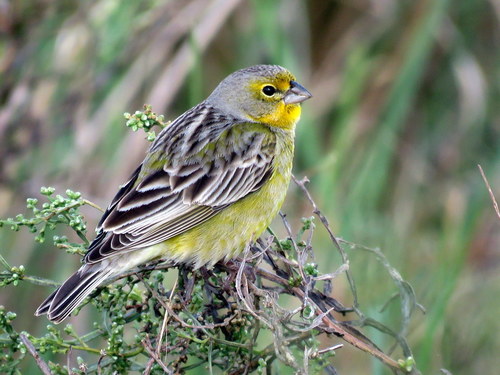
Grassland Yellow-Finch
Sicalis luteola
A splash of sunshine in the open fields, the Grassland Yellow-Finch is a social tanager known for its vibrant yellow breast and buzzy, energetic song. Often found in large flocks, these 'yellow-finches' bring life and color to meadows and suburban backyards across the Americas.
Quick Identification
Size
Length 11.5–12.5 cm (4.5–5 in); weight 11–14 g (0.4–0.5 oz)
Colors
Bright yellow underparts and face; olive-brown upperparts with heavy dark streaking; females are duller with more gray-brown tones
Key Features
- Vibrant yellow underparts and 'spectacles' around the eyes
- Olive-brown mantle with distinct dark longitudinal streaks
- Short, conical grey bill
- Gregarious social behavior often seen in large flocks
When You’ll See Them
Geographic range
Where Does the Grassland Yellow-Finch Live?
Native to South and Central America, the Grassland Yellow-Finch boasts an incredibly expansive and fragmented range that stretches from southern Mexico through the Caribbean and down to the tip of Argentina. These birds are most densely populated across the pampas of Argentina, Uruguay, and southern Brazil, though significant resident populations thrive in the Andean highlands and the llanos of Colombia and Venezuela. Because they favor open landscapes, they are frequently found colonizing newly cleared agricultural lands and suburban fringes throughout the Neotropics.
Basemap © OpenStreetMap contributors
Behavior
The Grassland Yellow-Finch is a social and energetic bird often seen in small to large flocks, especially during the non-breeding season. They are primarily ground-dwellers, scurrying through tall grasses to find seeds, but males will often perch on fence posts or low bushes to deliver their metallic, buzzy song. During the breeding season, they become more territorial, and males perform elaborate flight displays, fluttering upward before spiraling back down while singing.
These birds are generally shy around humans but can become accustomed to activity in rural and suburban gardens if there is ample open space and seeding grasses. Their flight is undulating and rapid, often punctuated by sharp 'chip' calls that help keep the flock together as they move between feeding sites. In the southern parts of their range, they are known to be migratory, moving northward in large, coordinated groups as the seasons change.
EverydayEarth exclusive
Camera Tips
To capture the Grassland Yellow-Finch on camera, focus on ground-level placement. These birds are dedicated ground-foragers, so setting your camera 6-12 inches off the ground near a patch of seeding grasses or a cleared spot in a pasture is ideal. Use a wide-angle lens setting if available, as they often travel in flocks and you'll want to capture the group dynamic rather than just a single individual. Since they are small and fast-moving, a high shutter speed or a 'burst' photo mode is essential to avoid motion blur during their frequent hops and flutters.
While they are primarily seed-eaters, they are highly attracted to shallow water features. A ground-level birdbath or a simple dripping water station placed in an open area will draw them in, especially during the drier months. Ensure the camera is positioned with the sun at your back to highlight the vibrant yellow plumage of the males, which can appear washed out in harsh midday glare. Early morning light provides the best color saturation and catches them at their most active foraging period.
If you are using bait to attract them to a specific spot, fine birdseed mixes containing millet or crushed sunflower hearts work best. Scatter the seed in a natural-looking way rather than in a pile to encourage more natural 'searching' behavior for the camera. Because these birds are sensitive to sudden movements, ensure your camera is well-camouflaged or housed in a non-reflective casing, and avoid placing it too close to high-traffic human paths where they might be easily spooked before the camera triggers.
Similar Species
Species that look similar or are commonly confused with Grassland Yellow-Finch.
Frequently Asked Questions
Record Grassland Yellow-Finch at your habitat
Connect a camera to start building your own species record — AI identifies every visitor automatically.