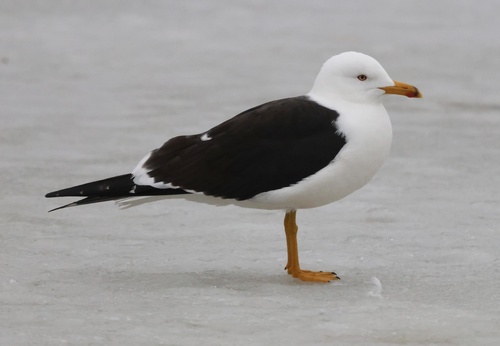
Lesser Black-backed Gull
Larus fuscus
A sophisticated traveler with striking slate-colored wings and bright yellow legs, the Lesser Black-backed Gull is a master of adaptation. Whether soaring over Atlantic cliffs or patrolling suburban parks, this elegant gull is a fascinating subject for any backyard observer.
Quick Identification
Size
Length 50-64 cm (20-25 in), wingspan 124-150 cm (49-59 in), weight 450-1200 g (1-2.6 lbs)
Colors
Adults have dark charcoal-grey to black wings and back, white head and underparts, and bright yellow legs. Juveniles are mottled brown and white.
Key Features
- Bright yellow legs and feet in adults
- Dark slate-grey to blackish mantle (upper wings)
- Slender yellow bill with a red spot near the tip
- Smaller and slimmer profile than the Great Black-backed Gull
When You’ll See Them
Geographic range
Where Does the Lesser Black-backed Gull Live?
The Lesser Black-backed Gull is primarily native to the Atlantic and Arctic coasts of Europe and parts of Western Asia. From its core breeding grounds in the United Kingdom, Scandinavia, and Iceland, it migrates south to wintering spots as far as West Africa and the Middle East. Interestingly, this species has staged a massive expansion into North America over recent decades, where it is now a common year-round resident along the East Coast and throughout the Great Lakes region.
Basemap © OpenStreetMap contributors
Behavior
The Lesser Black-backed Gull is a highly intelligent and opportunistic bird known for its versatility. Unlike many other seabirds, it has adapted remarkably well to inland environments, often seen patrolling agricultural fields, landfills, and urban rooftops. They are social birds, frequently seen in large mixed-species flocks, yet they maintain a hierarchy based on age and size. During the breeding season, they are colonial nesters, often returning to the same site year after year.
Their foraging behavior is a mix of active hunting and clever scavenging. They are known to follow fishing boats or tractors turning soil to snatch up easy meals. In urban settings, they show a high degree of habituation to humans, often nesting on flat roofs to avoid ground predators. While they can be vocal and territorial near their nests, they are generally less aggressive toward humans than the larger Herring Gull.
EverydayEarth exclusive
Camera Tips
To capture the best footage of a Lesser Black-backed Gull, think high. These birds prefer elevated vantage points like rooftops, chimneys, or high fence posts where they can survey the area. Mounting your AI camera on a roof eave or a high garden structure will yield much better results than ground-level placement. Angle the camera slightly downward to capture the bird's distinctive dark mantle and yellow legs as it lands.
If you live near a body of water or in an urban area where they frequent, you can attract them with a shallow birdbath or a steady supply of fresh water. They are meticulous bathers and the splashing movement is a great trigger for video recording. For bait, small amounts of dog kibble or fish scraps can work, but be mindful of local regulations regarding feeding gulls to avoid creating a nuisance.
Because of their white plumage and dark wings, lighting is critical. Early morning or late afternoon sun provides the best 'golden hour' light that prevents the white feathers from looking blown out (overexposed) while still showing the rich charcoal texture of the wings. Set your camera's exposure compensation slightly negative if you find the white areas of the bird are losing detail in direct midday sun.
Similar Species
Species that look similar or are commonly confused with Lesser Black-backed Gull.
Frequently Asked Questions
Record Lesser Black-backed Gull at your habitat
Connect a camera to start building your own species record — AI identifies every visitor automatically.