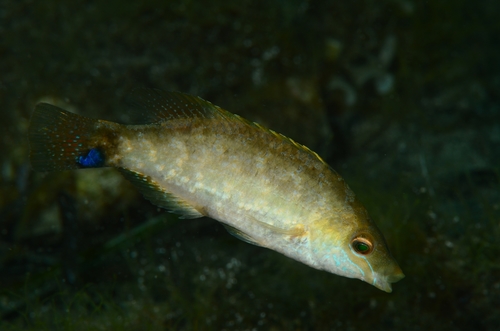
Grey Wrasse
Symphodus cinereus
A subtle beauty of the Mediterranean shallows, the Grey Wrasse is a master of camouflage and a dedicated nest-builder. Thriving in lush seagrass meadows, this small fish offers a fascinating glimpse into the complex social lives of coastal marine life.
Quick Identification
Size
Typically 8 cm (3.1 in), but can reach a maximum total length of 16 cm (6.3 in)
Colors
Variable grey, sandy-brown, or olive-green; usually features two dark longitudinal bands and a distinct dark spot at the base of the tail fin
Key Features
- Distinct dark spot at the base of the caudal fin
- Two dark horizontal bands along the flanks
- Pointed snout with a small mouth
- Often found hovering near seagrass or sandy bottoms
When You’ll See Them
Geographic range
Where Does the Grey Wrasse Live?
The Grey Wrasse is native to the temperate and subtropical waters of the eastern Atlantic Ocean, stretching from the southern Bay of Biscay along the coasts of Spain and Portugal down to Morocco. Its most dense populations are found throughout the Mediterranean Sea and into the Black Sea, where it thrives in the shallow, sunlit coastal fringes. It is a strictly marine species, found almost exclusively along the continental shelves of Southern Europe and North Africa.
Basemap © OpenStreetMap contributors
Behavior
The Grey Wrasse is a diurnal and highly territorial species, especially during the spring and summer breeding seasons. Unlike many pelagic fish that scatter eggs in open water, the male Grey Wrasse is a dedicated architect; he constructs a semi-circular nest out of various species of algae on the sandy seafloor. Once a female is attracted to the nest and deposits her eggs, the male takes on the role of a vigilant guardian, fanning the eggs with his fins to ensure they stay oxygenated and defending the site from opportunistic predators.
Outside of the breeding season, they are somewhat more social but remain closely tied to the seafloor for protection. They are inquisitive yet cautious, often darting into the safety of dense seagrass beds if they perceive a threat. In areas with high human activity, such as Mediterranean swimming beaches, they can become somewhat habituated to snorkelers, though they generally maintain a safe distance while foraging for small prey along the substrate.
EverydayEarth exclusive
Camera Tips
To capture high-quality footage of the Grey Wrasse, you will need a dedicated underwater action camera or an AI-powered marine camera house. Because these fish live in shallow water (1–5 meters is the sweet spot for lighting), you can often mount your camera on a weighted dive plate or a short tripod with sand-anchors. Positioning the camera at the edge of a seagrass bed where it meets a sandy patch is the most effective strategy, as the wrasse uses the grass for cover and the sand for foraging.
Using a small amount of bait, such as a crushed sea urchin or a cracked mussel, can draw Grey Wrasse into the camera's field of view almost instantly. Place the bait roughly 30–50 centimeters from the lens to ensure the fish remains in focus. Since they are small, set your camera to a high frame rate (60fps or higher) to capture their quick, darting movements clearly. If you are using an AI-trigger, calibrate it for small movements, as these fish often 'hover' before making a sudden strike at prey.
Lighting is critical for bringing out the subtle greys and greens of this species. In shallow water, natural sunlight is usually sufficient, but if you are filming deeper than 5 meters or on an overcast day, a small underwater video light with a wide beam will help reveal the two dark longitudinal bands and the tail spot that are diagnostic for the species. Check your camera housing seals frequently and ensure the lens port is treated with an anti-fog solution before deployment.
Similar Species
Species that look similar or are commonly confused with Grey Wrasse.
East Atlantic Peacock Wrasse
Much more vibrantly colored with blue and orange markings; lacks the specific tail spot and horizontal banding of the Grey Wrasse.
Corkwing Wrasse
Usually features a dark spot on the tail, but it is located on the middle of the caudal peduncle rather than the base, and it has more intricate facial markings.
Frequently Asked Questions
Record Grey Wrasse at your habitat
Connect a camera to start building your own species record — AI identifies every visitor automatically.