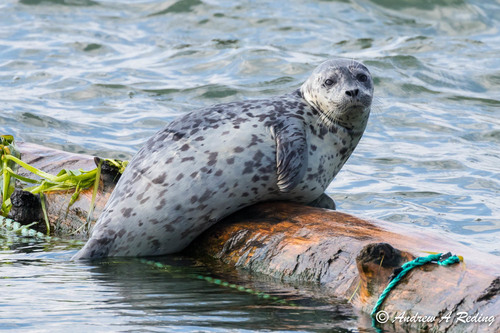
Harbor Seal
Phoca vitulina
The Harbor Seal is the ultimate coastal watcher, known for its dappled coat and soulful eyes. Often found lounging on sun-drenched rocks or bobbing in the surf, these intelligent mammals are a highlight of any seaside observation.
Quick Identification
Size
Length: 1.5–1.9 m (5–6.2 ft); Weight: 60–150 kg (130–330 lbs)
Colors
Variable coats ranging from brownish-black to silvery-white, covered in unique patterns of dark and light spots or rings.
Key Features
- V-shaped nostrils that meet at the bottom
- No external ear flaps, only small ear holes
- Large, dark, expressive eyes
- Short, five-clawed front flippers
When You’ll See Them
Sightings on EverydayEarth
Apr 10, 2026
A harbor seal is hauled out on a rock, resting as ocean waves surge around and occasionally over the edges of its perch. It remains relatively still, likely thermoregulating in the sunlight.
Geographic range
Where Does the Harbor Seal Live?
The Harbor Seal possesses the widest geographic distribution of any pinniped, hugging the temperate and Arctic shorelines throughout the Northern Hemisphere. They are native to the coastal fringes of both the North Atlantic and North Pacific Oceans, with significant populations residing along the coasts of the United States, Canada, the United Kingdom, and Norway. From the icy fjords of Alaska to the rocky bays of New England and the sandy islands of the North Sea, these adaptable mammals are a staple of the northern maritime landscape.
Basemap © OpenStreetMap contributors
Behavior
Harbor Seals are fascinating marine mammals characterized by their dual life between land and sea. While they are agile and graceful swimmers capable of diving to depths of 1,500 feet, they are much more lumbering on land. They spend significant portions of their day 'hauling out' onto rocky outcrops, sandy beaches, or ice floes. This behavior is essential for rest, thermoregulation, and social interaction, though they generally prefer to maintain a small 'personal space' distance from other seals even when grouped together.
These seals are generally solitary when foraging but can be quite gregarious at communal haul-out sites. They are known for their curiosity, often following coastal hikers or kayakers from a safe distance, popping their heads out of the water in a behavior known as 'bottling.' Unlike sea lions, they cannot rotate their rear flippers forward to walk, so they move across land using a belly-flopping motion known as 'galumphing.' They are relatively quiet compared to other pinnipeds, communicating through soft grunts or by slapping their flippers against the water.
EverydayEarth exclusive
Camera Tips
Capturing Harbor Seals on a backyard or trail camera is a unique opportunity for those living on waterfront properties, particularly near docks, seawalls, or rocky shorelines. The most effective setup involves mounting your camera on a sturdy, permanent fixture like a dock piling or a weighted tripod positioned about 2 to 4 feet above the high-tide line. Angle the camera slightly downward toward a flat surface where seals are likely to haul out, such as a large rock or a wooden float. To avoid false triggers caused by moving water or sunlight glinting off the waves, try to frame the shot so the water occupies only the top third of the frame, focusing the PIR sensor on the solid 'landing' spot.
Because Harbor Seals are highly sensitive to movement and sound, ensure your camera is set to a 'Silent' or 'No Glow' flash mode if you are monitoring at night. These seals are slaves to the tide, often hauling out as the water recedes to expose their favorite resting spots. Use a camera with a fast trigger speed and set it to take 3-photo bursts or 20-second video clips. This will help you capture their distinctive behaviors, such as the 'banana pose' (lifting head and tail simultaneously) or the way they use their sensitive whiskers to explore their environment. Avoid the use of any baits or lures; it is often illegal to feed marine mammals, and they are naturally attracted to quiet, safe places to rest.
If your camera is located in an area with salt spray, consider using a specialized protective housing or applying a water-repellent coating to the lens. Salt crusting can quickly ruin the clarity of your images. During the late summer molting season, seals spend significantly more time on land to stay warm, making this the best time of year for high-quality, long-duration captures. If you are using an AI-powered camera, ensure the sensitivity is dialed in to account for the difference in body temperature between the seal and the cold rocks or water, which can sometimes be subtle on overcast days.
Similar Species
Species that look similar or are commonly confused with Harbor Seal.
California Sea Lion
Sea lions have visible external ear flaps and can 'walk' on land by rotating their rear flippers, whereas Harbor Seals have no ear flaps and must crawl on their bellies.
Harp Seal
Harp Seals are typically found further north in the Arctic and have a distinctive black harp-shaped marking on their backs as adults.
Frequently Asked Questions
Record Harbor Seal at your habitat
Connect a camera to start building your own species record — AI identifies every visitor automatically.