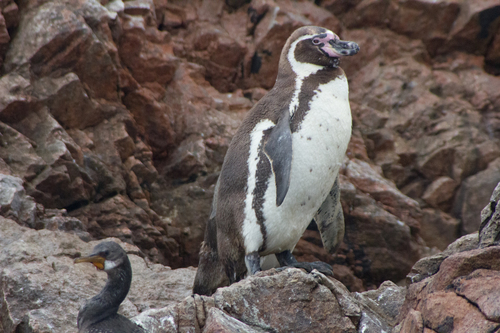
Humboldt Penguin
Spheniscus humboldti
The Humboldt Penguin is a charismatic 'desert' penguin that calls the rugged Pacific coast of South America home. Known for its distinctive braying call and incredible swimming agility, this vulnerable species is a true icon of the Humboldt Current.
Quick Identification
Size
65-70 cm (26-28 in) in length; 3.6-5.9 kg (8-13 lbs)
Colors
Slate-black upperparts, white underparts, a single black breast band, and pink fleshy patches around the eyes and bill.
Key Features
- Single horseshoe-shaped black breast band
- Pink fleshy skin at the base of the bill
- Large white 'C' shape bordering the side of the head
- Unique black spots on the white belly
When You’ll See Them
Geographic range
Where Does the Humboldt Penguin Live?
The Humboldt Penguin is native to the South American continent, predominantly found along the Pacific coastlines. Its core range spans from northern Peru down through the central coast of Chile, dictated largely by the path of the nutrient-rich, cold Humboldt Current. While they are occasionally found as far south as the Chiloe Archipelago, they remain a strictly South American species with no introduced populations elsewhere in the wild.
Basemap © OpenStreetMap contributors
Behavior
While they appear clumsy and waddle with a distinct side-to-side gait on land, they transform into sleek, powerful hunters once they hit the water. They use their stiff, flipper-like wings to 'fly' through the ocean, reaching impressive speeds to chase down schooling fish. They are generally monogamous and show high site fidelity, meaning they return to the same nesting site year after year to raise their chicks.
EverydayEarth exclusive
Camera Tips
Because these penguins are most active during the 'rush hours' of dawn and dusk when they leave for or return from fishing trips, a camera with high-quality low-light sensors or invisible 'No-Glow' infrared flash is essential. Standard white flash might startle the birds and disrupt their colony's peace. Set your trigger speed to the fastest possible setting, as they can be surprisingly quick when moving across open rock.
Avoid using any form of bait or lures, as this can attract predators like foxes or gulls that threaten penguin chicks. Instead, look for natural bottlenecks in the terrain, such as narrow gaps between boulders or the entrance to a sea cave. For the most interesting behavior, use video mode to capture their 'braying' displays, but ensure your camera housing is salt-rated or protected, as the coastal air where these penguins live is highly corrosive to electronics.
Similar Species
Species that look similar or are commonly confused with Humboldt Penguin.
Frequently Asked Questions
Record Humboldt Penguin at your habitat
Connect a camera to start building your own species record — AI identifies every visitor automatically.