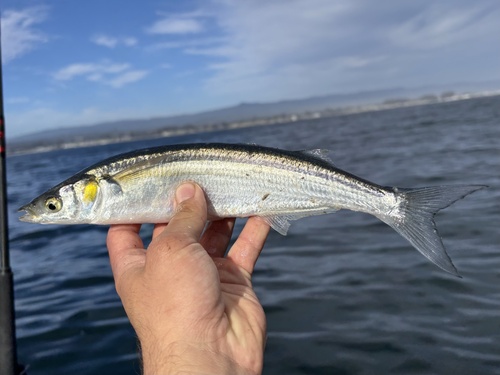
Jack Silverside
Atherinopsis californiensis
A shimmering presence in the Pacific surf, the Jack Silverside is the silver streak of our coastal bays. Known for its social schools and iconic golden cheek spot, it brings a flash of brilliance to every pier and kelp bed it calls home.
Quick Identification
Size
Typically ranges from 30 to 45 cm (12 to 18 inches) in length, with some individuals reaching up to 55 cm (22 inches).
Colors
Brilliant silver body with a greenish or greyish tint on the back; features a distinctive yellow or golden-orange spot on the gill cover behind the eye.
Key Features
- Prominent yellow-gold spot on the operculum (gill cover)
- Two widely separated dorsal fins
- Bright silver lateral stripe running the length of the body
- Sleek, cigar-shaped body with a deeply forked tail
When You’ll See Them
Geographic range
Where Does the Jack Silverside Live?
The Jack Silverside is a quintessential resident of the North American Pacific coast. This species is natively found from the cooler waters of Oregon in the United States, extending southward along the entire California coastline. Their range continues into the subtropical waters surrounding the Baja California peninsula in Mexico, where they thrive in both protected inner bays and the churning surf of the open ocean.
Basemap © OpenStreetMap contributors
Behavior
Jack Silversides, often locally called Jacksmelt, are highly social schooling fish that dominate the upper layers of the water column. They are frequently observed in massive, shimmering clouds near the surface, where they use their streamlined bodies to dart after drifting food particles. Their social nature makes them a constant presence around coastal infrastructure, and they are arguably the most common fish seen by visitors on Pacific coast piers.
Despite the 'smelt' in their common name, they are actually members of the silverside family. They exhibit a curious and bold temperament, often approaching divers or hanging around dock pilings where human activity stirs up nutrients. They serve as a fundamental link in the marine food chain, providing a primary food source for larger predators like harbor seals, California sea lions, and various sea birds.
EverydayEarth exclusive
Camera Tips
Capturing high-quality footage of Jack Silversides requires an underwater housing or a dedicated marine trail camera. To get the best results, mount your camera to a stationary structure like a dock piling or a boat slip about 1 to 2 feet below the water's surface. Positioning the camera to face toward the open water while keeping the piling in the corner of the frame provides a natural 'backdrop' that these fish are attracted to.
Lighting is your best friend when filming silversides. Angle the camera slightly upward toward the surface to take advantage of natural sunlight. This 'backlighting' effect will make their silver scales shimmer and highlight the distinctive yellow spot on their heads, which is a key marker for AI identification. If you are filming in the shade of a pier, a small underwater LED fill light can help maintain color accuracy and help the AI distinguish the fish from the dark background.
While Jack Silversides are naturally curious, you can encourage a close-up by using a mesh chum bag filled with bread or crushed shellfish. Secure the bag about 3 feet in front of the lens. This will create a 'staging area' where the fish will hover and compete for scraps, allowing the camera to capture clear, detailed images of their fins and facial features. Set your camera to a high frame rate, such as 60fps, to avoid motion blur from their rapid, jerky swimming patterns.
Similar Species
Species that look similar or are commonly confused with Jack Silverside.
Frequently Asked Questions
Record Jack Silverside at your habitat
Connect a camera to start building your own species record — AI identifies every visitor automatically.