Lechwe
Kobus leche
The lechwe is the ultimate marshland athlete, an antelope that thrives in the knee-deep waters of the African floodplains. With their water-resistant coats and specialized hooves, they turn the wetlands into a sanctuary.
Quick Identification
Size
Shoulder height 90-100 cm (35-39 in); weight 70-120 kg (150-265 lbs)
Colors
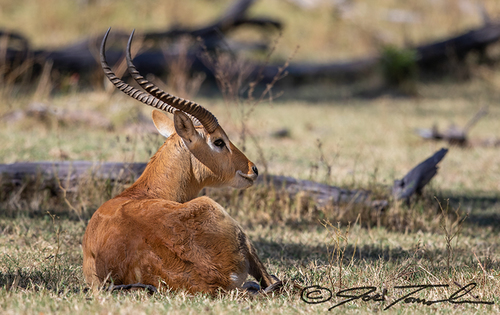
Golden-red to chestnut-brown coat; white throat, underparts, and eye-rings; distinct black markings on the front of the legs
Key Features
- Long, lyre-shaped, deeply ridged horns (males only)
- Sloping posture with hindquarters noticeably higher than shoulders
- Elongated, splayed hooves adapted for marshy ground
- Oily, water-repellent hair on the lower legs
When You’ll See Them
Geographic range
Where Does the Lechwe Live?
Native to the sun-soaked wetlands of south-central Africa, the lechwe is most famously found in the Okavango Delta of Botswana and the vast Bangweulu Swamps and Kafue Flats of Zambia. Their core range spans the floodplains of the Zambezi and Chobe rivers, extending into the Caprivi Strip of Namibia and parts of southeastern Angola. While their distribution is highly fragmented and tied strictly to major river systems, they remain one of the most iconic sights of the African marshlands.
Basemap © OpenStreetMap contributors
Behavior
The lechwe is a highly specialized semi-aquatic antelope that lives a life dictated by the rise and fall of African floodplains. They are exceptionally strong swimmers and feel most at home in knee-deep water, which provides them a significant tactical advantage against terrestrial predators like lions and hyenas. Their unique hooves spread wide to prevent them from sinking into soft mud, allowing them to bound through wetlands with surprising speed and grace.
Socially, lechwe are gregarious animals that congregate in herds ranging from a few dozen to several thousand individuals. They are known for a breeding system called 'lekking,' where males defend small, crowded territories in a central arena to attract females. While generally shy of human interaction, they are a vital part of their ecosystem, often seen grazing alongside other wetland specialists like sitatunga or hippos.
EverydayEarth exclusive
Camera Tips
To capture the best footage of a lechwe, place your trail camera along the 'splash zones'—the well-trodden muddy paths that lead from deep water to dry grazing banks. Look for flattened vegetation where the herd rests during the heat of the day. Because lechwe have a unique sloping build, mount your camera at roughly chest height (3-4 feet) to ensure you capture the impressive lyre-shaped horns of the males without cutting off the bottom of the frame.
Sunlight reflected off water can often trick a camera's exposure sensor, leading to washed-out images. Position your camera facing North or South to minimize direct solar glare during the golden hours of dawn and dusk when lechwe are most active. If you are setting up near a permanent water hole, look for the 'lek' areas—patches of slightly higher, drier ground where males frequently display; these are high-traffic zones perfect for behavioral shots.
Use a fast trigger speed (less than 0.5 seconds) as lechwe can be quite flighty. While they aren't attracted to standard backyard baits, a salt lick placed near a known crossing point can encourage them to pause long enough for a clear, focused photo. In areas with high humidity or swamp mist, ensure your camera has a high-quality anti-fog lens coating to keep your morning shots crisp.
Similar Species
Species that look similar or are commonly confused with Lechwe.
Frequently Asked Questions
Record Lechwe at your habitat
Connect a camera to start building your own species record — AI identifies every visitor automatically.