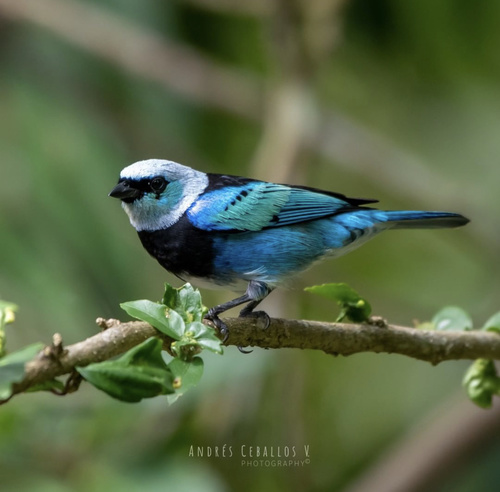
Masked Tanager
Stilpnia nigrocincta
A jewel of the Amazonian canopy, the Masked Tanager dazzles with its pale turquoise head and striking black mask. These energetic birds are a highlight for any birdwatcher or camera trap enthusiast exploring the tropical lowlands of South America.
Quick Identification
Size
Length 12-13 cm (4.7-5.1 in); Weight 15-20 g (0.5-0.7 oz)
Colors
Pale turquoise head, black mask and chin, black back and wings with blue/green edging, white underparts
Key Features
- Distinct black mask across eyes and chin
- Pale turquoise or sky-blue head
- Black upperparts with contrasting white belly
- Small, pointed bill for gleaning insects
When You’ll See Them
Geographic range
Where Does the Masked Tanager Live?
The Masked Tanager is a native of South America, primarily inhabiting the vast tropical landscapes of the Amazon Basin and the Guiana Shield. Its core range stretches across northern and central South America, including the lush forests of Brazil, Colombia, Peru, and Venezuela, as well as parts of Ecuador, Bolivia, and Guyana. This species thrives in the humid lowlands, where it remains a year-round resident in both pristine primary forests and recovering secondary woodlands.
Basemap © OpenStreetMap contributors
Behavior
The Masked Tanager is a high-energy songbird known for its constant movement within the tropical canopy. They are social creatures, often found in pairs or small family groups, and frequently join large, mixed-species foraging flocks alongside other tanagers, honeycreepers, and flycatchers. This social nature helps them stay protected from predators while searching for food across a wide territory.
While they are primarily arboreal and spend most of their time high above the ground, they are not particularly shy of human presence if their habitat is preserved. In garden settings near forest edges, they can become accustomed to human presence and may visit elevated feeding stations. Their flight is direct and fast, punctuated by short hops as they glean insects from the underside of leaves or pluck small berries from branches.
EverydayEarth exclusive
Camera Tips
Focus on elevation when setting up your camera for this species. Since Masked Tanagers are canopy dwellers, placing your camera at ground level is unlikely to yield results. If you have a property bordering a forest, try mounting your camera on a high balcony or using a pulley system to hoist it 10 to 20 feet into the sub-canopy near known fruiting trees.
Attraction is the secret to getting clear close-ups. Masked Tanagers are highly attracted to sweet, soft fruits. A platform feeder stocked with overripe bananas, papaya, or halved oranges will draw them in. Because they often travel in mixed-species flocks, one bird finding your feeder often leads to several other species appearing on camera as well, creating a diverse digital gallery.
Technical settings are crucial for these fast-moving birds. Use a high shutter speed or 'burst mode' to capture their rapid hops and flight maneuvers. If your AI camera allows for 'activity zones,' focus the trigger area specifically on the feeder or a favorite perching branch to avoid false triggers from wind-blown leaves in the background.
Water is an underrated lure in the humid tropics. A shallow, elevated birdbath or a misting system can be even more effective than food during the dry season. The sound of dripping water can lure these tanagers down from the highest branches for a morning bath, providing crystal-clear footage of their shimmering turquoise plumage without the obstruction of feeder equipment.
Similar Species
Species that look similar or are commonly confused with Masked Tanager.
Frequently Asked Questions
Record Masked Tanager at your habitat
Connect a camera to start building your own species record — AI identifies every visitor automatically.