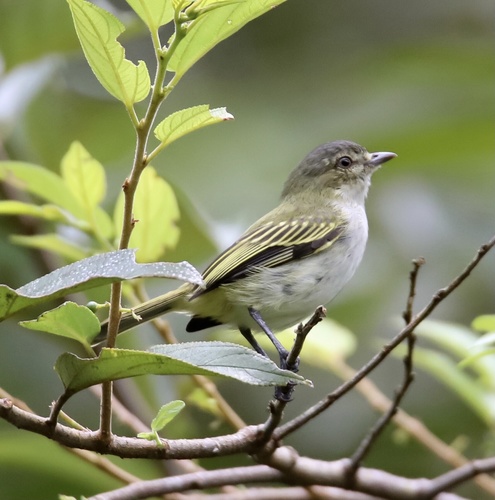
Mistletoe Tyrannulet
Zimmerius parvus
A tiny dynamo of the tropical canopy, the Mistletoe Tyrannulet is famous for its specialized diet and energetic tail-cocking. This olive-green gem is a common and delightful visitor to gardens and forest edges from Central America to Colombia.
Quick Identification
Size
9–10.5 cm (3.5–4.1 in) in length; weighs 7–10 g (0.25–0.35 oz)
Colors
Olive-green upperparts, pale gray throat and breast, transitioning to a pale yellow belly; yellowish edging on wing feathers.
Key Features
- Tiny size and energetic tail-cocking behavior
- Olive-green back with contrasting pale yellow underparts
- Short, dark bill with a slightly hooked tip
- Distinct yellowish-white edging on wing coverts and secondaries
When You’ll See Them
Geographic range
Where Does the Mistletoe Tyrannulet Live?
This diminutive bird is a native of the lush tropical corridors of Central America and northern South America. Its range stretches from the southern tips of Guatemala and Belize down through the humid lowlands and highlands of Honduras, Nicaragua, Costa Rica, and Panama, eventually reaching into the Caribbean lowlands of northern Colombia. This species is a permanent resident throughout its territory, thriving wherever healthy forest edges or fruit-bearing trees are present.
Basemap © OpenStreetMap contributors
Behavior
The Mistletoe Tyrannulet is a tireless bundle of energy, constantly flitting through the canopy and mid-story levels. Unlike many other flycatchers that sit and wait for prey, this species is highly active, often hovering to pluck berries or glean tiny insects from the undersides of leaves. They are known for their characteristic habit of cocking their tails upward while foraging, a movement that helps birdwatchers distinguish them from other small, green tropical birds.
While technically members of the tyrant flycatcher family, they are remarkably social within their niche, often appearing in pairs or participating in mixed-species foraging flocks. They have adapted exceptionally well to human-modified landscapes, frequently appearing in coffee plantations, shaded suburban gardens, and urban parks, provided there is enough vertical structure and their namesake mistletoe plants to feed on.
EverydayEarth exclusive
Camera Tips
To capture the Mistletoe Tyrannulet on an AI-powered camera, placement is everything. Because they are canopy and mid-story dwellers, mounting your camera at eye level or higher (roughly 5 to 8 feet) near a flowering or fruiting tree is your best bet. Look specifically for trees hosting mistletoe clumps, as these are the primary foraging hubs for this species. Position the camera to face these clumps from a distance of 3 to 5 feet to ensure the AI can trigger on such a small subject.
Since these birds are incredibly fast and small, they can sometimes appear as a blur. If your camera settings allow, use a high shutter speed or 'Sport' mode. They are most active in the early morning hours shortly after sunrise. If you are using a camera with a wide-angle lens, try to position it near a specific 'favorite' perch—these birds often return to the same twig between foraging bouts.
In a backyard setting, you can lure them by maintaining a diverse garden with native berry-producing shrubs. They are rarely interested in traditional seed feeders, so focus on 'living lures' like natural fruit sources. Additionally, a birdbath or a misting station can be a major draw during the drier months, as these active birds need to stay hydrated and cool after high-energy foraging sessions.
Finally, ensure your camera's motion sensitivity is set to 'High.' Because the Mistletoe Tyrannulet weighs less than a AAA battery, lower sensitivity settings might fail to detect its presence. Check your frame for moving leaves that might cause false triggers, and try to clear small twigs that might obscure the bird's tiny profile as it hovers to pluck berries.
Similar Species
Species that look similar or are commonly confused with Mistletoe Tyrannulet.
Frequently Asked Questions
Record Mistletoe Tyrannulet at your habitat
Connect a camera to start building your own species record — AI identifies every visitor automatically.