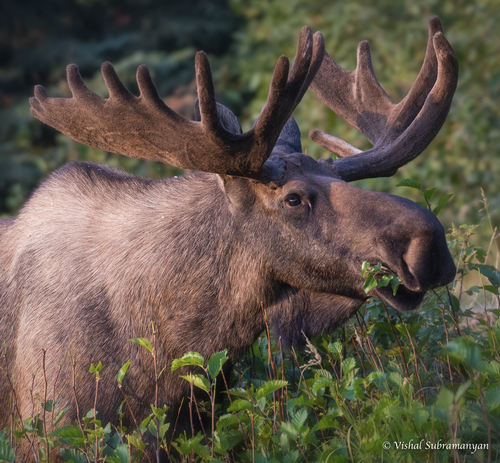
Moose
Alces alces
Meet the undisputed titan of the northern woods. With its massive palmate antlers and iconic silhouette, the moose is a symbol of the untamed, subarctic wilderness.
Quick Identification
Size
Height 1.4-2.1m (4.6-6.9ft) at shoulder; Weight 200-700kg (440-1,540lb); Length 2.4-3.2m (7.9-10.5ft)
Colors
Deep chocolate brown to blackish fur; legs are typically a lighter grayish-tan or creamy white
Key Features
- Massive palm-shaped (palmate) antlers on adult males
- Prominent shoulder hump and exceptionally long, spindly legs
- Large, bulbous muzzle with a dangling 'bell' or dewlap of skin under the chin
When You’ll See Them
Geographic range
Where Does the Moose Live?
Native to the northern reaches of the Northern Hemisphere, moose roam across the vast boreal forests of North America, Europe, and Asia. In the Western Hemisphere, their core range spans from Alaska through the majority of Canada and into the northernmost United States, from New England through the Great Lakes to the Rocky Mountains. Across the Atlantic, they thrive across Scandinavia, the Baltic states, and deep into the Russian taiga, where they are often referred to as 'elk' by local populations.
Basemap © OpenStreetMap contributors
Behavior
Moose are largely solitary giants, spending much of their day foraging for high-nutrient vegetation to support their massive frames. Unlike many other deer species, they do not form social herds; however, you may encounter a protective mother with her calves or a loose group of bulls during the late summer months before the autumn rut begins. They are surprisingly graceful in the water and are known to dive deep to reach sodium-rich aquatic plants, staying submerged for nearly a minute at a time.
While generally shy and prone to avoiding humans, moose are highly territorial during the mating season in September and October. They have a complex relationship with human environments; while they may wander into suburban gardens to snack on ornamental shrubs or lick road salt, they can become dangerous if they feel cornered. They rely on their immense size and powerful kicks for defense, making them an animal that demands respect and distance from observers.
EverydayEarth exclusive
Camera Tips
To capture these towering mammals, you must rethink your standard camera height. Mounting a camera at human eye level (5-6 feet) is often necessary just to catch the moose's head and antlers; otherwise, you might end up with a gallery of shots featuring only their legs or belly fur. Angle the camera slightly downward if placing it on a slope, and ensure you have a wide field of view. Moose are so large that they can easily fill a frame and trigger the sensor before their most recognizable features even enter the shot.
Location selection is the most critical factor for success. Look for 'moose highways'—well-trodden paths leading toward water or through dense willow thickets. Natural salt licks or the muddy edges of beaver ponds are goldmines for activity. In the winter, they tend to move toward lower elevations with less snow, making south-facing slopes or thick evergreen stands prime locations. Avoid using artificial bait, which is often illegal for cervids; instead, rely on their natural preference for mineral-rich mud or clearings with fresh saplings.
Since moose are crepuscular, ensure your camera has high-quality low-light or infrared capabilities. Set your trigger speed to the fastest possible setting; despite their size, a moose can move with surprising speed through the brush when startled. Using a 'Burst Mode' or 'Multi-shot' setting increases your chances of getting a clear profile shot or a look at those magnificent antlers. If your camera supports high-definition video, a 20-second clip is often better than a still, as it captures the deliberate, leggy gait and the 'bell' swinging under the chin, which provides a much more immersive experience.
Similar Species
Species that look similar or are commonly confused with Moose.
Frequently Asked Questions
Record Moose at your habitat
Connect a camera to start building your own species record — AI identifies every visitor automatically.