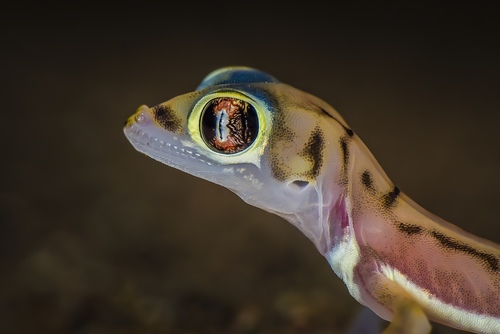
Namib Sand Gecko
Pachydactylus rangei
Meet the 'Ghost of the Dunes,' a translucent marvel that licks the morning fog to survive. With its unique webbed feet and massive eyes, the Namib Sand Gecko is the ultimate desert survivor.
Quick Identification
Size
Total length of 10-15 cm (4-6 inches); weight range of 7-10 grams (0.25-0.35 oz)
Colors
Translucent pinkish-flesh tones with pale yellowish or light brown dorsal markings; creamy white underbelly; large dark eyes with vertical pupils
Key Features
- Broadly webbed feet used for digging and walking on soft sand
- Large, lidless eyes that are cleaned with the tongue
- Slender limbs and a thin, translucent skin
- Short, tapered tail that can be shed if threatened
When You’ll See Them
Geographic range
Where Does the Namib Sand Gecko Live?
The Namib Sand Gecko is a desert specialist native to the southwestern coast of Africa. Its primary range is concentrated within the Namib Desert, stretching from southwestern Angola through the entire coastal length of Namibia and into the Northern Cape province of South Africa. This species is strictly tied to the dune systems of the Namib-Naukluft and Skeleton Coast regions, where the unique combination of soft sand and coastal fog supports its survival.
Basemap © OpenStreetMap contributors
Behavior
The Namib Sand Gecko is a nocturnal specialist, perfectly adapted to the extreme environment of the Namib Desert. During the blistering heat of the day, it retreats into deep burrows—sometimes up to a meter deep—where the sand remains cool and humid. These geckos are remarkable excavators, using their webbed feet like shovels to move loose sand. When night falls, they emerge to forage across the dunes, moving with a delicate, high-stepping gait that prevents them from sinking.
Socially, they are generally solitary but can be found in high densities in areas with abundant food. Their most famous behavior involves their method of drinking: they stand patiently as the Atlantic sea fog condenses on their large, lidless eyes. Once enough moisture has gathered, they use their long, fleshy tongues to lick the droplets off, providing vital hydration in a land without standing water. They are gentle and non-aggressive, relying on their camouflage and burrowing skills to avoid predators like sidewinder adders.
EverydayEarth exclusive
Camera Tips
To capture the Namib Sand Gecko, you need to think small and low. These geckos spend their lives just inches above the sand, so mount your camera at ground level. A specialized macro-lens or a trail camera with a very short focal distance is best, as these lizards are only about five inches long. Position the camera near the base of a sand dune or close to a 'dollar bush' (Zygophyllum stapfii), where the geckos often search for insects.
Because they are nocturnal, use a camera with 'No-Glow' or 'Black' infrared LEDs. Standard white flashes or even red-glow IR can startle these sensitive creatures and cause them to retreat into their burrows. Since they are cold-blooded, traditional PIR motion sensors may struggle to detect them; if your camera supports it, use a time-lapse mode with short intervals (e.g., every 30 seconds) during the peak fog hours between midnight and dawn.
Look for their distinctive star-shaped tracks in the sand during the day to find a high-traffic area. If you are setting up in a backyard or controlled desert environment, providing a flat, smooth stone can act as a natural 'fog trap'—the gecko may visit this specific spot to lick moisture from the surface, giving you a perfect, stationary target for your lens.
Similar Species
Species that look similar or are commonly confused with Namib Sand Gecko.
Frequently Asked Questions
Record Namib Sand Gecko at your habitat
Connect a camera to start building your own species record — AI identifies every visitor automatically.