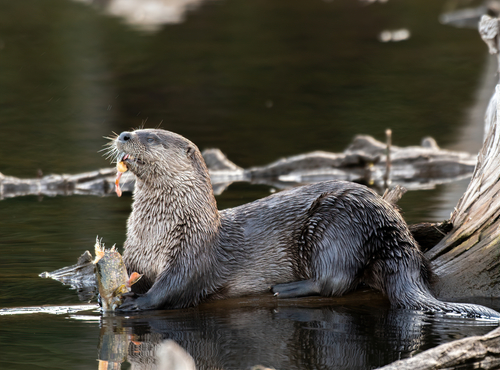
North American River Otter
Lontra canadensis
Playful, sleek, and exceptionally smart, the North American River Otter is a crown jewel of backyard wildlife sightings. These master swimmers turn any waterway into a personal playground, offering a rare glimpse into the life of a highly social apex predator.
Quick Identification
Size
2.2 to 3.5 feet (66-107 cm) in length; 11 to 31 pounds (5-14 kg) in weight
Colors
Rich chocolate to dark brown above, with a silvery-gray or cream-colored throat and belly; fur appears black when wet.
Key Features
- Streamlined, cylindrical body with a thick, muscular tail
- Webbed feet with short, powerful claws
- Broad, flattened head with long, sensitive whiskers (vibrissae)
- Short, dense, water-repellent double coat
When You’ll See Them
Behavior
North American River Otters are the undisputed acrobats of the aquatic world, known for their high energy and seemingly playful nature. While they appear to be having fun by sliding down muddy banks or juggling pebbles, these behaviors often serve practical purposes, such as grooming their fur, strengthening social bonds, or honing hunting skills. They are highly social within family groups, typically consisting of a female and her pups, while adult males often form their own bachelor groups.
Though they are masterful swimmers capable of staying submerged for up to eight minutes, they are equally agile on land, where they can run at speeds of up to 15 miles per hour. In areas with human activity, they tend to be shy and elusive, often shifting their schedules to avoid contact. However, in quiet suburban backyard ponds or creek-side properties, they can become quite bold, sometimes visiting the same spots daily if a reliable food source is present.
EverydayEarth exclusive
Camera Tips
To capture high-quality footage of North American River Otters, your best bet is to locate a 'latrine' or a 'slide.' Otters are creatures of habit and use specific shoreline spots to groom, dry off, and leave scent markings. Look for areas of flattened grass, muddy chutes leading into the water, or piles of fish scales and crayfish parts. Mount your camera low to the ground—about 12 to 18 inches high—to get an eye-level perspective that captures their facial expressions and whisker details.
Because otters move with incredible speed and fluidity, camera settings are critical. Use a 'Burst' or 'Multi-shot' mode to capture a sequence of 3-5 images per trigger, or set your video length to at least 20 seconds. If your camera allows for adjustable PIR sensitivity, set it to 'High' to ensure the sensor picks up their sleek bodies as they emerge quickly from the water. Since they are most active during the low-light hours of dawn and dusk, a camera with a high-quality 'No-Glow' infrared flash is ideal to avoid spooking them while maintaining clear nighttime visibility.
In winter, look for 'breathing holes' in the ice or tracks that look like a combination of paw prints and a long belly-drag mark. Otters are highly active in the snow and frequently travel over frozen ponds. Placing a camera near a hole in the ice can yield spectacular footage of them popping up with a fresh catch. Avoid using artificial lures or baits; instead, focus on their natural travel corridors along the water's edge. Ensuring your camera has a wide-angle lens can also help, as otters often travel in groups and you won't want to miss the pups following closely behind the mother.
Similar Species
Species that look similar or are commonly confused with North American River Otter.
Frequently Asked Questions
Record North American River Otter at your habitat
Connect a camera to start building your own species record — AI identifies every visitor automatically.