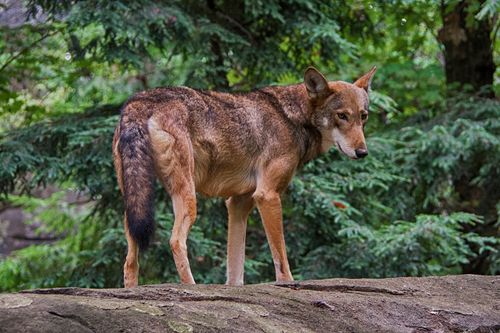
Red Wolf
Canis rufus
The Red Wolf is one of the world’s rarest canines, a sleek and elusive predator characterized by its stunning cinnamon-colored coat. Once roaming the entire Southeast, this 'ghost of the forest' now survives in only a few protected corners of the Atlantic coast.
Quick Identification
Size
Length: 4-5 feet (1.2-1.5 meters); Weight: 45-80 lbs (20-36 kg); Height: 26 inches (66 cm) at the shoulder
Colors
Tawny or reddish-brown coat with black shading along the back; distinctive cinnamon-colored fur on the legs and behind the ears; creamy white or tan underbelly.
Key Features
- Distinctive reddish-cinnamon tint behind the ears and on legs
- Lanky, long-legged build compared to the more compact coyote
- Large, pointed ears and a wide muzzle
- Bushy tail usually held straight or down, often with a black tip
When You’ll See Them
Behavior
Red Wolves are deeply social animals that live in small, tight-knit family groups consisting of a breeding pair and their offspring from previous years. Unlike the larger Gray Wolf, these packs are generally smaller and more elusive, preferring to avoid human contact whenever possible. They are highly territorial and use scent marking and vocalizations, such as a unique howl that is higher pitched and more melodic than a Gray Wolf's, to communicate with family members and warn off intruders.
While they are apex predators within their limited range, they are famously shy and rarely aggressive toward humans. They are masters of the 'ghost' lifestyle, moving silently through dense brush and wetlands. Their social structure is vital for hunting and pup-rearing, with the entire pack contributing to the survival of the year's litter. Observing them requires immense patience, as they are expert at staying just out of sight of people.
EverydayEarth exclusive
Camera Tips
Capturing a Red Wolf on camera is the ultimate 'holy grail' for wildlife enthusiasts, particularly in the coastal plains of North Carolina. Because these canines are incredibly wary of human scent and new objects, your camera setup must be extremely discreet. Avoid placing the camera directly on a fresh trail where it might startle them; instead, angle it from 10-15 feet away to capture a wider field of view. Mount the camera at about 24 to 30 inches off the ground—roughly chest height for an adult wolf—to ensure you get a clear profile shot rather than just the top of their head.
Scent is a powerful motivator for Red Wolves. While we don't recommend feeding wildlife, using a non-food lure like 'long-distance call' lures or even simple beaver castor can pique their curiosity enough to make them pause in front of your lens. Place the scent on a log or stump within the camera's primary trigger zone. Red Wolves often travel along 'edges'—where the forest meets a field or a dirt road—so look for these natural corridors when choosing a location. Clear any tall grass in the immediate foreground to prevent false triggers and ensure a clear view of their legs, which are key for identification.
Given their speed and tendency to move during low-light hours, camera settings are crucial. Use a fast trigger speed (0.3 seconds or less) and a high-intensity 'no-glow' infrared flash to avoid spooking them with visible red lights. If your camera supports it, 'Hybrid Mode' (capturing both a high-res photo and a 10-second video clip) is ideal. The video often captures their distinctive gait or a social interaction that a single photo might miss. During the winter months, their coats are thicker and more vibrant, making for spectacular nocturnal captures against a frosty background.
Similar Species
Species that look similar or are commonly confused with Red Wolf.
Frequently Asked Questions
Record Red Wolf at your habitat
Connect a camera to start building your own species record — AI identifies every visitor automatically.