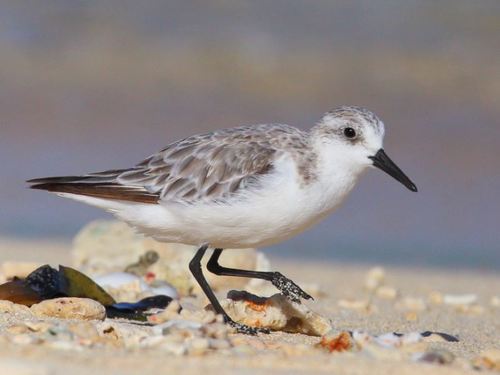
Sanderling
Calidris alba
The energetic sprinter of the shoreline, the Sanderling is a delight to watch as it dances with the waves. With its pale plumage and tireless legs, it turns the beach into a high-speed playground.
Quick Identification
Size
Length: 18-21 cm (7-8 in); Wingspan: 35-45 cm (14-18 in); Weight: 40-100 g (1.4-3.5 oz)
Colors
In winter, they are the palest sandpiper, showing light gray above and bright white below. In breeding season, they develop a mottled rufous-brown head and neck. They always have solid black legs and a black bill.
Key Features
- Distinctive 'clockwork' running motion along the tide line
- Black legs and slightly heavy black bill
- Lacks a hind toe (unique among small sandpipers)
- Bright white wing stripe visible in flight
When You’ll See Them
Behavior
The Sanderling is most famous for its 'wave-chasing' behavior. It spends its days on the beach, sprinting downward toward the ocean as a wave retreats to pick tiny invertebrates from the wet sand, then frantically dashing back up the beach just before the next wave breaks. This characteristic 'sewing machine' motion makes them easy to identify even from a distance.
These are highly social birds, often found in small to medium-sized flocks. While they are energetic foragers, they are also world-class travelers; some individuals migrate from high Arctic breeding grounds to the southern tips of South America or Africa. Despite their small size, they are remarkably hardy and can be seen braving harsh winter winds on exposed coastlines.
Sanderlings are generally less skittish around humans than other shorebirds, often allowing people to walk within a few yards of them. However, they are easily disturbed by off-leash dogs, which can force them to expend precious energy needed for their long-distance migrations.
EverydayEarth exclusive
Camera Tips
To capture high-quality footage of Sanderlings, camera placement is everything. Because these birds are small and stay close to the ground, you must mount your camera at 'sand-level.' Use a low-profile ground spike or a weighted beanbag to position the lens just 6 to 10 inches off the sand. Aim the camera parallel to the shoreline at the 'swash zone'—the area where waves wash over the sand—as this is where they spend 90% of their time foraging.
Lighting is a significant challenge with Sanderlings due to their pale plumage and the reflective nature of sand and water. Aim for the 'Golden Hours'—the hour after sunrise or before sunset. This provides a warmer light that prevents the birds' white bellies from looking 'blown out' or overexposed in your images. Position your camera so the sun is at your back to illuminate the birds fully as they run across the frame.
Standard PIR motion sensors often struggle to detect small birds against a moving background of waves. For the best results, use a 'time-lapse' setting on your AI camera, programmed to trigger every 5 to 10 seconds during the two hours surrounding low tide. If your camera supports it, use a high frame rate (at least 60fps) for video, as their legs move incredibly fast and will appear as a blur at lower frame rates.
Avoid placing bait, which can attract gulls or crows that might harass the shorebirds. Instead, look for 'natural attractants' like piles of washed-up kelp or seaweed. These 'wrack lines' are magnets for the insects and crustaceans that Sanderlings love to eat. Placing your camera near a fresh wrack line on a receding tide is a guaranteed way to capture active feeding behavior.
Similar Species
Species that look similar or are commonly confused with Sanderling.
Frequently Asked Questions
Record Sanderling at your habitat
Connect a camera to start building your own species record — AI identifies every visitor automatically.