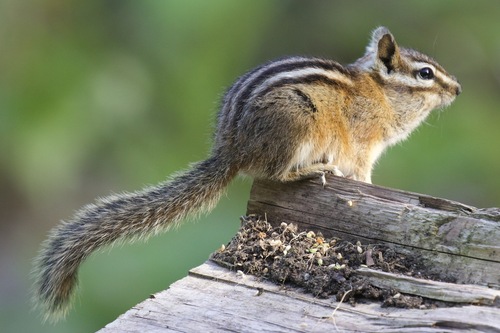
Yellow-pine Chipmunk
Neotamias amoenus
A vibrant and energetic resident of the Western woods, the yellow-pine chipmunk is a master of the forest floor. With its bold cinnamon stripes and industrious nature, it’s one of the most delightful visitors to any backyard trail cam.
Quick Identification
Size
Length: 18-24.5 cm (7.1-9.6 in); Weight: 30-70 g (1.1-2.5 oz)
Colors
Bright cinnamon to reddish-brown coat with five distinct dark stripes and four light stripes; creamy white underbelly; facial stripes are well-defined.
Key Features
- Five dark longitudinal stripes on the back
- Bright reddish-brown (cinnamon) base color
- Distinctive white and dark facial stripes
- Slender tail with a tawny underside and black tip
- Smaller and more colorful than most squirrels
When You’ll See Them
Behavior
The yellow-pine chipmunk is a high-energy acrobat of the forest floor, known for its constant movement and distinctive "chip" vocalizations. Unlike some of its relatives, this species is highly industrious, spending the majority of its waking hours foraging for seeds and bulbs to store in its intricate underground burrows. They are solitary creatures that maintain a home range, though these ranges often overlap with others of their kind in food-rich areas.
In the presence of humans, they can be quite bold, especially in campgrounds or backyards where birdseed is accessible. However, they remain naturally skittish and will retreat to the nearest rock crevice, log, or burrow at the first sign of a predator. During the winter, they enter a state of torpor to conserve energy. They aren't true hibernators; instead, they wake up periodically throughout the winter to snack on the "larder" of seeds they spent all summer and autumn building.
EverydayEarth exclusive
Camera Tips
To capture the frenetic energy of the yellow-pine chipmunk, place your camera low to the ground—ideally no more than 6 to 12 inches high. Aim the lens toward "natural highways" like fallen logs, flat-topped rocks, or the base of large pine trees where they often stop to scan for danger. Because they are so small and incredibly fast, use a high-speed trigger or a "burst mode" setting to ensure you catch them in frame before they zip out of view.
Baiting a small area with black oil sunflower seeds or a smear of peanut butter on a rock can be incredibly effective for backyard setups. Place the bait about 3 to 5 feet away from the lens to get a clear, focused shot without the animal being too close for the camera's minimum focal distance. If you're using an AI-powered camera like EverydayEarth, ensure the motion-trigger sensitivity is set to its highest level to capture these lightweight, rapid-moving mammals.
Lighting is key for bringing out their vibrant cinnamon colors. Try to position your camera facing North or South to avoid the direct glare of the morning and afternoon sun, which can wash out the details of their back stripes. If you have a rock wall or a woodpile, these are prime "stage" locations where chipmunks feel secure enough to pause and groom, offering the perfect opportunity for a high-quality portrait rather than just a blurry streak of fur.
In the late summer and early autumn, focus your efforts near berry-producing shrubs or beneath large conifers. This is their busiest hoarding season, and you will frequently capture them with their cheek pouches completely distended with food. These "stuffed cheek" shots provide a fascinating glimpse into their survival strategies. Ensure your camera is equipped with a fast SD card (Class 10 or higher) to handle the rapid-fire captures these little speedsters will trigger throughout the day.
Similar Species
Species that look similar or are commonly confused with Yellow-pine Chipmunk.
Least Chipmunk
Smaller and paler with more grayish tones; it lacks the rich cinnamon-red color of the yellow-pine chipmunk.
Townsend's Chipmunk
Significantly larger and darker with less distinct stripes; prefers denser, wetter coastal forest habitats.
Red-tailed Chipmunk
Very similar in appearance but is distinguished by the bright, bushy rufous-red underside of its tail.
Frequently Asked Questions
Record Yellow-pine Chipmunk at your habitat
Connect a camera to start building your own species record — AI identifies every visitor automatically.