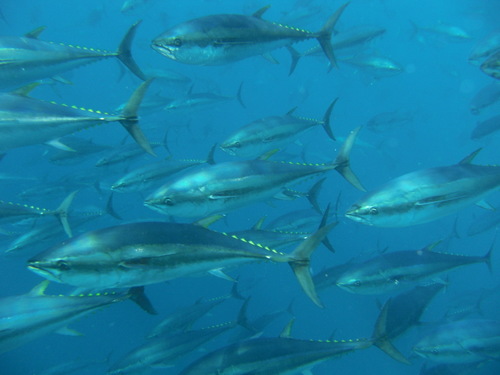
Atlantic Bluefin Tuna
Thunnus thynnus
Meet the undisputed titan of the Atlantic—a shimmering, silver-blue powerhouse built for extreme speed and transoceanic endurance.
Quick Identification
Size
Length up to 3 meters (10 feet); weight up to 680 kilograms (1,500 pounds)
Colors
Metallic dark blue on the back and upper sides, fading to a shimmering silvery-white on the belly; small yellow finlets follow the dorsal and anal fins
Key Features
- Hydrodynamic torpedo-shaped body
- Metallic dark blue dorsal surface with silver-white underside
- Series of small, bright yellow finlets along the tail
- Rigid, crescent-shaped caudal fin for high-speed propulsion
When You’ll See Them
Geographic range
Where Does the Atlantic Bluefin Tuna Live?
Native to the vast expanse of the Atlantic Ocean, the Atlantic Bluefin Tuna is a wide-ranging wanderer that traverses the breadth of the sea. Its core range spans from the cold, nutrient-rich waters off the coast of Newfoundland and Norway down to the warm spawning grounds of the Gulf of Mexico and the Mediterranean Sea. While they are primarily found in the Northern Hemisphere, these powerful migrants occasionally venture into the South Atlantic, making them one of the most geographically diverse marine species on the planet.
Basemap © OpenStreetMap contributors
Behavior
The Atlantic Bluefin Tuna is an apex predator and one of the fastest, most powerful athletes in the ocean. Unlike most fish, they are endothermic (warm-blooded), which allows them to maintain a high internal body temperature. This physiological advantage enables them to hunt effectively in the icy waters of the North Atlantic where other predators would become sluggish. They are highly migratory, often traveling thousands of miles across the open ocean to reach specific spawning and feeding grounds.
Socially, bluefin are known to form large, disciplined schools, often grouped by size to maintain consistent swimming speeds. They are relentless hunters that rely on sight and incredible bursts of speed to ambush schools of smaller fish. While they spend much of their time in the open pelagic zone, they occasionally venture toward the continental shelf, where they interact with commercial and recreational vessels. Their sheer power and size have made them a legendary figure in maritime culture, though they remain elusive and difficult to observe without specialized equipment.
EverydayEarth exclusive
Camera Tips
Capturing an Atlantic Bluefin Tuna on camera requires specialized underwater equipment, as these giants are purely pelagic. For those with 'ocean backyards' or boat access, the best results come from using high-speed action cameras or dedicated marine trail cameras housed in pressure-rated casings. Mounting a camera to a weighted line or a stabilizer wing while trolling at slow speeds can provide incredible footage of these fish as they investigate your lures or bait.
Because bluefin are incredibly fast, you must set your camera to a high frame rate—at least 60 or 120 frames per second—to prevent motion blur and allow for smooth slow-motion playback. Position the camera to face slightly downward and away from the sun to minimize glare from the water's surface. If your camera settings allow, manual white balance or a red filter can help restore the natural colors that are often lost in the deep blue of the water column.
To attract them to your camera's field of view, look for natural activity like 'boiling' water or diving birds, which indicate a bait ball. While chumming is a common way to draw them in, always check local regulations first. If you are using a stationary underwater rig, placing it near deep-water drop-offs or underwater mounts (seamounts) during their peak migration months of late summer and autumn will yield the highest chance of a sighting. Ensure your housing is rated for at least 30 meters of depth to handle the pressure of the open sea.
Similar Species
Species that look similar or are commonly confused with Atlantic Bluefin Tuna.
Yellowfin Tuna
Features much longer, bright yellow dorsal and anal fins and a more slender body profile than the Bluefin.
Bigeye Tuna
Has a stockier build and significantly larger eyes; the liver of a Bigeye is striated, whereas a Bluefin's is not.
Albacore
Recognizable by its exceptionally long pectoral fins that reach well past the start of the anal fin.
Frequently Asked Questions
Record Atlantic Bluefin Tuna at your habitat
Connect a camera to start building your own species record — AI identifies every visitor automatically.