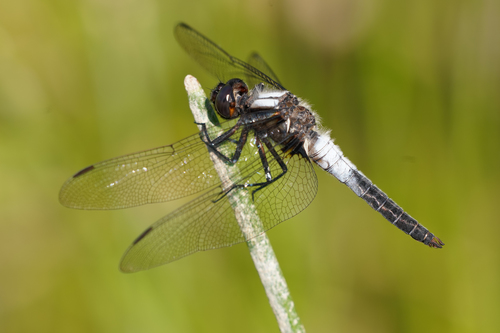
Chalk-fronted Corporal
Ladona julia
A striking skimmer of the North, the Chalk-fronted Corporal is famous for its 'frosted' white appearance and social nature. Watch for them basking in groups on sun-warmed logs near boggy waters.
Quick Identification
Size
Length: 41-48 mm (1.6-1.9 in); Wingspan: 65-75 mm (2.5-3.0 in)
Colors
Mature males exhibit a chalky white frosting (pruinescence) on the thorax and the first few segments of the abdomen, with a black tip. Females and juveniles are brownish-orange with two white 'corporal' stripes on the thorax.
Key Features
- Chalk-white 'frosting' on the front half of mature males
- Two dark, rectangular spots at the base of the hindwings
- Frequent habit of perching flat on the ground or logs
- Broad, tapered abdomen that narrows toward the tip
When You’ll See Them
Geographic range
Where Does the Chalk-fronted Corporal Live?
Native to the northern half of North America, the Chalk-fronted Corporal is a classic species of the boreal and temperate zones. Its core range spans the entire width of southern Canada, from British Columbia to Newfoundland, and extends into the northern United States. It is particularly common in the Great Lakes region, New England, and the Pacific Northwest, though it becomes increasingly rare as you move toward the southern states or the arid interior.
Basemap © OpenStreetMap contributors
Behavior
The Chalk-fronted Corporal is a highly gregarious dragonfly, often seen in much larger numbers than other skimmers. Unlike many of its cousins that prefer to perch on vertical reeds or the tips of tall grass, this species has a distinctive habit of perching flat on horizontal surfaces. You will frequently find them basking on sun-warmed rocks, logs, or even gravel paths and dirt roads, where they soak up the heat to fuel their high-energy flights.
These dragonflies are bold and relatively approachable compared to other species. They are active hunters, patrolling the edges of water bodies for small flying insects. While they are territorial, their tolerance for others of their own kind is remarkably high, leading to 'colonies' of dozens of individuals resting within a few feet of each other. During the heat of the day, they are a whirl of activity, darting out from their perches to snatch prey before returning to the exact same spot to consume it.
EverydayEarth exclusive
Camera Tips
To capture the Chalk-fronted Corporal on camera, you must think low. Because these dragonflies prefer perching on flat, horizontal surfaces, place your camera just 6 to 12 inches off the ground. A log near the edge of a pond or a large, flat rock in a sunny patch of a garden is the ideal 'stage.' Aim the camera horizontally across the surface of the log to get that dramatic, eye-level profile shot that highlights their chalky white markings.
Unlike mammals, you don't need bait, but you do need light. These dragonflies are 'sun-worshippers' and will rarely visit a perch that is in deep shade. Position your camera to face north or south so that the morning and afternoon sun hits the perch from the side, providing high-contrast lighting that makes the white pruinescence pop against the dark background of the abdomen.
Since dragonflies move incredibly fast, use a high-speed trigger or a camera with a 'pre-capture' feature if available. Set your shutter speed to at least 1/1000th of a second to freeze the action if they take flight. If you are using an AI-powered camera, ensure the focus zone is locked on the center of the log or rock, as the shallow depth of field required for small insects can easily lead to blurry shots if the camera hunts for focus.
The best time for photography is late morning when the air has warmed up but the dragonflies are still spending significant time basking to regulate their body temperature. In mid-summer, look for them on forest edges or garden paths near water; they will often return to the same favorite perch dozens of times a day, giving you multiple opportunities to get the perfect shot.
Similar Species
Species that look similar or are commonly confused with Chalk-fronted Corporal.
Frequently Asked Questions
Record Chalk-fronted Corporal at your habitat
Connect a camera to start building your own species record — AI identifies every visitor automatically.