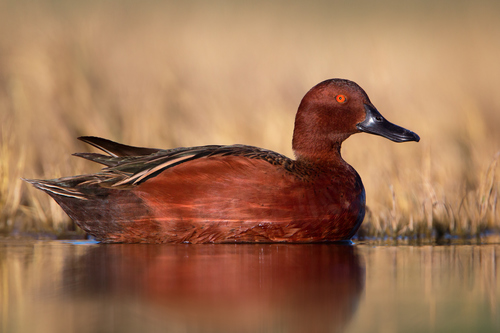
Cinnamon Teal
Spatula cyanoptera
With its striking burnt-orange plumage and piercing red eyes, the Cinnamon Teal is a vibrant highlight of western wetlands. This small, agile dabbling duck brings a flash of brilliant color to marshes and ponds across the Americas.
Quick Identification
Size
14–17 in (36–43 cm) long, 22–24 in (56–60 cm) wingspan, 10–18 oz (280–500 g)
Colors
Males feature vibrant cinnamon-red bodies, black backs, and red eyes. Females are mottled brown with a pale eye-line. Both have large sky-blue wing patches.
Key Features
- Bright cinnamon-red plumage on breeding males
- Large sky-blue wing coverts visible in flight
- Long, black, spatulate bill
- Distinctive red eye in adult males
When You’ll See Them
Geographic range
Where Does the Cinnamon Teal Live?
The Cinnamon Teal is a unique New World duck with a disjunct distribution across western North and South America. In North America, its core range extends from the western United States and southwestern Canada down through Mexico. In South America, separate populations thrive in the Andean highlands and the lowlands of Argentina and Chile, making it one of the few species to breed in both the Northern and Southern Hemispheres.
Basemap © OpenStreetMap contributors
Behavior
Cinnamon Teals are classic dabbling ducks, meaning they feed by tipping their heads underwater rather than diving. They are often seen in pairs or small family groups, skimming the surface of shallow wetlands. While they are generally social with other teal species, they are somewhat shy around humans and will take flight quickly if approached, revealing their colorful wing patches in a fast, erratic flight pattern.
During the breeding season, males are known for their territorial displays, which involve rhythmic head-pumping. They are relatively quiet compared to other waterfowl; the male's call is a subtle, rattling chatter, while the female gives a thin, high-pitched quack when startled or communicating with ducklings.
EverydayEarth exclusive
Camera Tips
To capture the stunning colors of a Cinnamon Teal, position your AI camera at a very low angle—ideally just 6 to 12 inches above the water level. Placing the camera on a stabilized stake or a floating platform near the edge of a marsh or pond provides an intimate perspective that highlights the male's red eye and the intricate feather patterns of the female. Ensure the camera is pointed toward the sun to prevent the deep red plumage from appearing too dark or silhouetted.
Focus your setup on "dabbling zones"—areas of shallow water (less than 10 inches deep) where aquatic vegetation like pondweed or sedges is visible. These ducks are highly attracted to these foraging spots. If you have a private pond, you can encourage them to stay in the frame by scattering a small amount of cracked corn or specialized waterfowl pellets in the shallowest water, though check local regulations regarding wildlife feeding first.
Because Cinnamon Teals are wary and have excellent eyesight, camouflage is essential. Conceal your camera housing with local reeds, cattails, or a piece of burlap to break up its silhouette. Use a high-speed trigger setting or video mode, as their movements while feeding and preening can be quite rapid. Early morning light is the absolute best time for capturing the true vibrance of their namesake cinnamon hue.
Similar Species
Species that look similar or are commonly confused with Cinnamon Teal.
Blue-winged Teal
Males have a blue-gray head with a white facial crescent; females have a smaller bill and bolder dark line through the eye.
Northern Shoveler
Significantly larger with a much larger, spoon-shaped bill and a white chest on the male.
Green-winged Teal
Much smaller with a vertical white stripe on the shoulder and no large blue wing patches.
Frequently Asked Questions
Record Cinnamon Teal at your habitat
Connect a camera to start building your own species record — AI identifies every visitor automatically.